Organic Chemistry
148 previous year questions.
High-Yield Trend
Chapter Questions 148 MCQs
(a) Hydroboration – Oxidation reaction:
(b) Williamson Synthesis:
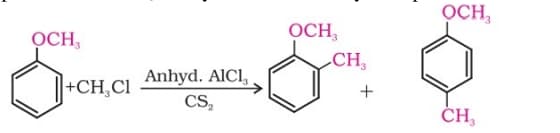
(c) Friedel-Crafts Alkylation of Anisole:
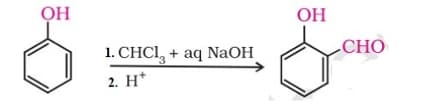
(d) Reimer-Tiemann Reaction:
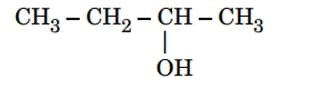
(CH3)2CH - CH2OH
CH3CH2CH2OH
(CH3)3C - OH
Reason (R): Chlorine shows electron withdrawing (–I) effect which increases the acidic character of C1} – CH2} – COOH.
Williamson's synthesis of preparing dimethyl ether is a/an:
Electrophilic substitution
SN1 reaction
Electrophilic addition
SN2 reaction
Reason (R): The unshared electron pair on nitrogen atom in aniline becomes less available for protonation due to resonance.
If amines are arranged in increasing order of their basic strength in gaseous phase, the correct order will be:
NH₃ < CH₃NH₂ < (CH₃)₃N < (CH₃)₂NH
NH₃ < (CH₃)₂NH < (CH₃)₃N < CH₃NH₂
(CH₃)₃N < (CH₃)₂NH < CH₃NH₂ < NH₃
NH₃ < CH₃NH₂ < (CH₃)₂NH < (CH₃)₃N
The chemical test which can be used to distinguish between ethanamine and aniline is:
Haloform test
Tollens' test
Azo dye test
Hinsberg test
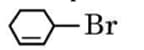
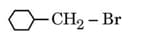
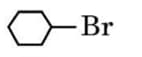
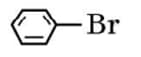
Cl – CH2 – COCl
Cl – CH2 – COOH
CH3 – COCl
CCl3 – COOH
(CH3)3C – OH > (CH3)2CH – OH > CH3CH2 – OH
(CH3)2CH – OH > CH3CH2 – OH > (CH3)3C – OH
CH3CH2 – OH > (CH3)2CH – OH > (CH3)3C – OH
(CH3)2CH – OH > (CH3)3C – OH > CH3CH2 – OH
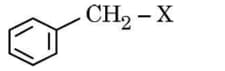
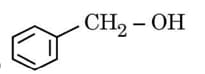
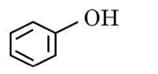
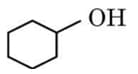
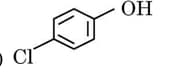
Write the reaction involved in:
(a) Reimer-Tiemann reaction
(b) Kolbe's reaction
(i) Toluene to Benzoic acid:
(ii) Ethanol to 3-Hydroxybutanal:



Benzoic acid to Benzaldehyde
Ethanal to Propanone
(c) Acetophenone to Benzoic acid
(d) Bromobenzene to 1-Phenylethanol


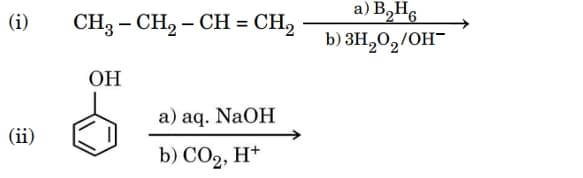
(b) What type of bonds hold a DNA double helix together?
(c) Which one of the following is a polysaccharide?
(d) Give one example each for water-soluble vitamins and fat-soluble vitamins.
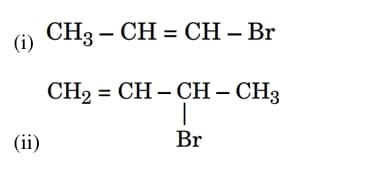
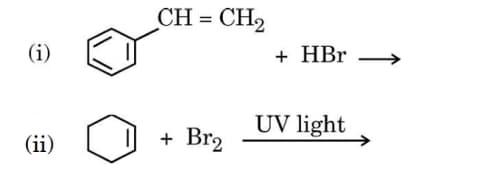
(b) Give reasons for the following:
(i) Grignard reagent should be prepared under anhydrous conditions.
(ii) Alkyl halides give alcohol with aqueous KOH whereas in the presence of alcoholic KOH, alkenes are formed
(i) Phenol and Benzoic acid:
(ii) Propanal and Propanone:
Butane, 1-Bromobutane, 1-Iodobutane, 1-Chlorobutane
(a)
(b)
Why is chlorobenzene resistant to nucleophilic substitution reactions?

Reason (R): Hydrogen bonding is more extensive in CH₃CH₂CH₂NH₂.
Reason (R): Aldehydes and ketones have dipole-dipole interaction.
Alkyl halides undergoing nucleophilic bimolecular substitution reaction involve:
\vspace{5pt}
Reason (R): C—Cl bond is more polar than C—Br bond.
Reason (R): The concentration of water does not get altered much during the reaction.
Reason (R): Phenoxide ion is more stable than ethoxide ion.
Reason (R): The van der Waals forces of attraction decrease in the order .
Write the structures of the main products of the following reactions: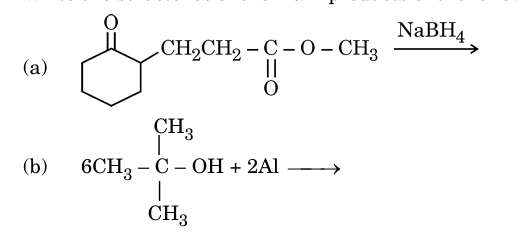
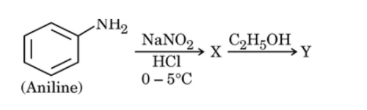
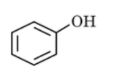
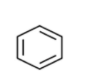
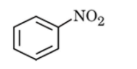
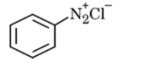
Reason (R): Acetylation of aniline results in decrease of electron density on nitrogen.
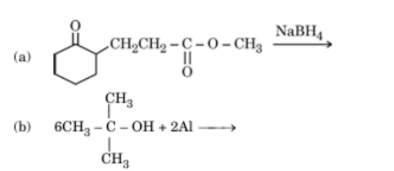
An aromatic compound ‘A’ with molecular formula C8H8O gives positive 2,4-DNP test. It gives yellow precipitate of compound ‘B’ on treatment with sodium hypoiodite. Compound ‘A’ does not react with Tollen’s or Fehling’s reagent; on drastic oxidation with KMnO4 it forms a carboxylic acid ‘C’. Elucidate the structures of A, B, and C. Also give their IUPAC names.
(i)
‘A’ ‘B’
(ii)
‘A’ ‘B’
(iii) ‘A’ ‘B’ (Main product)
(i) Allyl chloride is hydrolysed more readily than n-propyl chloride.(ii) Isocyanides are formed when alkyl halides are treated with silver cyanide.
(iii) Methyl chloride reacts faster with OH– ion in SN2 reaction than ethyl chloride.
Arrange the following compounds as asked:
(a) In increasing order of pKb values: , , ,
(b) In decreasing order of boiling point: , ,
(c) In decreasing order of solubility in water: , ,
(a) Presence of an aldehydic group in glucose.
(b) Presence of five −OH groups in glucose.
(II) Decarboxylation Reaction
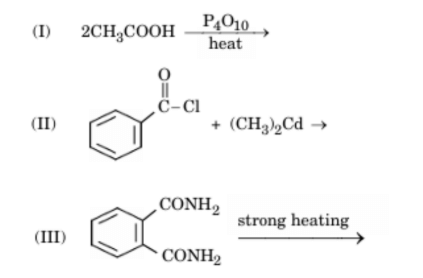
(I) Carboxylic acids do not give the characteristic reactions of the carbonyl group.
(II) Ethanoic acid is a stronger acid than ethanol.
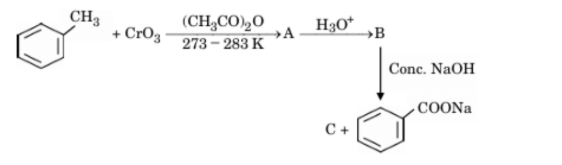
Complete the following equation :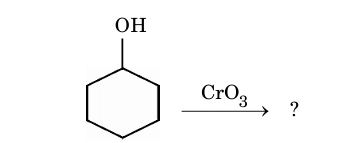
Write the products of the following reactions: 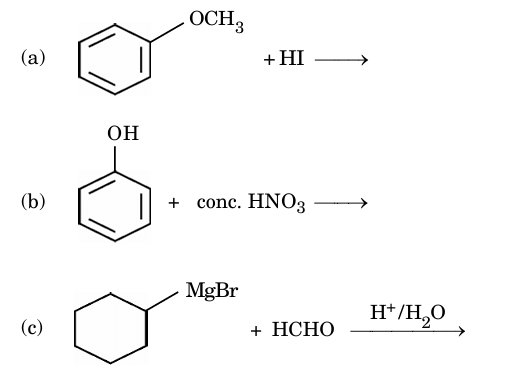
Complete each synthesis by giving missing starting material, reagent or products: 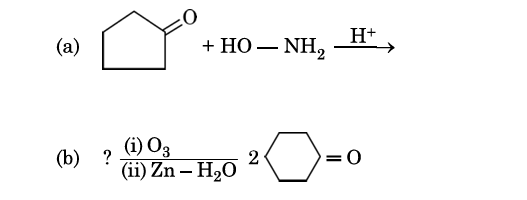
(ii) Racemic mixture
(a)Sulphanilic acid
(b) Phenylisocyanide
(c) Acetanilide
(a) Presence of an aldehyde group in glucose.
(b) Presence of five –OH groups in glucose.
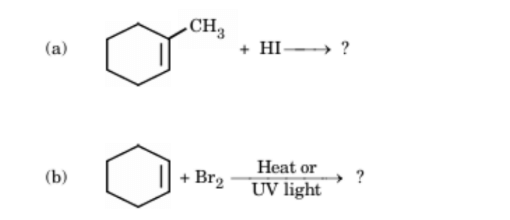
?
(b) Heat or UV light ?
Benzaldehyde to 3-phenylpropanol
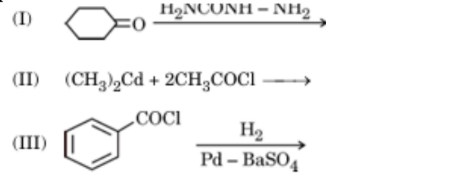
(II) CH2 −→ ? −→ CHO
(III)
(I) Ethyl benzoate and benzoic acid
(II) Propanal and propanone
(a) In decreasing order of pKb, values:
C H NH , (C H ) NH, C H NHCH CH , C H NH
(b) Increasing order of boiling point:
C H OH, C H NH , (C H ) NH, C H NH
(c) Increasing order of solubility in water:
C H NH , (C H ) NH, C H NHCH CH
(ii) CH CH CHCl + alc. KOH ‘A’ ‘B’ (Main product)
(ii) Isocyanides are formed when alkyl halides are treated with silver cyanide.
(iii) Methyl chloride reacts faster with OH ion in reaction than t-butyl chloride.
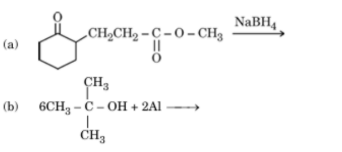
(b) 6CH C O + 2AlCl 6CH C O
(i) Toluene to benzoic acid.
(ii) Ethanol to propan-2-ol.
(iii) Propanal to 2-hydroxy propanoic acid.
Propanoic acid to Ethane
Ethanal to But-2-enal
[Co(NH₃)₅(CO₃)]Cl.
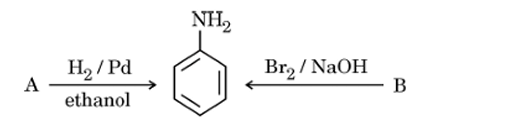
CH3CHO + NH2CONH2 →
CH3}CHO + dil. NaOH →
CH3COOH + Cl2/red P →
p-dichlorobenzene has higher melting point than ortho and meta isomers.
Preparation of phenol from cumene.
Nitration of anisole.
(CH3)3C - O - CH3 + HI →

(a) Haloarenes are less reactive towards nucleophilic substitution reactions.
(I) Transition metals exhibit catalytic properties.
(II) Transition metals have high melting points.
(III) Zn is a transition element, while Zn is not
(I) Which phenomenon is responsible for the above behaviour? Define it
C₆H₅NH₂, (CH₃)₂NH, NH₃, CH₃NH₂, (CH₃)₃N
(a) The C–Cl bond length in chlorobenzene is shorter than that in methyl chloride.
(b) Grignard reagents should be prepared under anhydrous conditions.
(c) In case of optically active alkyl halides, SN1 reactions are accompanied by racemisation.
3,5-dinitrophenol, 4-methylphenol, phenol, 2,4,6-trinitrophenol.
About Organic Chemistry - CBSE-CLASS-XII
Organic Chemistry is a vital chapter for CBSE-CLASS-XII aspirants. Mastering the concepts covered in this chapter is essential for securing a top rank.
By rigorously practicing the previous year questions associated with this chapter, you can identify high-yield topics, understand the examiner's perspective, and boost your confidence during the actual exam.
Frequently Asked Questions
Why focus on Organic Chemistry PYQs?
Analyzing PYQs for this specific chapter reveals the most frequently tested concepts and the typical complexity of questions, allowing you to tailor your study plan efficiently.
How to best use this analysis?
Review the topic breakdown to see which sub-topics within Organic Chemistry carry the most weight. Then, tackle the questions iteratively to solidify your understanding.