Coordination Compounds
85 previous year questions.
High-Yield Trend
Chapter Questions 85 MCQs
(b) Its shape and magnetic behaviour
(c) Whether it is a high spin or a low spin complex
[Atomic number: = 27]
The most stable complex among the following is:
[Pt(NH₃)₂Cl₂]
[Ag(NH₃)₂]Cl
[Pt(en)₂Cl₂]²⁺
K₄[Fe(CN)₆]
The IUPAC name of the complex [Co(NH₃)₅(ONO)]Cl₂ is:
Pentaamminenitrito-O-cobalt(III) chloride
Pentaamminenitrito-N-cobalt(III) chloride
Pentaamminenitro-cobalt(III) chloride
Pentaamminenitrito-cobalt(II) chloride
The geometry of paramagnetic nickel complex [NiCl₄]²⁻ is:
tetrahedral
octahedral
square planar
distorted octahedral
Out of Fe²⁺, Co²⁺, Cr³⁺, Ni²⁺, the one which shows the lowest magnetic moment is:
[Atomic number: Fe = 26, Co = 27, Ni = 28, Cr = 24]
Fe²⁺
Co²⁺
Cr³⁺
Ni²⁺
Answer the following questions:
(i) [Co(NH3)5NO2]2+
(ii) [Co(en)3]3+Cl3
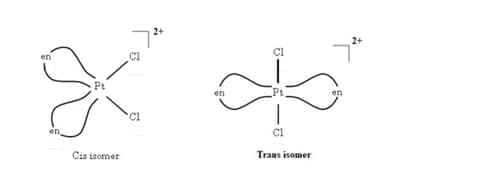
[Pt(en)2Cl2]2+
Answer the following questions:
(i) More stable?
(ii) The high-spin complex?
[Atomic No. Ni = 28]
The correct IUPAC name of is:
Diamminedichloridoplatinate (IV)
The Crystal Field Theory (CFT) of coordination compounds is based on the effect of different crystal fields (provided by the ligands taken as point charges) on the degeneracy of d-orbital energies of the central metal atom/ion. The splitting of the d-orbitals provides different electronic arrangements in strong and weak crystal fields. In tetrahedral coordination entity formation, the d-orbital splitting is smaller as compared to the octahedral entity.
On the basis of CFT, explain why [Ti(H O) ]Cl complex is coloured? What happens on heating the complex [Ti(H O) ]Cl ? Give reason.
Reason (R): All the ligands attached to the metal are the same.
At. No. Co = 27, Fe =26, Ni= 28]
Out of Ti3+, Cr3+, Fe2+ and Ni2+ ions, the one which is the most stable ion in aqueous solution is:
Name the type of isomerism exhibited and draw isomers:
(I) [Co(NH3)6][Cr(CN)6]
(II) [Co(en)3]3+
(III) [Co(NH3)3(NO2)3]
The Crystal Field Theory (CFT) of coordination compounds is based on the effect of different crystal fields (provided by the ligands taken as point charges) on the degeneracy of d-orbital energies of the central metal atom/ion. The splitting of the d-orbitals provides different electronic arrangements in strong and weak crystal fields. In tetrahedral coordination entity formation, the d-orbital splitting is smaller as compared to the octahedral entity.
What is crystal field splitting energy?
(b) [CrCl (en) ]Cl
Write two consequences of lanthanide contraction.
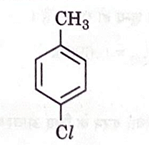
Which is the correct IUPAC name for
Co is easily oxidized to Co in the presence of a strong ligand (At. No. of Co = 27).
Low spin tetrahedral complexes are not known.
(a)[Fe(en)2Cl2]+
(b)[Co(NH3)4(H2O)Br]SO4
(c)[Ni(CN)4]²−
Write the IUPAC name of the following complex: .
What type of isomerism is shown by the complex ?

(i)
(ii)
(ii) What is meant by the 'Chelate effect'? Give an example.
29(a). In octahedral crystal field, energies of which d-orbitals will be raised when ligands approach? Give reason.
About Coordination Compounds - CBSE-CLASS-XII
Coordination Compounds is a vital chapter for CBSE-CLASS-XII aspirants. Mastering the concepts covered in this chapter is essential for securing a top rank.
By rigorously practicing the previous year questions associated with this chapter, you can identify high-yield topics, understand the examiner's perspective, and boost your confidence during the actual exam.
Frequently Asked Questions
Why focus on Coordination Compounds PYQs?
Analyzing PYQs for this specific chapter reveals the most frequently tested concepts and the typical complexity of questions, allowing you to tailor your study plan efficiently.
How to best use this analysis?
Review the topic breakdown to see which sub-topics within Coordination Compounds carry the most weight. Then, tackle the questions iteratively to solidify your understanding.