Biomolecules
74 previous year questions.
High-Yield Trend
Chapter Questions 74 MCQs
Reason (R): Symbol ‘D’ represents its dextrorotatory nature.
Carbohydrates are the major components of all living organisms. Sugars are carbohydrates. The major types of sugars include monosaccharides and disaccharides. The main difference between monosaccharides, disaccharides and polysaccharides is that monosaccharides are monomer of sugars and disaccharides are composed of two monomers, whereas polysaccharides are composed of a large number of monomers. Monosaccharides are single sugar molecules which act as the building blocks of disaccharides and polysaccharides. Disaccharides are also simple sugars. Disaccharides are classified into two groups according to their reducing strength: Reducing and Non-reducing sugars. When a polymer is formed from a monomer, a condensation reaction occurs that forms a glycosidic bond and water molecule is lost. Starch, glycogen and cellulose are examples of polysaccharides. Starch is found in many parts of plant cell and consists of amylose and amylopectin. Glycogen is the major carbohydrate storage product found in humans. It is present in liver, muscles and brain.
Cellulose is the most abundant organic molecule on Earth. It makes up around 50% of all organic carbon.
(a) Essential amino acids:
(b) Peptide bond:
(c) Denaturation:
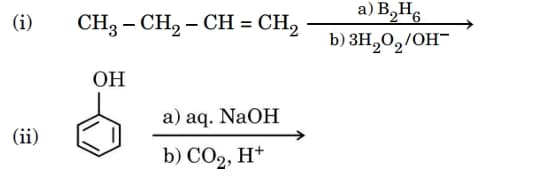
(i) Thymine
(ii) Uracil.
Reason (R): Fructose does not reduce Fehling solution and Tollen’s reagent.
(a) Denaturation of protein
(b) Invert sugar
(a) HI
(b)
In the Haworth structure of the following carbohydrate, various carbon atoms have been numbered. The anomeric carbon is numbered as: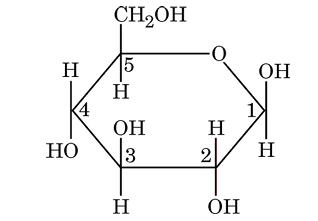
Reason (R): Vitamin K is a water soluble vitamin.
Assertion (A): Maltose is a reducing sugar.
Reason (R): One of the two glucose units can open to expose free aldehydic group in solution.
Reason (R): Vitamin C is water soluble and excreted in urine.
Reason (R): Most naturally occurring amino acids have L-configuration.
(a) HCN
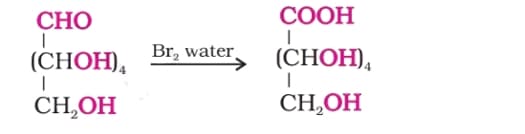
(b) Br water
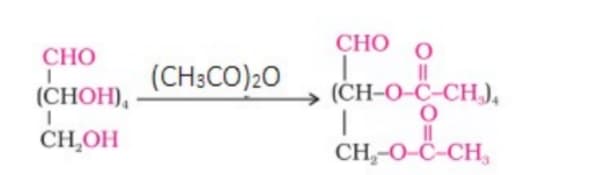
(a) HCN (b) Br water (c) (CH CO) O
Write the reaction of D-Glucose with the following:
(b) Invert sugar
(c) Oligosaccharides
Reason (R): Vitamin D is fat-soluble vitamin and is not excreted from the body in urine.
Answer the following questions :
(a) What products would be formed when DNA is hydrolyzed? How is DNA different from RNA with reference to structure?
Define the term: Anomers.
(i) Acidic amino acids and basic amino acids
(ii) Nucleotide and Nucleoside
Reason (R) : The hydrogen bonds are formed between specific pairs of bases.
Reason (R): (+) represents dextrorotatory nature and D represents its configuration.
About Biomolecules - CBSE-CLASS-XII
Biomolecules is a vital chapter for CBSE-CLASS-XII aspirants. Mastering the concepts covered in this chapter is essential for securing a top rank.
By rigorously practicing the previous year questions associated with this chapter, you can identify high-yield topics, understand the examiner's perspective, and boost your confidence during the actual exam.
Frequently Asked Questions
Why focus on Biomolecules PYQs?
Analyzing PYQs for this specific chapter reveals the most frequently tested concepts and the typical complexity of questions, allowing you to tailor your study plan efficiently.
How to best use this analysis?
Review the topic breakdown to see which sub-topics within Biomolecules carry the most weight. Then, tackle the questions iteratively to solidify your understanding.