Aldehydes Ketones And Carboxylic Acids
61 previous year questions.
High-Yield Trend
Chapter Questions 61 MCQs
Why is of ClCH2COOH lower than the of CH3COOH?
Identify A, B, C and D and write all the chemical equations involved.
Compound A undergoes Rosenmund reduction to give compound B with molecular formula H6O. Compound B does not give Fehling’s test but reacts with conc. NaOH to give C and D.
Identify A, B, C and D and write all the reactions involved.
Write one chemical test to distinguish between compound B and propanone.
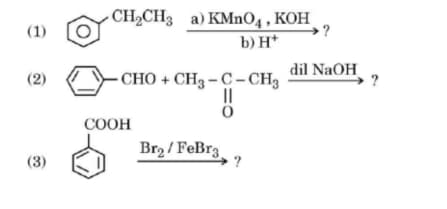
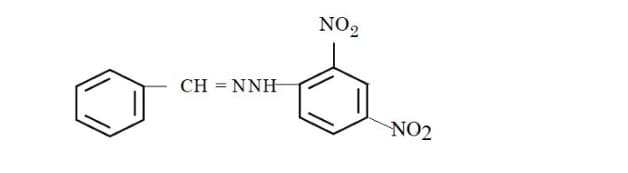
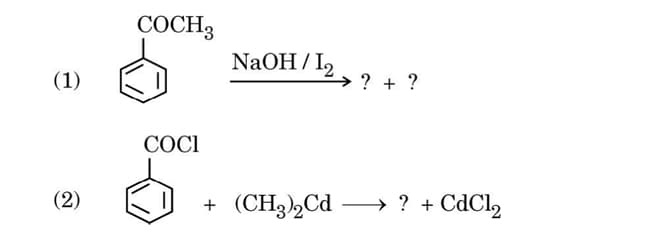
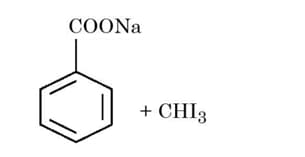
1. Oxidation of aldehydes is easier as compared to ketones.
2. The alpha (α) hydrogen atoms of aldehydes are acidic in nature.
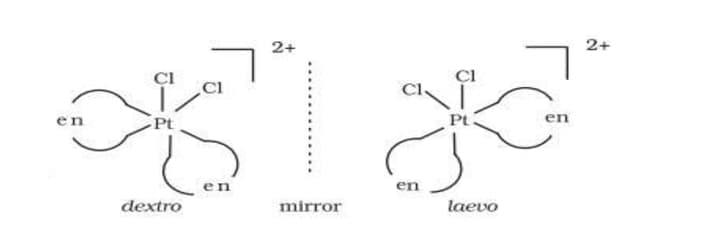

(b) Decarboxylation reaction
(c) Cannizzaro reaction

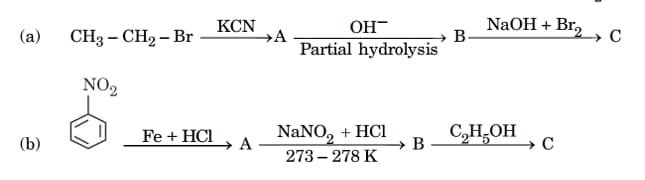
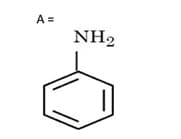
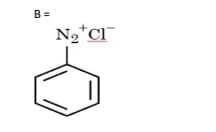
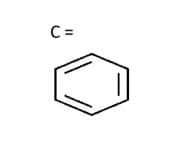
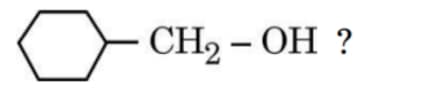
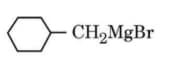
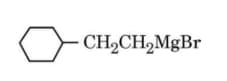
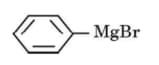
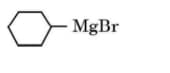
(i) Draw structure of the methyl hemiactetal of methanal.
(ii) There are two -NH groups in semicarbazide. However, only one is involved in the formation of semicarbazones. Give reason.
(iii) How will you convert ethanol to 3-hydroxybutanal?
In the given reaction sequence, the structure of Y would be: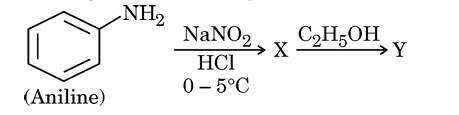
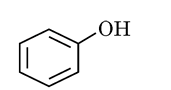

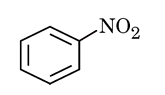
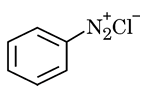
Convert Ethanal to But-2-enal
Clemmensen reduction
shows Cannizzaro reaction.
Write structure of the products of the following reactions: 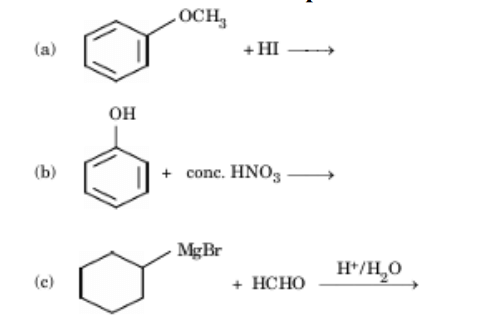
Benzoic acid does not undergo Friedel-Crafts reaction.
(I) shows Cannizzaro reaction.
(II) reduces Tollens' reagent and has a chiral carbon.
(III) gives positive iodoform test.
Give reasons for the following:
Benzoic acid does not undergo Friedel-Crafts reaction.
(b) HCHO is more reactive than
(c) Vinyl group directly attached with carboxylic acid should decrease the acidity of corresponding carboxylic acid due to resonance, but on the contrary it increases the acidity.
(b)
(b) Etard reaction
(c) Cannizzaro reaction
(a) Wolff-Kishner reduction
(b) Etard reaction
(c) Cannizzaro reaction
Give reason of the following
Carboxylic acids have higher boiling point than alcohols of comparable molecular masses.
Di-tert. butyl ketone, Acetaldehyde, Acetone
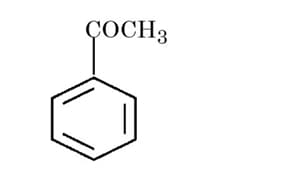
(I) Acetophenone
(II) Ethyl benzene
(I) does not give Tollen's test but gives a positive iodoform test.
(II) does not give Tollen's test and iodoform test but undergoes Aldol condensation.
(III) undergoes Cannizzaro's reaction.
About Aldehydes Ketones And Carboxylic Acids - CBSE-CLASS-XII
Aldehydes Ketones And Carboxylic Acids is a vital chapter for CBSE-CLASS-XII aspirants. Mastering the concepts covered in this chapter is essential for securing a top rank.
By rigorously practicing the previous year questions associated with this chapter, you can identify high-yield topics, understand the examiner's perspective, and boost your confidence during the actual exam.
Frequently Asked Questions
Why focus on Aldehydes Ketones And Carboxylic Acids PYQs?
Analyzing PYQs for this specific chapter reveals the most frequently tested concepts and the typical complexity of questions, allowing you to tailor your study plan efficiently.
How to best use this analysis?
Review the topic breakdown to see which sub-topics within Aldehydes Ketones And Carboxylic Acids carry the most weight. Then, tackle the questions iteratively to solidify your understanding.