Chemical Bonding And Molecular Structure
20 previous year questions.
High-Yield Trend
Chapter Questions 20 MCQs
| Atomic Number | Ionization Enthalpy (kJ/mol) | ||
I1 | I2 | I3 | |
| n | 1681 | 3374 | 6050 |
| n+1 | 2081 | 3952 | 6122 |
| n+2 | 469 | 4562 | 6910 |
| n+3 | 738 | 1451 | 7733 |
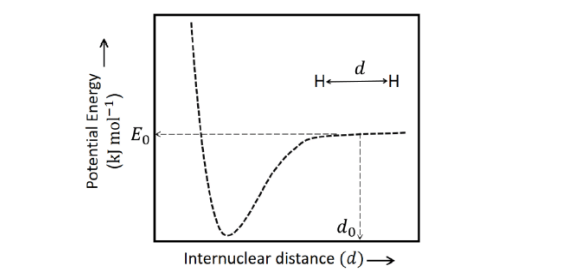
The amount of energy required to break a bond is the same as the amount of energy released when the same bond is formed. In a gaseous state, the energy required for homolytic cleavage of a bond is called Bond Dissociation Energy (BDE) or Bond Strength. BDE is affected by the s-character of the bond and the stability of the radicals formed. Shorter bonds are typically stronger bonds. BDEs for some bonds are given below: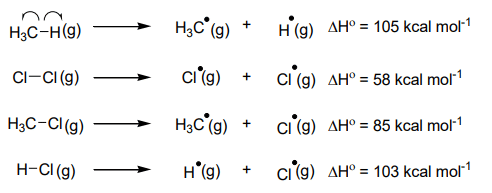
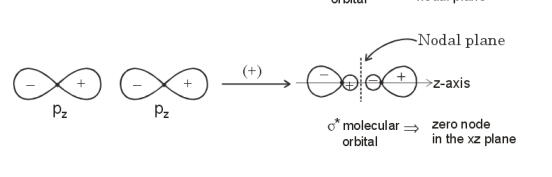
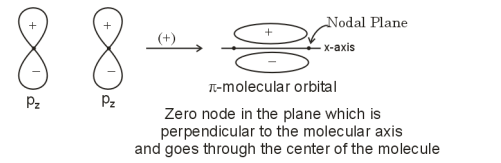
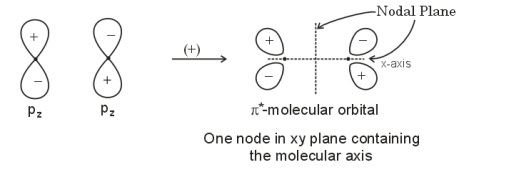
H2S (5 moles) reacts completely with acidified aqueous potassium permanganate solution. In this reaction, the number of moles of water produced is x, and the number of moles of electrons involved is y. The value of (x + y) is ____.
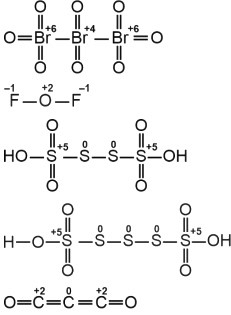
Consider the following molecules : Br3O8, F2O, H2S4O6, H2S5O6, and C3O2. Count the number of atoms existing in their zero oxidation state in each molecule. Their sum is _______.
When the age of the sample is P x108 years, the ratio of mass of Pb-206 to that of U-238 in the sample is found to be 7. The value of P is _____.
[Given: Half-life of U-238 is 4.5 x10⁹ years; loge2 = 0.693]
List I | List II | ||
| (P) | XeF2 | (1) | Trigonal bipyramidal and two lone pair of electrons |
| (Q) | XeF4 | (2) | Tetrahedral and one lone pair of electrons |
| (R) | XeO3 | (3) | Octahedral and two lone pair of electrons |
| (S) | XeO3F2 | (4) | Trigonal bipyramidal and no lone pair of electrons |
| (5) | Trigonal bipyramidal and three lone pair of electrons | ||
About Chemical Bonding And Molecular Structure - JEE-ADVANCED
Chemical Bonding And Molecular Structure is a vital chapter for JEE-ADVANCED aspirants. Mastering the concepts covered in this chapter is essential for securing a top rank.
By rigorously practicing the previous year questions associated with this chapter, you can identify high-yield topics, understand the examiner's perspective, and boost your confidence during the actual exam.
Frequently Asked Questions
Why focus on Chemical Bonding And Molecular Structure PYQs?
Analyzing PYQs for this specific chapter reveals the most frequently tested concepts and the typical complexity of questions, allowing you to tailor your study plan efficiently.
How to best use this analysis?
Review the topic breakdown to see which sub-topics within Chemical Bonding And Molecular Structure carry the most weight. Then, tackle the questions iteratively to solidify your understanding.