JEE-ADVANCED SERIES
Chemistry

Chemical Kinetics

21 previous year questions.

Volume: 21 Ques
Yield: High

High-Yield Trend

2
2025
1
2024
2
2021
1
2019
1
2018
1
2014
1
2010
1
2009
1
2005
1
2004
1
2003
1
2002
1
2001
1
1999
1
1998

Chapter Questions
21 MCQs

01
PYQ 1981
medium
chemistry ID: jee-adva
The rate constant of a reaction depends on
1
temperature
2
initial concentration of the reactants
3
time of reaction
4
extent of reaction
02
PYQ 1983
medium
chemistry ID: jee-adva
A catalyst is a substance which
1
increases the equilibrium concentration of the product
2
changes the equilibrium constant of the reaction
3
shortens the time to reach equilibrium
4
supplies energy to the reaction
03
PYQ 1986
hard
chemistry ID: jee-adva
The half-life period of a radioactive element is 140 days. After 650 days, one gram of the element will reduce to
1
2
3
4
04
PYQ 1996
medium
chemistry ID: jee-adva
is a stable isotope, is expected to decay by
1
-emission
2
-emission
3
positron emission
4
proton emission
05
PYQ 1998
medium
chemistry ID: jee-adva
For the first order reaction,
1
the degree of dissociation is equal to
2
a plot of reciprocal concentration of the reactant vs time gives a straight line
3
the time taken for the completion of 75% reaction is thrice the of the reaction
4
the pre-exponential factor in the Arrhenius equation has the dimension of time,
06
PYQ 1999
medium
chemistry ID: jee-adva
The following statement (s) is are correct
1
A plot of log is linear
2
A plot of log [X] vs time is linear for a first order reaction,
3
A plot of log p vs is linear at constant volume
4
A plot of p vs A plot of p vs
07
PYQ 2001
medium
chemistry ID: jee-adva
If I is the intensity of absorbed light and C is the concentration of AB for the photochemical process. AB, for the rate of formation of AB is directly proportional to
1
C
2
I
3
4
C.I
08
PYQ 2002
medium
chemistry ID: jee-adva
Consider the chemical reaction, .The rate of this reaction can be expressed in terms of time derivatives of concentration of . Identify the correct relationship amongst the rate expressions
1
2
3
4
09
PYQ 2003
medium
chemistry ID: jee-adva
In first order reaction, the concentration of reactant decreases from to in . The rate constant is
1
2
3
4
10
PYQ 2004
medium
chemistry ID: jee-adva
For a first order reaction, product. Concentration of , changes from to in minutes the rate of reaction of when concentration of is is :
1
2
3
4
11
PYQ 2005
medium
chemistry ID: jee-adva
Which one of the following statements) is incorrect about order of reaction?
1
Order 6'f reaction is determined experimentally
2
Order o f reaction is equal to sum o f the power o f concentration terms in differential rate law
3
It is not affected with stoichiometric coefficient o f the reactants
4
Order cannot be fractional
12
PYQ 2009
medium
chemistry ID: jee-adva
For a first order reaction, , the temperature dependent rate constant was found to follow the equation: . The pre-exponential factor and the activation energy , respectively, are
1
and
2
and
3
and
4
and
13
PYQ 2010
medium
chemistry ID: jee-adva
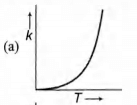
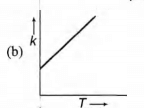
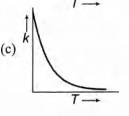
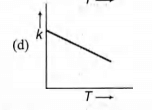
Plots showing the variation of the rate constant with temperature are given below. The plot that follows Arrhenius equation is
1
2
3
4
14
PYQ 2014
medium
chemistry ID: jee-adva
For the elementary reaction, , the rate of disappearance of increases by a factor of upon doubling the concentration of . The order of the reaction with respect to is
1
4
2
3
3
2
4
1
15
PYQ 2018
medium
chemistry ID: jee-adva
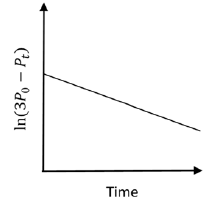
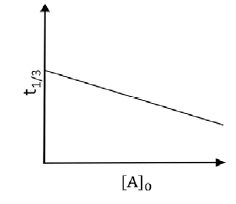
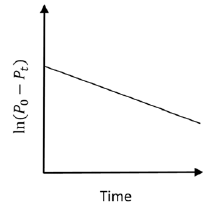
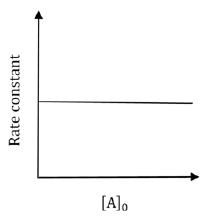
For a first order reaction at constant volume and , the total pressure at the beginning and at time are and , respectively. Initially, only is present with concentration , and is the time required for the partial pressure of to reach of its initial value. The correct option(s) is (are) (Assume that all these gases behave as ideal gases)
1
2
3
4
16
PYQ 2019
medium
chemistry ID: jee-adva
In the decay sequence, and are particles/radiation emitted by the respective isotopes. The correct option(s) is(are)
1
will deflect towards negatively charged plate
2
is
3
is -ray
4
is an isotope of uranium
17
PYQ 2021
easy
chemistry ID: jee-adva
For the following reaction the rate of reaction is Two moles of are mixed with one mole of to make of solution At , mole of is left in the reaction mixture The correct statement(s) about the reaction is(are) (Use :
18
PYQ 2021
easy
chemistry ID: jee-adva
For the following reaction;
The rate of reaction is

Two moles of X are mixed with one mole of Y to make 1.0 L of solution. At 50 s, 0.5 mole of Y is left in the reaction mixture. The correct statement(s) about the reaction is(are). (Use: ln 2 = 0.693)
1
The rate constant, k, of the reaction is 13.86 × 10⁻⁴ s-1.
2
Half-life of X is 50 s.
3
At 50 s, – d[X] / dt = 13.86 × 10⁻³ mol L-1 s-1.
4
At 100 s, d[Y] / dt = 3.46 × 10⁻³ mol L-1 s-1.
19
PYQ 2024
easy
chemistry ID: jee-adva
Consider the following reaction,

which follows the mechanism given below:
(fast equilibrium)
(slow reaction)
(fast reaction)
The order of the reaction is________
20
PYQ 2025
medium
chemistry ID: jee-adva

Consider a reaction . The rate of this reaction is measured to be . At the start of the reaction, the concentration of , , is 10-times the concentration of , . The reaction can be considered to be a pseudo first order reaction with assumption that is constant. Due to this assumption, the relative error (in %) in the rate when this reaction is 40% complete, is ____. [ and represent corresponding rate constants]

21
PYQ 2025
medium
chemistry ID: jee-adva

Consider a reaction . The rate of this reaction is measured to be . At the start of the reaction, the concentration of , , is 10-times the concentration of , . The reaction can be considered to be a pseudo first order reaction with assumption that is constant. Due to this assumption, the relative error (in %) in the rate when this reaction is 40% complete, is ____. [ and represent corresponding rate constants]