Thermodynamics
16 previous year questions.
High-Yield Trend
Chapter Questions 16 MCQs
For a system undergoing a particular process, the work done is,
This equation is applicable to a
At ,
,
,
Assume that the enthalpies and the entropies are temperature independent
One mole of an ideal gas at 900 K, undergoes two reversible processes, I followed by II, as shown below. If the work done by the gas in the two processes are the same, the value of is _____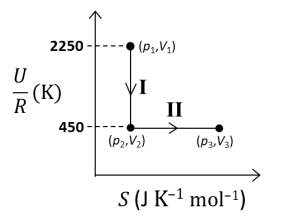
(U: internal energy, S: entropy, p: pressure, V: volume, R: gas constant)
(Given: molar heat capacity at constant volume, of the gas is R)
[Given: Gas constant R = 8.3 J K–1 mol–1]
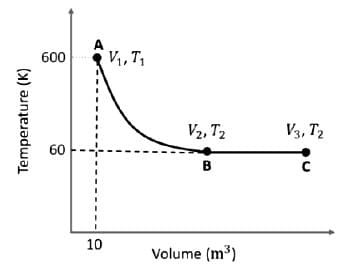
is an adiabatic process. If the total heat absorbed in the entire process ( and ) is , the value of is ___ . [Use, molar heat capacity of the gas at constant pressure, ]
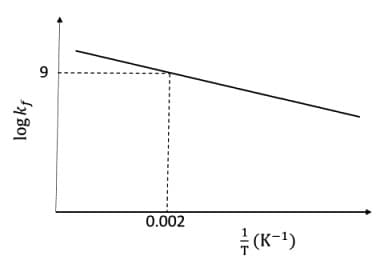
Pre-exponential factors for the forward and backward reactions are 1015s-1 and 1011s-1 respectively. If the value of log K for the reaction at 500 K is 6, the value of |log kb| at 250K is_________
[K = equilibrium constant of the reaction,
𝑘𝑓 = rate constant of forward reaction,
𝑘𝑏 = rate constant of backward reaction]
Pre-exponential factors for the forward and backward reactions are 1015s-1 and 1011s-1 respectively. If the value of log K for the reaction at 500 K is 6, the value of |log kb| at 250K is_________[K = equilibrium constant of the reaction, 𝑘𝑓 = rate constant of forward reaction, 𝑘𝑏 = rate constant of backward reaction]
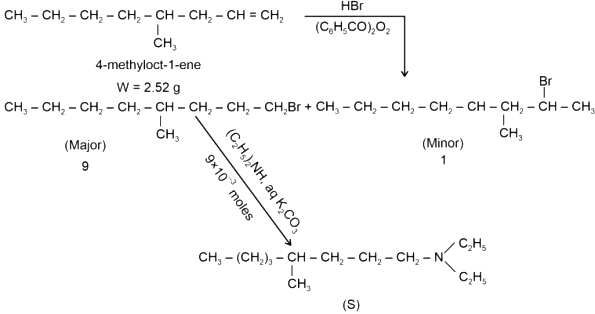
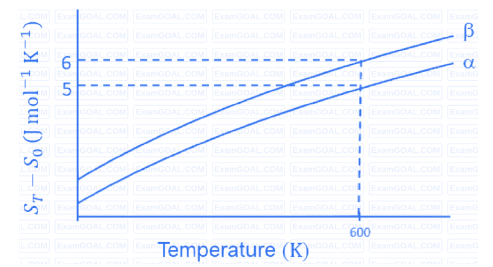
The transition temperature for to phase change is and , , . Assume is independent of temperature in the range of to . are heat capacities of and phases, respectively
is an adiabatic process. If the total heat absorbed in the entire process ( and ) is , the value of is ___ .
[Use, molar heat capacity of the gas at constant pressure, ]
Considering ideal gas behavior, the expansion work done (in kJ) when 144 g of water is electrolyzed completely under constant pressure at 300 K is ____. Use: Universal gas constant ; Atomic mass (in amu): H = 1, O = 16
About Thermodynamics - JEE-ADVANCED
Thermodynamics is a vital chapter for JEE-ADVANCED aspirants. Mastering the concepts covered in this chapter is essential for securing a top rank.
By rigorously practicing the previous year questions associated with this chapter, you can identify high-yield topics, understand the examiner's perspective, and boost your confidence during the actual exam.
Frequently Asked Questions
Why focus on Thermodynamics PYQs?
Analyzing PYQs for this specific chapter reveals the most frequently tested concepts and the typical complexity of questions, allowing you to tailor your study plan efficiently.
How to best use this analysis?
Review the topic breakdown to see which sub-topics within Thermodynamics carry the most weight. Then, tackle the questions iteratively to solidify your understanding.