Law Of Chemical Equilibrium And Equilibrium Constant
11 previous year questions.
High-Yield Trend
Chapter Questions 11 MCQs
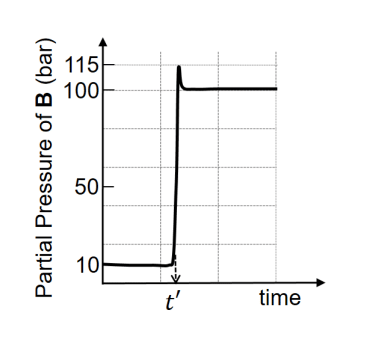
Use and overall dissociation constant of
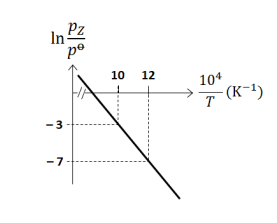
(Given, , where the equilibrium constant, and the gas constant, )
The value of standard enthalpy, (in ) for the given reaction is ______
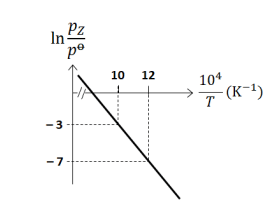
(Given, , where the equilibrium constant, and the gas constant, )
The value of (in ) for the given reaction, at is ______
(Given, , where the equilibrium constant, and the gas constant, )
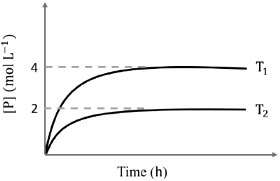
If T1 = 2T2 and (∆G2Θ − ∆G1Θ) = RT2 ln x, then the value of x is ___ . [∆G1Θ and ∆G2Θ are standard Gibb’s free energy change for the reaction at temperatures T1 and T2, respectively.]
If T1 = 2T2 and (∆G2Θ − ∆G1Θ) = RT2 ln x, then the value of x is ___ .
[∆G1Θ and ∆G2Θ are standard Gibb’s free energy change for the reaction at temperatures T1 and T2, respectively.]
Use: Solubility product constant of barium iodate =
The solubility of barium iodate in an aqueous solution prepared by mixing 200 mL of 0.010 M barium nitrate with 100 mL of 0.10 M sodium iodate is . The value of is ------.
Use: Solubility product constant of barium iodate =
About Law Of Chemical Equilibrium And Equilibrium Constant - JEE-ADVANCED
Law Of Chemical Equilibrium And Equilibrium Constant is a vital chapter for JEE-ADVANCED aspirants. Mastering the concepts covered in this chapter is essential for securing a top rank.
By rigorously practicing the previous year questions associated with this chapter, you can identify high-yield topics, understand the examiner's perspective, and boost your confidence during the actual exam.
Frequently Asked Questions
Why focus on Law Of Chemical Equilibrium And Equilibrium Constant PYQs?
Analyzing PYQs for this specific chapter reveals the most frequently tested concepts and the typical complexity of questions, allowing you to tailor your study plan efficiently.
How to best use this analysis?
Review the topic breakdown to see which sub-topics within Law Of Chemical Equilibrium And Equilibrium Constant carry the most weight. Then, tackle the questions iteratively to solidify your understanding.