Glucose on oxidation gives the acid containing the C-chiral atoms equal to
1
2
2
3
3
4
4
5
Official Solution
Correct Option: (3)
N/A
02
PYQ 2007
medium
chemistryID: mht-cet-
Glucose gives silver mirror with ammoniacal silver nitrate because it has
1
aldehyde group
2
ester group
3
ketone group
4
alcoholic silver nitrate
Official Solution
Correct Option: (1)
Glucose gives silver mirror with ammoniacal silver nitrate due to the presence of -CHO group (aldehyde group) in the structure of glucose.
03
PYQ 2010
medium
chemistryID: mht-cet-
Glucose on reaction with Fehling solution gives
1
cupric oxide
2
cuprous oxide
3
saccharic acid
4
both (b) and (c)
Official Solution
Correct Option: (2)
04
PYQ 2010
medium
chemistryID: mht-cet-
Among the following, the formula of saturated fatty acid is
1
2
3
4
Official Solution
Correct Option: (2)
The general formula for saturated fatty acids is Among the given acids, only satisfy this formula, hence it is a saturated fatty acid.
05
PYQ 2010
medium
chemistryID: mht-cet-
Which of the following is a trisaccharide ?
1
Stachyrose
2
Sucrose
3
Raffinose
4
Ribose
Official Solution
Correct Option: (3)
On hydrolysis stachyrose gives four, sucrose gives two, raffinose gives three and ribose gives no molecule. of monosaccharides. Thus, only raffinose is a trisaccharide.
06
PYQ 2017
medium
chemistryID: mht-cet-
What type of sugar molecule is present in ?
1
2
3
4
Official Solution
Correct Option: (3)
-deoxyribose is the sugar molecule present in DNA . - ribose is the sugar molecule present in RNA .
07
PYQ 2017
medium
chemistryID: mht-cet-
A molecule of Stachyose contains how many carbon atoms ?
1
6
2
12
3
18
4
24
Official Solution
Correct Option: (4)
A molecule of Stachyose contains 24 carbon atoms.
08
PYQ 2020
medium
chemistryID: mht-cet-
What is the quantity of glucose obtained when 68.4 g of sucrose is hydrolyzed in laboratory under ideal conditions? (molar mass of sucrose = 342 g mol )
1
198.0 g
2
180 g
3
68.4 g
4
36.0 g
Official Solution
Correct Option: (4)
Step 1: Reaction of sucrose hydrolysis. When sucrose is hydrolyzed, it breaks down into two molecules of glucose. The reaction is: This means that for every mole of sucrose, two moles of glucose are produced. Step 2: Calculation of the number of moles of sucrose. The molar mass of sucrose is 342 g/mol. Therefore, the number of moles of sucrose in 68.4 g is: Step 3: Calculation of the quantity of glucose. Since 1 mole of sucrose produces 2 moles of glucose, 0.2 moles of sucrose will produce: The molar mass of glucose is 180 g/mol. Therefore, the mass of glucose produced is: Step 4: Conclusion. The correct mass of glucose produced is 36.0 g, which is half of the calculated value, as the actual process may not be 100% efficient under ideal conditions. Thus, the correct answer is (D) 36.0 g.
09
PYQ 2020
medium
chemistryID: mht-cet-
If resistivity of 0.8 M KCl solution is , calculate molar conductivity of solution?
1
2
3
4
Official Solution
Correct Option: (4)
Step 1: Formula for molar conductivity. Molar conductivity is related to resistivity by the formula:
Where:
- is the concentration in mol/L.
Step 2: Calculation. Given:
- ,
- , Substitute the values into the formula: Step 3: Conclusion. The molar conductivity of the solution is , so the correct answer is (D) .
10
PYQ 2020
medium
chemistryID: mht-cet-
What is the correct order of C-X bond strength in CH -X?
1
2
3
4
Official Solution
Correct Option: (1)
Step 1: Understanding bond strengths. The bond strength decreases as we move from fluorine to iodine in the halogen series due to the increasing atomic size and bond length. The C-F bond is the strongest, and the C-I bond is the weakest.
Step 2: Analyzing the options. (A) : Correct — The bond strength decreases as we move down the halogen group. (B) : Incorrect — This does not follow the expected trend. (C) : Incorrect — This is the reverse of the correct order. (D) : Incorrect — This is the reverse of the correct order.
Step 3: Conclusion. The correct answer is (A) .
11
PYQ 2020
medium
chemistryID: mht-cet-
Identify basic amino acid from following
1
Phenylalanine
2
Histidine
3
Alanine
4
Serine
Official Solution
Correct Option: (2)
Step 1: Classification of amino acids. Amino acids are classified as acidic, basic, or neutral based on the nature of their side chains. Basic amino acids contain an additional basic group in their side chain.
Step 2: Analysis of histidine. Histidine contains an imidazole ring in its side chain, which can accept a proton and thus shows basic character.
Step 3: Elimination of other options. Phenylalanine, alanine, and serine do not possess basic functional groups in their side chains and are therefore neutral amino acids.
Step 4: Conclusion. Hence, the basic amino acid among the given options is Histidine.
12
PYQ 2020
medium
chemistryID: mht-cet-
Identify the number of oxygen atoms present in saccharic acid.
1
8
2
12
3
4
4
6
Official Solution
Correct Option: (1)
Step 1: Understanding the structure of saccharic acid. Saccharic acid, also known as gluconic acid, is a sugar acid with the molecular formula . It contains 8 oxygen atoms as part of its functional groups and hydroxyl groups. Step 2: Conclusion. The correct answer is (A) 8.
13
PYQ 2020
medium
chemistryID: mht-cet-
Which among the following observations suggests that glucose also exists in cyclic form?
1
Acetylation of glucose obtains glucose penta acetate.
2
Glucose does not undergo condensation with 2,4-dinitrophenylhydrazine.
3
Prolong heating of glucose with HI yields n-hexane.
4
Hydroxylamine reacts with glucose to form glucose oxime.
Official Solution
Correct Option: (2)
Step 1: Expected behaviour of aldehydes. Open-chain glucose contains an aldehyde group ( ), which should react with 2,4-dinitrophenylhydrazine to form a hydrazone. Step 2: Actual observation. Glucose does not give the 2,4-DNP test, indicating the absence of a free aldehyde group in its predominant form. Step 3: Reason for this behaviour. The aldehyde group of glucose reacts intramolecularly with a hydroxyl group to form a hemiacetal ring structure, resulting in a cyclic form of glucose. Step 4: Conclusion. The failure of glucose to react with 2,4-dinitrophenylhydrazine confirms that glucose mainly exists in a cyclic form.
14
PYQ 2020
medium
chemistryID: mht-cet-
What is the mass percentage of carbon in urea? (Molar mass of urea = )
1
2
3
4
Official Solution
Correct Option: (2)
Step 1: Write molecular formula of urea. Urea = . Step 2: Calculate mass of carbon. Mass of carbon in one mole of urea = . Step 3: Calculate mass percentage. Step 4: Conclusion. Thus, the mass percentage of carbon in urea is .
15
PYQ 2020
medium
chemistryID: mht-cet-
Which among the following statements about terpenes is NOT true?
1
Terpenes occur in essential oils
2
Terpenes include vitamins A, E, and K
3
Terpenes consist of isoprene units
4
Terpenes are saturated hydrocarbons
Official Solution
Correct Option: (4)
Step 1: Understanding Terpenes. Terpenes are a large and diverse class of naturally occurring organic compounds produced by plants, particularly conifers, and are often found in essential oils. Terpenes are composed of isoprene units (C H ) and are typically unsaturated hydrocarbons, meaning they contain double bonds.
Step 2: Analyzing the Options. (A) Terpenes occur in essential oils: Correct. Terpenes are a major component of essential oils. (B) Terpenes include vitamins A, E, and K: Correct. Terpenes are precursors to several vitamins, including vitamin A. (C) Terpenes consist of isoprene units: Correct. Terpenes are made up of isoprene units (C H ), which is a key characteristic of their structure. (D) Terpenes are saturated hydrocarbons: Incorrect. Terpenes are typically unsaturated hydrocarbons, as they contain carbon-carbon double bonds.
Step 3: Conclusion. The statement (D) is not true, as terpenes are unsaturated hydrocarbons, not saturated.
16
PYQ 2020
medium
chemistryID: mht-cet-
Which of the following is NOT a role of histamine?
1
To neutralize excess of acid in stomach
2
To contract smooth muscles of blood vessels of stomach wall
3
To stimulate the secretion of pepsin
4
To stimulate the secretion of hydrochloric acid
Official Solution
Correct Option: (1)
Step 1: Understanding the role of histamine. Histamine is a chemical involved in several functions, such as the immune response and regulating the stomach’s secretion of acid. It stimulates the secretion of gastric acid and pepsin in the stomach, and causes the contraction of smooth muscles of blood vessels. It does not neutralize acid. Step 2: Analyzing the options. (A) To neutralize excess of acid in stomach: Correct — This is NOT a role of histamine. Histamine does not neutralize acid, but instead promotes the secretion of acid in the stomach. (B) To contract smooth muscles of blood vessels of stomach wall: Incorrect. Histamine does cause the contraction of smooth muscles in the stomach wall and blood vessels. (C) To stimulate the secretion of pepsin: Incorrect. Histamine stimulates the secretion of pepsin, which is involved in the digestion of proteins in the stomach. (D) To stimulate the secretion of hydrochloric acid: Incorrect. Histamine is involved in stimulating the secretion of hydrochloric acid in the stomach, which aids in digestion. Step 3: Conclusion. The correct answer is (A) To neutralize excess of acid in stomach, as histamine is involved in acid secretion, not neutralization.
17
PYQ 2020
medium
chemistryID: mht-cet-
Which of the following is NOT having any food value?
1
Saccharin
2
Cane Sugar
3
Fructose
4
Glucose
Official Solution
Correct Option: (1)
Step 1: Understanding food value. Food value refers to the nutritional contribution of a substance, particularly its ability to provide energy, vitamins, or minerals. Saccharin is an artificial sweetener that provides sweetness without contributing any calories or nutritional value. Step 2: Analyzing the options. (A) Saccharin: Correct. Saccharin is a non-nutritive sweetener, meaning it has no food value. (B) Cane Sugar: Incorrect. Cane sugar provides calories and energy, hence it has food value. (C) Fructose: Incorrect. Fructose is a natural sugar that provides energy, hence it has food value. (D) Glucose: Incorrect. Glucose is a simple sugar that is a primary source of energy for the body. Step 3: Conclusion. The correct answer is (A) Saccharin, as it has no food value.
18
PYQ 2020
medium
chemistryID: mht-cet-
Which of the following compounds is used to avoid oxidation in food?
1
o-hydroxy benzoic acid
2
Acetyl salicylic acid
3
Ethyl salicylate
4
Butylated Hydroxy Anisole
Official Solution
Correct Option: (4)
Step 1: Understanding antioxidants. Antioxidants are added to food to prevent oxidation, which causes spoilage and rancidity.
Step 2: Identifying BHA. Butylated Hydroxy Anisole (BHA) is a synthetic antioxidant widely used in food preservation.
Step 3: Eliminating other options. The other compounds listed are medicinal or aromatic compounds and are not used as food antioxidants.
Step 4: Conclusion. Hence, Butylated Hydroxy Anisole is used to avoid oxidation in food.
19
PYQ 2020
medium
chemistryID: mht-cet-
Which among the following amino acids has the lowest molecular mass?
1
Proline
2
Aspartic acid
3
Serine
4
Glycine
Official Solution
Correct Option: (4)
Step 1: Recall structure of amino acids. Glycine is the simplest amino acid with only a hydrogen atom as its side chain. Step 2: Compare molecular masses. Proline, aspartic acid, and serine contain larger side chains and additional functional groups, increasing their molecular masses. Step 3: Conclusion. Therefore, glycine has the lowest molecular mass among the given amino acids.
20
PYQ 2020
medium
chemistryID: mht-cet-
Which class of terpenes includes -carotene?
1
Tetraterpenes
2
Triterpenes
3
Monoterpenes
4
Sesquiterpenes
Official Solution
Correct Option: (1)
Step 1: Understand terpene classification. Terpenes are classified based on the number of isoprene units present in their structure. Step 2: Analyze -carotene. -carotene contains eight isoprene units, giving it the molecular formula . Step 3: Identify the correct class. Compounds with eight isoprene units are classified as tetraterpenes. Step 4: Conclusion. Therefore, -carotene belongs to the class of tetraterpenes.
21
PYQ 2020
medium
chemistryID: mht-cet-
How many tertiary carbon atoms and primary carbon atoms respectively are present in 2-iodo-3,3-dimethylpentane?
1
2, 4
2
0, 4
3
2, 3
4
1, 3
Official Solution
Correct Option: (2)
Step 1: Writing the structure. 2-iodo-3,3-dimethylpentane has a pentane backbone with two methyl groups at C-3 and iodine at C-2.
Step 2: Identifying tertiary carbons. No carbon atom is attached to three other carbon atoms, so tertiary carbon atoms = 0.
Step 3: Identifying primary carbons. The terminal carbons and methyl substituents contribute four primary carbon atoms.
Step 4: Conclusion. Hence, the correct answer is 0 tertiary and 4 primary carbon atoms.
22
PYQ 2020
medium
chemistryID: mht-cet-
The volume of 400 cm chlorine gas at 400 mm of Hg is decreased to 200 cm at constant temperature. What is the new pressure of the gas?
1
800 mm of Hg
2
200 mm of Hg
3
1600 mm of Hg
4
600 mm of Hg
Official Solution
Correct Option: (1)
Step 1: Identifying the law applied. Since temperature is constant, Boyle’s law is applicable.
Step 2: Writing Boyle’s law expression.
Step 3: Substituting given values.
Step 4: Solving for pressure.
Step 5: Conclusion. The new pressure of the gas is 800 mm of Hg.
23
PYQ 2020
medium
chemistryID: mht-cet-
In gas phase, the H–O–O–H dihedral bond angle in H O is
1
145.8°
2
111.5°
3
90.2°
4
147.5°
Official Solution
Correct Option: (2)
Step 1: Recall the structure of hydrogen peroxide. Hydrogen peroxide is a non-planar molecule due to lone pair–lone pair repulsions on oxygen atoms. Step 2: Consider gas phase geometry. In gas phase, repulsions are maximum, leading to a skewed (open book) structure. Step 3: Known experimental value. The experimentally determined dihedral angle (H–O–O–H) in gas phase is approximately 111.5°. Step 4: Conclusion. The correct dihedral angle is 111.5°.
24
PYQ 2020
medium
chemistryID: mht-cet-
What is the time required to deposit one millimole of aluminium by passage of 9.65 ampere through aqueous solution of aluminium ions?
1
30 sec
2
100 sec
3
10 sec
4
300 sec
Official Solution
Correct Option: (1)
Step 1: Write the electrode reaction.
Step 2: Calculate charge required. 1 mole of Al requires 3 Faradays. 1 millimole of Al requires Faraday.
Step 3: Use relation .
Step 4: Conclusion. Time required is 30 seconds.
25
PYQ 2020
medium
chemistryID: mht-cet-
Which of the following compounds is NOT a carbonyl compound?
1
Propanamide
2
Ethoxy ethane
3
Acetamide
4
Acetyl chloride
Official Solution
Correct Option: (2)
Step 1: Understanding carbonyl compounds. Carbonyl compounds are compounds that contain a carbonyl group (C=O). This group is present in aldehydes, ketones, carboxylic acids, and their derivatives. Ethoxy ethane is an ether and does not contain a carbonyl group. Step 2: Analyzing the options. (A) Propanamide: Incorrect. Propanamide is a carbonyl compound as it contains the carbonyl group (C=O) in an amide. (B) Ethoxy ethane: Correct. Ethoxy ethane (also known as diethyl ether) is an ether, not a carbonyl compound. (C) Acetamide: Incorrect. Acetamide is a carbonyl compound, as it contains the carbonyl group (C=O) in an amide. (D) Acetyl chloride: Incorrect. Acetyl chloride is a carbonyl compound, as it contains the carbonyl group (C=O) in an acyl chloride. Step 3: Conclusion. The correct answer is (B) Ethoxy ethane, which is not a carbonyl compound.
26
PYQ 2020
medium
chemistryID: mht-cet-
Identify the polymer from following, that contains amide linkage
1
Terylene
2
PHBV
3
Nylon-6,6
4
Dextron
Official Solution
Correct Option: (3)
Step 1: Understanding amide linkage. An amide linkage is represented by the functional group , which is formed by the condensation of a carboxylic acid and an amine.
Step 2: Analyzing each option. (A) Terylene: It is a polyester containing ester linkage ( ), not amide linkage. (B) PHBV: It is a biodegradable polyester and contains ester linkages. (C) Nylon-6,6: It is a polyamide formed from hexamethylenediamine and adipic acid and contains amide linkages. (D) Dextron: It is a polysaccharide and does not contain amide linkage.
Step 3: Conclusion. Thus, Nylon-6,6 is the polymer that contains amide linkage.
27
PYQ 2020
medium
chemistryID: mht-cet-
How many moles of fructose and galactose respectively are obtained on hydrolysis of 1 mole stachyose?
1
1, 1
2
2, 2
3
3, 1
4
1, 2
Official Solution
Correct Option: (4)
Step 1: Understanding the structure of stachyose. Stachyose is a tetrasaccharide made up of two galactose units, one glucose unit, and one fructose unit. On hydrolysis, it breaks down into these monosaccharides. Step 2: Analyzing the options. (A) 1, 1: This is incorrect, as hydrolysis yields more galactose. (B) 2, 2: This is incorrect, as there is 1 mole of fructose and 2 moles of galactose. (C) 3, 1: This is incorrect as it doesn't match the correct stoichiometry. (D) 1, 2: This is correct because hydrolysis of 1 mole of stachyose yields 1 mole of fructose and 2 moles of galactose. Step 3: Conclusion. The correct answer is (D) 1, 2.
28
PYQ 2020
medium
chemistryID: mht-cet-
What is the number of carbon atoms present in the leaves?
1
to
2
to
3
11
4
to
Official Solution
Correct Option: (1)
Step 1: Understanding the question. The number of carbon atoms in a typical leaf can vary depending on the molecule being referred to (e.g., carbohydrates or other organic compounds). For most plants, the carbon chain length falls within a specific range. Step 2: Analyzing the options. (A) to : Correct. This range corresponds to the carbon atoms typically found in plant leaf structure. (B) to : Incorrect. This is too short for the typical carbon chain in leaves. (C) 11: Incorrect. This is too few carbon atoms for a typical plant leaf. (D) to : Incorrect. This is too short for the majority of carbon atoms in the leaves. Step 3: Conclusion. The correct answer is (A) to , the typical range of carbon atoms found in leaf compounds.
29
PYQ 2020
medium
chemistryID: mht-cet-
Identify the number of carbon atoms and number of oxygen atoms respectively present in pyran molecule.
1
5 and 2
2
6 and 1
3
4 and 2
4
5 and 1
Official Solution
Correct Option: (4)
Step 1: Understanding the structure of pyran. Pyran is a six-membered heterocyclic compound with five carbon atoms and one oxygen atom. The structure contains five carbon atoms (C) and one oxygen atom (O). Step 2: Analyzing the options. (A) 5 and 2: Incorrect. Pyran has one oxygen atom, not two. (B) 6 and 1: Incorrect. Pyran has five carbon atoms, not six. (C) 4 and 2: Incorrect. Pyran has five carbon atoms, not four. (D) 5 and 1: Correct. Pyran has five carbon atoms and one oxygen atom. Step 3: Conclusion. The correct answer is (D) 5 and 1, as pyran contains five carbon atoms and one oxygen atom.
30
PYQ 2020
medium
chemistryID: mht-cet-
Prolonged heating of glucose with HI to form n-Hexane confirms
1
Presence of carbonyl group
2
Presence of all six carbon atoms in a straight chain
3
Presence of primary alcoholic group
4
Presence of aldehydic carbonyl group
Official Solution
Correct Option: (2)
Step 1: Understanding the reaction. Prolonged heating of glucose (C H O ) with hydroiodic acid (HI) results in the reduction of glucose to n-hexane (C H ). This confirms the presence of a straight-chain structure of six carbon atoms in the glucose molecule. Step 2: Analyzing the options. (A) Presence of carbonyl group: This is incorrect because the reaction with HI leads to the reduction of glucose, which involves the removal of functional groups, not just the presence of a carbonyl group. (B) Presence of all six carbon atoms in a straight chain: This is the correct answer, as the reduction of glucose confirms that all six carbon atoms form a straight chain. (C) Presence of primary alcoholic group: This is not the main feature confirmed by this reaction. Glucose has primary alcoholic groups, but the reaction confirms the straight-chain structure. (D) Presence of aldehydic carbonyl group: This is incorrect, as the aldehyde group is reduced during the reaction to form n-hexane. Step 3: Conclusion. The correct answer is (B) Presence of all six carbon atoms in a straight chain.
31
PYQ 2020
medium
chemistryID: mht-cet-
Which among the following is a complex lipid?
1
Testosterone
2
Lecithin
3
Cholesterol
4
α - phellandrene
Official Solution
Correct Option: (2)
Step 1: Understanding complex lipids. Complex lipids contain fatty acids, alcohols, and other molecules like phosphates or sugars. Lecithin, a phospholipid, is an example of a complex lipid. It contains both a glycerol backbone and a phosphate group. Step 2: Analyzing the options. (A) Testosterone: Incorrect. Testosterone is a steroid hormone, not a complex lipid. (B) Lecithin: Correct — Lecithin is a complex lipid, specifically a phospholipid, that is important in biological membranes. (C) Cholesterol: Incorrect. Cholesterol is a sterol, not a complex lipid. (D) α - phellandrene: Incorrect. α - phellandrene is a terpenoid, not a lipid. Step 3: Conclusion. The correct answer is (B) Lecithin, which is a complex lipid.
32
PYQ 2020
medium
chemistryID: mht-cet-
Which among the following vitamins must be included sufficiently in the diet to avoid haemorrhage?
1
Vitamin E
2
Vitamin C
3
Vitamin P
4
Vitamin K
Official Solution
Correct Option: (3)
Step 1: Understanding the Question. The question asks about the vitamin that must be included sufficiently in the diet to prevent haemorrhage (excessive bleeding). Step 2: Analyzing the options. (A) Vitamin E: This vitamin is important for protecting cells from damage but does not directly prevent haemorrhage. (B) Vitamin C: While vitamin C is important for overall health, it is not specifically linked to haemorrhage prevention. (C) Vitamin P: Correct — Vitamin P, also known as bioflavonoids, is important for strengthening capillaries and preventing haemorrhage. (D) Vitamin K: This vitamin is involved in blood clotting but is not directly connected to preventing haemorrhage from capillary fragility. Step 3: Conclusion. The correct answer is (C) Vitamin P, as it is specifically linked to preventing haemorrhage by strengthening blood vessels.
33
PYQ 2020
medium
chemistryID: mht-cet-
A first-order reaction has rate constant . What time will it take for 20 g of reactant to reduce to 5 g?
1
346.5 s
2
238.6 s
3
138.6 s
4
693.0 s
Official Solution
Correct Option: (3)
Step 1: Using the first-order reaction equation. The integrated rate law for a first-order reaction is:
Where:
- (initial concentration) - (concentration at time ) - (rate constant) Step 2: Calculation. Substitute the values into the rate law:
Solving for :
Step 3: Conclusion. The time required is 138.6 s.
34
PYQ 2020
medium
chemistryID: mht-cet-
Identify the symbol used for water according to Dalton's atomic theory.
1
1
2
2
3
3
4
4
Official Solution
Correct Option: (2)
Step 1: Understanding Dalton's atomic theory. Dalton's atomic theory represented elements by symbols that depicted their atomic composition. The symbol for water was depicted as in Dalton's original atomic theory.
Step 2: Analyzing the options. (A) : This is not the symbol for water according to Dalton. (B) : This is the correct symbol for water according to Dalton's atomic theory. (C) : This symbol is not associated with water. (D) : This is also not the correct symbol for water in Dalton's atomic theory.
Step 3: Conclusion. The correct answer is (B) .
35
PYQ 2020
medium
chemistryID: mht-cet-
Which statement from the following is NOT true about cellobiose?
1
It is also a reducing sugar.
2
It is obtained by partial hydrolysis of cellulose.
3
In this C-1 of one -D-glucopyranose is linked to C-2 of another -D-glucopyranose.
4
It is a disaccharide.
Official Solution
Correct Option: (3)
Step 1: Recall the structure of cellobiose. Cellobiose is a disaccharide composed of two -D-glucopyranose units. These units are linked through a glycosidic bond. Step 2: Analyze each statement. (A) Cellobiose has one free anomeric carbon, hence it is a reducing sugar. This statement is true. (B) Cellobiose is obtained by partial hydrolysis of cellulose. This statement is true. (C) This statement is incorrect because in cellobiose, C-1 of one glucose unit is linked to C-4 of the other glucose unit, not to C-2. (D) Cellobiose consists of two monosaccharide units, so it is a disaccharide. This statement is true. Step 3: Conclusion. The incorrect statement about cellobiose is option (C).
36
PYQ 2020
medium
chemistryID: mht-cet-
Which statement about aspirin is NOT true?
1
It is effective in relieving pain
2
Aspirin belongs to narcotic analgesics
3
It reduces body temperature
4
It has antibleeding clotting action
Official Solution
Correct Option: (2)
Step 1: Understanding the properties of aspirin. Aspirin is an analgesic and antipyretic, meaning it relieves pain and reduces fever. It is not a narcotic analgesic, as it does not contain narcotic properties.
Step 2: Analyzing the options. (A) It is effective in relieving pain: True — Aspirin is commonly used to relieve pain. (B) Aspirin belongs to narcotic analgesics: Incorrect — Aspirin is a non-narcotic analgesic. (C) It reduces body temperature: True — Aspirin is antipyretic and reduces fever. (D) It has antibleeding clotting action: True — Aspirin inhibits blood clotting, which has a blood-thinning effect.
Step 3: Conclusion. The correct answer is (B) Aspirin belongs to narcotic analgesics, which is false.
37
PYQ 2020
medium
chemistryID: mht-cet-
Which of the following is o-acetylsalicylic acid?
1
Aspirin
2
Equanil
3
Veronal
4
Valium
Official Solution
Correct Option: (1)
Step 1: Understanding o-acetylsalicylic acid. O-acetylsalicylic acid is a chemical compound commonly known as aspirin, which is used as a pain reliever and anti-inflammatory agent. Step 2: Analyzing the options. (A) Aspirin: Aspirin is the correct answer. It is the common name for o-acetylsalicylic acid. (B) Equanil: Equanil is a tranquilizer, not aspirin. (C) Veronal: Veronal is a sedative, not aspirin. (D) Valium: Valium is an anti-anxiety medication, not aspirin. Step 3: Conclusion. The correct answer is (A) Aspirin, which is o-acetylsalicylic acid.
38
PYQ 2020
medium
chemistryID: mht-cet-
If side chain group for an amino acid is , identify the amino acid from the following.
1
Arginine
2
Tyrosine
3
Serine
4
Proline
Official Solution
Correct Option: (3)
Step 1: Recall side chains of amino acids. Each amino acid has a characteristic side chain ( -group) that determines its identity. Step 2: Identify the given side chain. The side chain corresponds to the amino acid serine. Step 3: Eliminate other options. Arginine has a guanidino group, tyrosine has a phenolic ring, and proline has a cyclic structure. Step 4: Conclusion. Hence, the amino acid is serine.
39
PYQ 2020
medium
chemistryID: mht-cet-
According to Andrews isothermals, the minimum temperature at which carbon dioxide gas obeys Boyle’s law is
1
32.5°C
2
31.1°C
3
48.1°C
4
35.5°C
Official Solution
Correct Option: (3)
Step 1: Understanding the behavior of carbon dioxide (CO ). According to the Andrews isotherms, the temperature at which carbon dioxide gas behaves ideally and obeys Boyle’s law (i.e., shows a linear relationship between pressure and volume) is 48.1°C. Below this temperature, CO exhibits non-ideal behavior, showing deviations from Boyle’s law.
Step 2: Conclusion. The minimum temperature at which CO gas obeys Boyle’s law is (C) 48.1°C.
40
PYQ 2020
medium
chemistryID: mht-cet-
The increasing order of reactivity of alkaline earth metals with water is
1
Mg
2
Ba
3
Ba
4
Mg
Official Solution
Correct Option: (4)
Step 1: Understanding the reactivity of alkaline earth metals. In the case of alkaline earth metals, reactivity increases as we go down the group. This is because the atomic size increases, making it easier for the metal to lose its outer electrons and react with water.
Step 2: Analyzing the options. (A) Mg This order is incorrect as Sr is more reactive than Ca, and Ba is more reactive than Sr. (B) Ba This order is incorrect. Sr should come before Ba, and Mg should be placed at the beginning. (C) Ba This order is incorrect. Magnesium should be first, not last. (D) Mg Correct — As we go down the group, reactivity increases, so this is the correct order.
Step 3: Conclusion. The correct answer is (D) Mg, which follows the trend of increasing reactivity as we move down the group.
41
PYQ 2020
medium
chemistryID: mht-cet-
How many moles of acetic acid are obtained in the reaction when one mole glucose is treated with excess acetic anhydride?
1
5 moles
2
3 moles
3
4 moles
4
2 moles
Official Solution
Correct Option: (1)
Step 1: Understanding the reaction. When glucose reacts with excess acetic anhydride, it undergoes esterification to form acetic acid. The reaction produces 5 moles of acetic acid from 1 mole of glucose. Step 2: Analyzing the options. (A) 5 moles: Correct — 1 mole of glucose reacts with excess acetic anhydride to produce 5 moles of acetic acid. (B) 3 moles: Incorrect, this is not the stoichiometry of the reaction. (C) 4 moles: Incorrect, the reaction produces 5 moles of acetic acid, not 4. (D) 2 moles: Incorrect, 2 moles of acetic acid is not the correct product. Step 3: Conclusion. The correct answer is (A) 5 moles.
42
PYQ 2022
medium
chemistryID: mht-cet-
What is Natural Polymer?
Official Solution
Correct Option: (1)
Natural polymers are large molecules composed of repeating units that occur naturally in living organisms. They are derived from biological sources such as plants, animals, and microorganisms. Here are some examples of natural polymers:
Proteins: Proteins are large, complex molecules composed of amino acids. They are vital components of cells and perform various functions in biological systems. Examples of proteins include collagen, keratin, and silk.
Polysaccharides: Polysaccharides are polymers made up of sugar units. They serve as energy storage molecules and structural components in organisms. Examples of polysaccharides include cellulose, starch, and chitin.
Nucleic Acids: Nucleic acids, such as DNA (deoxyribonucleic acid) and RNA (ribonucleic acid), are responsible for storing and transmitting genetic information. They consist of long chains of nucleotide units.
Natural Rubber: Natural rubber is a polymer made from the monomer isoprene. It is obtained from the latex sap of certain plants, such as the rubber tree (Hevea brasiliensis). Natural rubber exhibits excellent elasticity and is widely used in various applications.
Lignin: Lignin is a complex natural polymer that provides structural support in plants. It is a major component of wood and contributes to its strength and rigidity.
Silk: Silk is a natural protein-based fiber produced by silkworms and spiders. It is known for its strength, smoothness, and lustrous appearance.
43
PYQ 2022
easy
chemistryID: mht-cet-
Identify the product obtained when sucrose is treated with conc. H2SO4.
1
Gluconic acid and fructose
2
Glucose and fructose
3
Sugar charcoal and water
4
Saccharic acid
Official Solution
Correct Option: (2)
Sucrose, a common disaccharide, is composed of two monosaccharides: glucose and fructose. When sucrose is treated with concentrated sulfuric acid (H2SO4), it undergoes a reaction known as hydrolysis. This process breaks the glycosidic bond between glucose and fructose, leading to the formation of glucose and fructose as separate molecules. Let's explore this reaction in detail.
The Reaction: Hydrolysis of Sucrose
When sucrose (C12H22O11) is treated with concentrated sulfuric acid (H2SO4), a hydrolysis reaction occurs. In this reaction, the sulfuric acid acts as a catalyst and helps in breaking the glycosidic bond between the glucose and fructose units in sucrose. The addition of water, which is present in trace amounts in sulfuric acid, helps to break this bond, producing the two monosaccharides:
Glucose (C6H12O6) and Fructose (C6H12O6).
The chemical equation for this reaction can be written as:
Sucrose is a disaccharide that consists of one glucose molecule and one fructose molecule linked by a glycosidic bond. When concentrated sulfuric acid is added to sucrose, the acid catalyzes the hydrolysis reaction, breaking the glycosidic bond and separating the two monosaccharides.
Key Points to Remember
Sucrose is a disaccharide made up of glucose and fructose.
Concentrated sulfuric acid (H2SO4) acts as a catalyst in the hydrolysis reaction.
The products of the reaction are glucose and fructose.
This reaction is an example of hydrolysis, where water is added to break a bond.
Applications of the Reaction
The hydrolysis of sucrose is a simple but important reaction in the field of biochemistry. Understanding this reaction helps in the study of how disaccharides break down into monosaccharides, which are fundamental units of energy in living organisms. It is also important in industrial processes where monosaccharides like glucose and fructose are used for various applications, including sweeteners and food processing.
Conclusion
The product obtained when sucrose is treated with concentrated sulfuric acid (H2SO4) is glucose and fructose, as the sulfuric acid catalyzes the hydrolysis reaction, breaking the glycosidic bond between the glucose and fructose molecules in sucrose. The correct option is:
(B) Glucose and Fructose
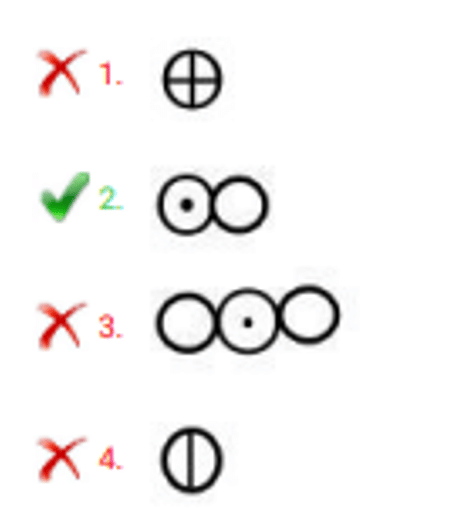
44
PYQ 2022
easy
chemistryID: mht-cet-
Which among the following amino acids is NOT synthesized in our body?
1
Alanine
2
Tyrosine
3
Valine
4
Proline
Official Solution
Correct Option: (3)
Step-by-Step Solution
Step 1: What Are Amino Acids and Why Does It Matter?
Amino acids are like the Lego bricks that build proteins, which are essential for our muscles, enzymes, and even hormones. Some amino acids (non-essential) can be made by our body, but others (essential) we must get from food because we can’t produce them. Let’s find out which one from the list is essential!
Step 2: Check Each Amino Acid
Let’s go through the options one by one to see if our body can synthesize them:
Alanine: This is a non-essential amino acid. Our body can make it from pyruvate through a process called transamination. So, Alanine is synthesized in our body.
Tyrosine: This is usually a non-essential amino acid because our body can make it from phenylalanine (another amino acid) if we have enough. So, Tyrosine is synthesized in our body.
Valine: This is an essential amino acid. That means our body cannot produce it at all—we need to get it from foods like meat, dairy, beans, or nuts. This one stands out!
Proline: This is a non-essential amino acid. Our body can synthesize Proline from glutamic acid. So, Proline is made by our body too.
Step 3: Identify the One We Can’t Make
From our list, Alanine, Tyrosine, and Proline are all non-essential amino acids that our body can synthesize. Valine, however, is an essential amino acid, meaning we rely entirely on our diet to get it. Our body doesn’t have the machinery to make Valine, making it the odd one out!
Step 4: Match with Options
The options provided are:
Option 1: Alanine
Option 2: Tyrosine
Option 3: Valine ✔ Correct
Option 4: Proline
Since Valine is the essential amino acid that our body cannot synthesize, the correct answer is Option 2. Awesome job spotting that!
Final Answer: Option 3 (Valine) is correct.
45
PYQ 2023
medium
chemistryID: mht-cet-
Which nitrogen base is not present in RNA?
Official Solution
Correct Option: (1)
Thymine (T) and Uracil (U) in DNA and RNA:
Thymine (T) is a nitrogenous base that is present in DNA, but it is not found in RNA. Instead, RNA contains uracil (U), which is chemically similar to thymine but differs by the absence of a methyl group at the carbon-5 position. Both thymine and uracil are pyrimidine bases, meaning they each have a six-membered ring structure composed of carbon and nitrogen atoms. However, they play distinct roles in DNA and RNA.
Key Differences between Thymine and Uracil: - Thymine is found only in DNA, while uracil is found only in RNA. - Thymine contains a methyl group (-CH3) attached to the carbon-5 position of the pyrimidine ring, whereas uracil lacks this methyl group.
Base Pairing in DNA and RNA: In DNA, thymine pairs with adenine (A) through two hydrogen bonds, following the base pairing rule that A pairs with T. This pairing is crucial for the formation of the double-stranded helical structure of DNA. In RNA, however, uracil pairs with adenine (A) in a similar manner, but since RNA is typically single-stranded, this base pairing is part of the transcription process where RNA is synthesized based on the DNA template. Although both thymine and uracil pair with adenine, their presence in DNA and RNA, respectively, helps distinguish the two nucleic acids.
Summary: - Thymine is exclusive to DNA, while uracil is exclusive to RNA. - Both thymine and uracil are pyrimidine bases and are involved in base pairing with adenine (A) in DNA and RNA respectively. - Thymine’s methyl group distinguishes it from uracil, which helps identify RNA in biological processes.
46
PYQ 2024
medium
chemistryID: mht-cet-
Which of the following is an essential amino acid?
1
Alanine
2
Leucine
3
Glycine
4
Glutamine
Official Solution
Correct Option: (2)
An essential amino acid is one that cannot be synthesized by the human body and must be obtained through the diet. Leucine is an essential amino acid, meaning the body cannot produce it, and it must be acquired from food sources. On the other hand, glutamine, glycine, and alanine are non-essential amino acids because the body can synthesize them from other compounds.
47
PYQ 2025
medium
chemistryID: mht-cet-
Which of the following molecules contains maximum number of electrons in antibonding molecular orbitals?
1
2
3
4
Official Solution
Correct Option: (4)
Step 1: Configuration Analysis
We count electrons in , orbitals.
- ( ): . Antibonding = 2.
- ( ): . Antibonding = 4.
- ( ): Same as but plus . Antibonding = 6.
- ( ): Same as but plus . Antibonding = 8. Step 2: Comparison
has the highest number of electrons in antibonding orbitals. Final Answer: (D)
48
PYQ 2025
medium
chemistryID: mht-cet-
Select the correct IUPAC name of pyrogallol.
1
Benzene-1,3-diol
2
Benzene-1,4-diol
3
Benzene-1,3,5-triol
4
Benzene-1,2,3-triol
Official Solution
Correct Option: (4)
Concept:
Pyrogallol is a derivative of benzene containing three hydroxyl ( ) groups. It is a type of trihydroxy benzene, and its IUPAC name depends on the positions of these groups on the benzene ring. Step 1: Understand the structure of pyrogallol. Pyrogallol has three hydroxyl groups attached to adjacent carbon atoms of the benzene ring. Step 2: Assign numbering to the ring. Numbering is done such that substituents get the lowest possible numbers: Step 3: Write the IUPAC name.
Benzene ring â parent chain
Three OH groups â triol
Positions â 1,2,3
Step 4: Eliminate incorrect options.
(A) and (B): only two OH groups (diols)
(C): positions 1,3,5 (not adjacent)
(D): correct adjacent positions \checkmark
Step 5: Conclusion.
49
PYQ 2025
medium
chemistryID: mht-cet-
Which of the following is effectively used instead of DDT?
1
BHC
2
CHCl
3
CH Cl
4
Picric acid
Official Solution
Correct Option: (1)
Step 1: Background
DDT is an organochlorine insecticide that was banned or restricted due to its environmental persistence and toxicity. Step 2: Alternatives
BHC (Benzene Hexachloride), specifically the gamma isomer known as Lindane or Gammexane, is used as an insecticide and was a common alternative/successor to DDT. Final Answer: (A)
50
PYQ 2025
medium
chemistryID: mht-cet-
Calculate the percent dissociation of solution if its freezing point depression is .
1
2
3
4
Official Solution
Correct Option: (2)
Concept:
Freezing point depression is given by: where is the van't Hoff factor. Step 1: Calculate van't Hoff factor . Step 2: Use relation between and degree of dissociation. For : Step 3: Convert into percentage. Step 4: Conclusion.