Body Fluids And Circulation
56 previous year questions.
High-Yield Trend
Chapter Questions 56 MCQs
Rh– female & Rh+ male
Rh+ female & Rh– male
Rh+ female & Rh+ male
Rh– female & Rh– male
Which of the following statement is true for Lymph
atria of heart
ventricles of heart
(a) They do not need to reproduce
(b) They are somatic cells
(c) They do not metabolize
(d) All their internal space is available for oxygen transport
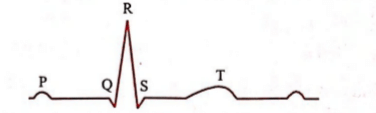
| COLUMN I | COLUMN II | ||
| a | P-wave | i | Depolarisation of ventricles |
| b | QRS complex | ii | Repolarisation of ventricles |
| c | T-wave | iii | Coronary ischemia |
| d | Reduction in the of size of T-wave | iv | Depolarisation of atria |
| v | Repolarisation of atria |
Absence of antibodies, anti-A and anti-B, in plasma
Absence of antigens A and B on the surface of RBCs
Absence of antigens A and B in plasma
Presence of antibodies, anti-A and anti-B, on RBCs
Thrombokinase
Thrombin
bin (3) R
Epinephrine
Match List I with List II.
List I | List II | ||
| A | P-wave | I | Beginning of systole |
| B | Q-wave | II | Repolarisation of ventricles |
| C | QRS complex | III | Depolarisation of atria |
| D | T-wave | IV | Depolarisation of ventricles |
Choose the correct answer from the options given below:
Given below are two statements:
Statement I: The coagulum is formed of a network of threads called thrombins.
Statement II: Spleen is the graveyard of erythrocytes.
In the light of the above statements, choose the most appropriate answer from the options given below:
List I | List II | ||
|---|---|---|---|
| A | P wave | I | Heart muscles are electrically silent. |
| B | QRS complex | II | Depolarisation of ventricles. |
| C | T wave | III | Depolarisation of atria. |
| D | T-P gap | IV | Repolarisation of ventricles. |
About Body Fluids And Circulation - NEET-UG
Body Fluids And Circulation is a vital chapter for NEET-UG aspirants. Mastering the concepts covered in this chapter is essential for securing a top rank.
By rigorously practicing the previous year questions associated with this chapter, you can identify high-yield topics, understand the examiner's perspective, and boost your confidence during the actual exam.
Frequently Asked Questions
Why focus on Body Fluids And Circulation PYQs?
Analyzing PYQs for this specific chapter reveals the most frequently tested concepts and the typical complexity of questions, allowing you to tailor your study plan efficiently.
How to best use this analysis?
Review the topic breakdown to see which sub-topics within Body Fluids And Circulation carry the most weight. Then, tackle the questions iteratively to solidify your understanding.