Electrostatic Potential
19 previous year questions.
High-Yield Trend
Chapter Questions 19 MCQs
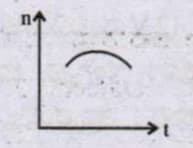
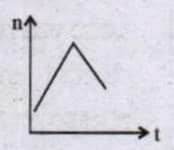
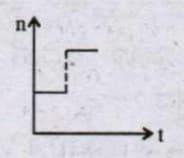
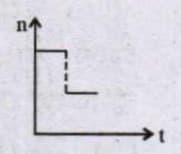
25 x 10-13 N
5 x 10-13 N
Four charges +q, +2q, +q and -2q are placed at the corner of square ABCD respectively. The force on unit positive charge kept at the centre 'O' is
A long solenoid has 500 turns, when a current of 2A is passed through it, the resulting flux linked with each turns of solenoid is 4 x 10⁻³ Wb, then the self induction of solenoid is
An alternating current is given by i = i1 sin ωt + i2 cos ωt. The r.m.s. current is given by
√ (i12 + i22)/ 2
(i1 + i2)/ √2
√ (i12 + i22)/ √2
(i1 - i2)/ √2
A circular coil of wire of radius 'r' has 'n' turns and carries a current ' I '. The magnetic induction 'B' at a point on the axis of the coil of distance √3 r from its center is
μ0nI/16 r
μ0nI/32 r
μ0nI/4r
μ0nI/8 r
Two tiny sphere carrying a charges 1.8 µC and 2.8 µC are located at 40 cm apart. The potential at the mid-point of the line joining the two charges is
4.3 x 10⁴ V
3.8 x 10⁴ V
3.6 x 10³ V
2.1 x 10⁵ V
An electric dipole with dipole moment 4 x 10⁻⁹ Cm is aligned at 30 degree with the direction of the uniform electric field of magnitude 5 x 10⁴ NC-1. The magnitude of the torque acting on the diapole is
10-5 Nm
10-4 Nm
10 x 10-3 Nm
√ 3 x 10⁻⁴ Nm
A tiny spherical oil drop carrying a net charge q is balanced in still air with a vertical uniform electrical field of strength x 105 V/m.When the field is switched off, the drop is observed to fall with terminal velocity 2 x 10⁻³ m/s. Here g = 9.8 m/s2, viscosity of air is 1.8 x 10⁻⁵ N/m2 and the density of the oil is 900 kg/m3. The magnitude of 'q' is
1.6 x 10⁻¹⁹ C
0.8 x 10⁻¹⁹ C
3.2 x 10⁻¹⁹ C
8 x 10-19 C
Which of the following radiations of electromagnetic waves has the highest wavelength ?
In a series LCR Circuit R = 300 Ω, L = 0.9 H, c = 2.0 µF and w = 1000 rad/sec. Then the impedance of the circuit is
You are given a dipole of charge and separated by a distance . A sphere 'A' of radius passes through the centre of the dipole as shown below and another sphere 'B' of radius passes through the charge . Then the electric flux through the sphere A is
About Electrostatic Potential - KCET
Electrostatic Potential is a vital chapter for KCET aspirants. Mastering the concepts covered in this chapter is essential for securing a top rank.
By rigorously practicing the previous year questions associated with this chapter, you can identify high-yield topics, understand the examiner's perspective, and boost your confidence during the actual exam.
Frequently Asked Questions
Why focus on Electrostatic Potential PYQs?
Analyzing PYQs for this specific chapter reveals the most frequently tested concepts and the typical complexity of questions, allowing you to tailor your study plan efficiently.
How to best use this analysis?
Review the topic breakdown to see which sub-topics within Electrostatic Potential carry the most weight. Then, tackle the questions iteratively to solidify your understanding.