KCET SERIES Physics
Rotational Motion
7 previous year questions.
Volume: 7 Ques
Yield: Medium
High-Yield Trend
2
2026 1
2025 1
2023 2
2021 1
2020 Chapter Questions 7 MCQs
01
PYQ 2020
hard
physics ID: kcet-202
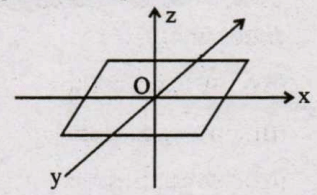
A thin uniform rectangular plate of mass 2 kg is placed in X-Y plane as shown in figure. The moment of inertial about x-axis is Ix = 0.2 kg m2 and the moment of inertia about y-axis is Iy = 0.3 kg m2. The radius of gyration of the plate about the axis passing through O and perpendicular to the plane of the plate is
1
50 cm
2
5 cm
3
38.7 cm
4
31.6 cm
02
PYQ 2021
medium
physics ID: kcet-202
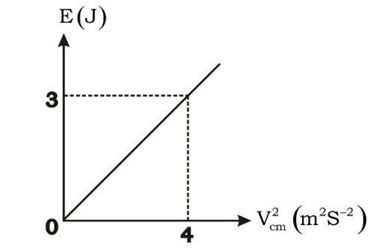
In figure E and Vcm represent the total energy and speed of centre of mass of an object of mass 1kg in pure rolling. The object is :
1
sphere
2
ring
3
disc
4
Hollow Cylinder
03
PYQ 2021
medium
physics ID: kcet-202
A coin placed on a rotating turn table just slips if it is placed at a distance of 4 cm from the centre. If the angular velocity of the turn table is doubled it will just slip at a distance of :
1
1 cm
2
2 cm
3
4 cm
4
8 cm
04
PYQ 2023
easy
physics ID: kcet-202
The moment of inertia of a rigid body about an axis
1
does not depend on its shape.
2
depends on the position of axis of rotation
3
does not depend on its size.
4
does not depend on its mass.
05
PYQ 2025
easy
physics ID: kcet-202
Three particles of mass 1 kg, 2 kg, and 3 kg are placed at the vertices A, B and C respectively of an equilateral triangle ABC of side 1 m. The centre of mass of the system from vertices A (located at origin) is
1
2
3
4
06
PYQ 2026
easy
physics ID: kcet-202
The angular momentum of a moving body remains constant, if
1
net external force is applied
2
net pressure is applied
3
net external torque is applied
4
net external torque is not applied
07
PYQ 2026
easy
physics ID: kcet-202
If the earth were to suddenly contract to half of its present radius, what would be the duration of the day?
1
6 h
2
18 h
3
24 h
4
30 h
About Rotational Motion - KCET
Rotational Motion is a vital chapter for KCET aspirants. Mastering the concepts covered in this chapter is essential for securing a top rank.
By rigorously practicing the previous year questions associated with this chapter, you can identify high-yield topics, understand the examiner's perspective, and boost your confidence during the actual exam.
Frequently Asked Questions
Why focus on Rotational Motion PYQs?
Analyzing PYQs for this specific chapter reveals the most frequently tested concepts and the typical complexity of questions, allowing you to tailor your study plan efficiently.
How to best use this analysis?
Review the topic breakdown to see which sub-topics within Rotational Motion carry the most weight. Then, tackle the questions iteratively to solidify your understanding.