NEET-UG SERIES
Chemistry

Aldehydes Ketones And Carboxylic Acids

47 previous year questions.

Volume: 47 Ques
Yield: High

High-Yield Trend

1
2023
3
2022
1
2021
1
2019
3
2018
2
2017
2
2012
1
2011
2
2010
2
2008
2
2007
4
2006
1
2005
4
2003
1
2002

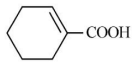
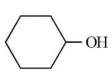
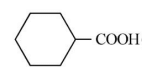
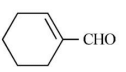
Chapter Questions
47 MCQs

01
PYQ 1980
medium
chemistry ID: neet-ug-
For the reversible reaction, the equilibrium shifts in forward direction
1
by increasing the concentration of
2
by decreasing the pressure
3
by decreasing the concentrations of and
4
by increasing pressure and decreasing temperature
02
PYQ 1990
medium
chemistry ID: neet-ug-
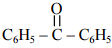
The reagents which can be used to distinguish acetophenone from benzophenone is (are)
1
2,4-dinitrophenyl hydrazine
2
aqueous solution of
3
Benedict reagent
4
and
03
PYQ 1992
easy
chemistry ID: neet-ug-
A is a lighter phenol and B is an aromatic carboxylic acid. Separation of a mixture of A and B can be carried out easily by using a solution of
1
sodium hydroxide
2
sodium sulphate
3
calcium chloride
4
sodium bicarbonate
04
PYQ 1993
medium
chemistry ID: neet-ug-
Among acetic acid, phenol and n-hexanol which one of the following compound will react with solution to give sodium salt and ?
1
Acetic acid
2
n-hexanol
3
Acetic acid and phenol
4
Phenol
05
PYQ 1994
medium
chemistry ID: neet-ug-
Schotten-Baumann reaction is a reaction of phenols with
1
benzoyl chloride and NaOH
2
acetyl chloride and NaOH
3
salicylic acid and cone.
4
acetyl chloride and cone.
06
PYQ 1994
medium
chemistry ID: neet-ug-
Benzaldehyde reacts w ith ethanolic KCN to give
1
2
3
4
07
PYQ 1994
medium
chemistry ID: neet-ug-
Aldehydes and ketones will not form crystalline derivatives with
1
sodium bisulphite
2
phenyl hydrazine
3
semicarbazide hydrochloride
4
dihydrogen sodium phosphate
08
PYQ 1994
medium
chemistry ID: neet-ug-
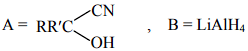
A compound has a molecular formula . It reduces Fehling's solution and on oxidation, gives a monocarboxylic acid . can be obtained by the action of chlorine on ethyl alcohol.
1
chloroform
2
chloral
3
methyl chloride
4
monochloro acetic acid
09
PYQ 1997
medium
chemistry ID: neet-ug-
Ketones [RCOR1] where alkyl group, can be obtained in one step by
1
hydrolysis of esters
2
oxidation of primary alcoho
3
oxidation of tertiary alcoho
4
reactioq of acid halide with alcohols
10
PYQ 1997
medium
chemistry ID: neet-ug-
1-phenyl ethanol can be prepared by the reaction of benzaldehyde with
1
methyl bromide
2
ethyl iodide and magnesium
3
methyl iodide and magnesium
4
methyl bromide and aluminium bromide
11
PYQ 1999
medium
chemistry ID: neet-ug-
Aldol condensation will not take place in
1
2
3
4
12
PYQ 2000
medium
chemistry ID: neet-ug-
Ethyl benzoate can be prepared from benzoic acid by using:
1
Ethyl alcohol
2
Ethyl alcohol and dry HCl
3

Ethyl chloride

4
Sodium ethoxide
13
PYQ 2000
medium
chemistry ID: neet-ug-
Benzoic acid may be converted into ethyl benzoate by reaction with
1
sodium ethoxide
2
ethyl chloride
3
dry HCI,
4
ethanol
14
PYQ 2000
medium
chemistry ID: neet-ug-

Reduction by of hydrolysed product of an ester gives:

1
Two alcohols
2
Two aldehyde
3
One acid and one alcohol
4
Two acids
15
PYQ 2000
medium
chemistry ID: neet-ug-

First product of the reaction between and :

1

2

3

4

16
PYQ 2001
medium
chemistry ID: neet-ug-
Which of the following is incorrect : -
1
is used in detection of phenol
2
Fehling solution is used in detection of glucose
3
Tollen reagent is used in detection of unsaturation
4
is used in detection of carbonyl compound
17
PYQ 2001
medium
chemistry ID: neet-ug-
Which of following give positive Fehling solution test
1
Sucrose
2
Glucose
3
Fats
4
Protein
18
PYQ 2002
medium
chemistry ID: neet-ug-
In the above reaction product 'P' is :
1

2

3

4

19
PYQ 2003
medium
chemistry ID: neet-ug-
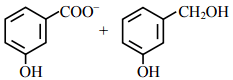
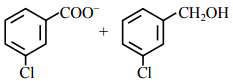
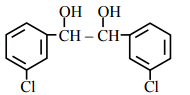
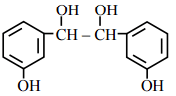
When m-chlorobenzaldehyde is treated with 50% KOH solution, the product(s) obtained is (are)
1

2

3

4

20
PYQ 2003
medium
chemistry ID: neet-ug-
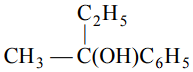
In a set of the given reactions, acetic acid yielded a product C.
CH3COOH+PCl5 A B ‘C’, product C would be
1

CH3CH(OH)C2H5

2

CH3COC6H5

3

CH3CH(OH)C6H5

4

21
PYQ 2003
medium
chemistry ID: neet-ug-
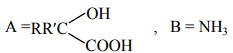
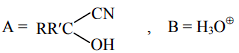
A and B in the following reactions are : 
HCN/KCN
1

2

3

4

22
PYQ 2003
easy
chemistry ID: neet-ug-
In this reaction, an asymmetric centre is generated. The acid obtained would be
1
50% D + 50% L-isomer
2
20% D + 80% L-isomer
3
D-isomer
4
L-isomer
23
PYQ 2005
medium
chemistry ID: neet-ug-
In a set of reactions, acetic acid yielded a product D.
CH3COOH A B C D
The structure of D would be:
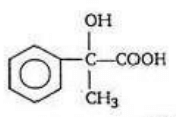
1

OH-C-COOH-CH3

2

[Benzene]-CH2-COOH-C-CH3-OH

3

[Benzene]-Ch2-C-OH-CN_CH3

4

[Benzene]-C_CN_OH_CH3

24
PYQ 2006
easy
chemistry ID: neet-ug-
In a set of reactions propionic acid yielded a compound . The structure of would be
1
2
3
4
25
PYQ 2006
medium
chemistry ID: neet-ug-
Self condensation of two moles of ethyl acetate in presence of sodium ethoxide yields:
1
ethyl butyrate
2
acetoacetic ester
3
methyl acetoacetate
4
ethyl propionate
26
PYQ 2006
medium
chemistry ID: neet-ug-
A carbonyl compound reacts with hydrogen cyanide to form cyanohydrin which on hydrolysis forms a racemic mixture of α-hydroxy acid. The carbonyl compound is:
1
acetaldehyde
2
acetone
3
diethyl ketone
4
formaldehyde
27
PYQ 2006
medium
chemistry ID: neet-ug-
Nucleophilic addition reaction will be most favoured in:
1
2
(CH3)2C=O
3
CH3CH2CHO
4
CH3CHO
28
PYQ 2007
medium
chemistry ID: neet-ug-
Trans esterification is the process of
1
conversion of an aliphatic acid to ester
2
conversion of an aromatic acid to ester
3
conversion of one ester to another ester
4
conversion of an ester into its components namely acid and alcohol
29
PYQ 2007
medium
chemistry ID: neet-ug-
Consider the following compounds: (i) The correct decreasing order of their reactivity towards hydrolysis is:
1
(ii) > (iv) > (i) > (iii)
2
(ii) > (iv) > (iii) > (i)
3
(i) > (ii) > (iii) > (iv)
4
(iv) > (ii) > (i) > (iii)
30
PYQ 2008
medium
chemistry ID: neet-ug-
The relative reactivities of acyl compounds towards nucleophilic substitution are in the order of
1
acyl chloride > acid anhydride > ester > amide
2
ester > acyl chloride > amide > acid anhydride
3
acid anhydride > amide > ester > acyl chloride
4
acyl chloride > ester > acid anhydride > amide
31
PYQ 2008
medium
chemistry ID: neet-ug-
A strong base can abstract an -hydrogen from
1
alkene
2
amine
3
ketone
4
alkane
32
PYQ 2010
easy
chemistry ID: neet-ug-
Given are cyclohexanol (I), acetic acid (II), 2, 4, 6-trinitrophenol (III) and phenol (IV). In these, the order of decreasing acidic character will be
1
lll > ll > IV > l
2
ll > lll> l > IV
3
ll > lll > IV > l
4
lll> IV > ll > l
33
PYQ 2010
medium
chemistry ID: neet-ug-
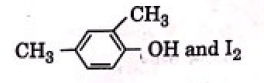
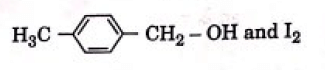
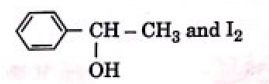
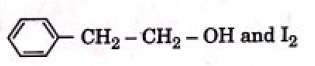
Follwoing compounds are given : (a) (b) (c) (d) Which of the above compounds(s), on being warmed with iodine solution and , will give iodoform ?
1
Only (b)
2
(a), (b) and (c)
3
(a) and (b)
4
(a), (c) and (d)
34
PYQ 2011
medium
chemistry ID: neet-ug-
Clemmensen reduction of a ketone is carried out in the presence of which of the following?
1
with
2
3
and as catalyst
4
Glycol with
35
PYQ 2012
medium
chemistry ID: neet-ug-
Consider the reaction: What sort of reaction is it ?
1
Free radical addition - elimination reaction
2
Electrophilic substitution-elimination reaction
3
Nucleophilic addition - elimination reaction
4
Electrophilic addition - elimination reaction
36
PYQ 2012
medium
chemistry ID: neet-ug-
Consider the following reaction The product 'A' is -
1
2
3
4
37
PYQ 2017
medium
chemistry ID: neet-ug-
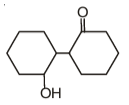
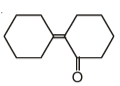
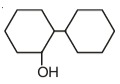
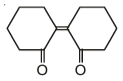
Of the following, which is the product formed when cyclohexanone undergoes aldol condensation followed by heating?
1
Of the following, which is the product formed when cyclohexanone undergoes aldol condensation followed by heating?
2
Of the following which is the product formed when cyclohexanone undergoes aldol condensation followed by heating?
3
Of the following which is the product formed when cyclohexanone undergoes aldol condensation followed by heating?
4
Of the following which is the product formed when cyclohexanone undergoes aldol condensation followed by heating?
38
PYQ 2017
medium
chemistry ID: neet-ug-
Consider the reactions :- Identify and
1
A-Methoxymethane, X-Ethanol, Y-Ethanoic acid, Z-Semicarbazide
2
A - Ethanal , X - Ethanol , Y - But - 2 - enal , Z - Semicarbazone
3
A- Ethanol, X- Acet aldehyde, Y- Butanone, Z- Hydrazone
4
A-Methoxymethane, X-Ethanoic acid, Y-Acetate ion, Z-hydrazine
39
PYQ 2018
easy
chemistry ID: neet-ug-
Carboxylic acids have higher boiling points than aldehydes, ketones and even alcohols of comparable molecular mass. It is due to their
40
PYQ 2018
medium
chemistry ID: neet-ug-
Carboxylic acids have higher boiling points than aldehydes, ketones and even alcohols of comparable molecular mass. It is due to their
1
formation of intermolecular H-bonding
2
formation of intramolecular H-bonding
3
more extensive association of carboxylic acid via van der Waal's force of attraction
4
formation of carboxylate ion
41
PYQ 2018
medium
chemistry ID: neet-ug-
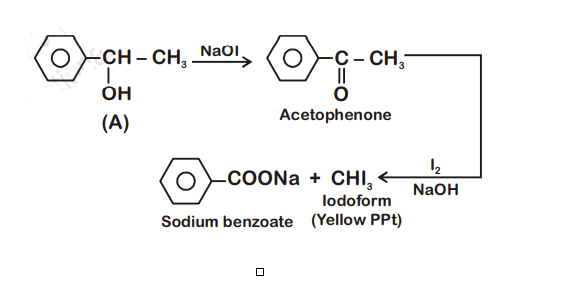
Compound , is found to react with (produced by reacting with ) and yields a yellow precipitate with characteristic smell. and are respectively
1
2
3
4
42
PYQ 2019
medium
chemistry ID: neet-ug-
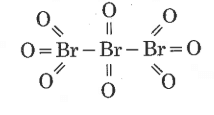
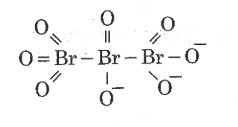
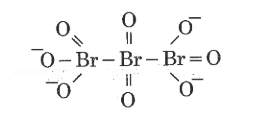
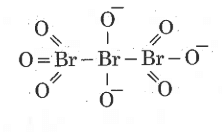
The correct structure of tribromooctaoxide is:
1
Alternative_Text
2
Alternative_Text
3
Alternative_text
4
Alternative_text
43
PYQ 2021
easy
chemistry ID: neet-ug-

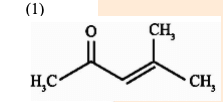
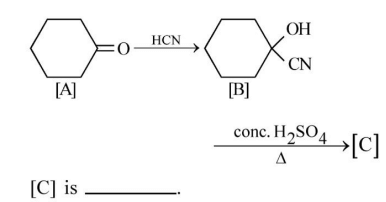
What is the IUPAC name of the organic compound formed in the following chemical reaction? 

44
PYQ 2022
easy
chemistry ID: neet-ug-
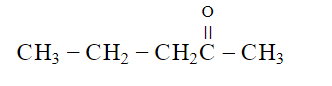
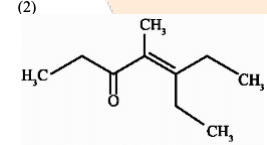
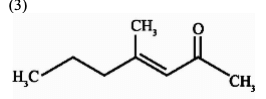
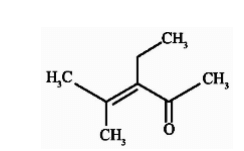
Which one of the following is not formed when acetone reacts with 2-pentanone in the presence of dilute NaOH followed by heating?
1
2
3
4
45
PYQ 2022
medium
chemistry ID: neet-ug-

Match List - I with List- II.

List-I (Products formed) List-II (Reaction of carbonyl compound with)
(a)Cyaniohydrin(i)NH2OH
(b)Acetal(ii)RNH2
(c)Schiff’s base(iii)alcohol
(d)Oxime(iv)HCN

Choose the correct answer from the options given below:

1
(a)-(iii), (b)-(iv), (c)-(ii), (d)-(i)
2
(a)-(ii), (b)-(iii), (c)-(iv), (d)-(i)
3
(a)-(i), (b)-(iii), (c)-(ii), (d)-(iv)
4
(a)-(iv), (b)-(iii), (c)-(ii), (d)-(i)
46
PYQ 2022
medium
chemistry ID: neet-ug-

What is Y in the above reaction?
1
2
3
4
47
PYQ 2023
medium
chemistry ID: neet-ug-
Complete the following reactions:
1
Complete the following reactions:
2
Complete the following reactions:
3
Complete the following reactions:
4
Complete the following reactions:

About Aldehydes Ketones And Carboxylic Acids - NEET-UG

Aldehydes Ketones And Carboxylic Acids is a vital chapter for NEET-UG aspirants. Mastering the concepts covered in this chapter is essential for securing a top rank.

By rigorously practicing the previous year questions associated with this chapter, you can identify high-yield topics, understand the examiner's perspective, and boost your confidence during the actual exam.

Frequently Asked Questions

Why focus on Aldehydes Ketones And Carboxylic Acids PYQs?

Analyzing PYQs for this specific chapter reveals the most frequently tested concepts and the typical complexity of questions, allowing you to tailor your study plan efficiently.

How to best use this analysis?

Review the topic breakdown to see which sub-topics within Aldehydes Ketones And Carboxylic Acids carry the most weight. Then, tackle the questions iteratively to solidify your understanding.