Thermodynamics
65 previous year questions.
High-Yield Trend
Chapter Questions 65 MCQs
>
Unit of entropy is
JK–1 mol–1
J mol–1
J–1K–1 mol–1 v
JK mol–1
2 mole of ideal gas at 27ºC temp. is expanded reversibly from 2 lit. to 20 lit. Find entropy change (R = 2 cal/mol K)
The solubility product of a sparingly soluble salt AX2 is 3.2 ×10⁻¹¹. Its solubility (in moles/liter) is
3.1×10⁻⁴
2 × 10⁻⁴
4 × 10⁻⁴
5.6 × 10⁻⁶
–608 J
+ 304 J
–304 J
–6 J
The standard enthalpy and standard entropy changes for the oxidation of ammonia at 298 K are –382.64 kJ mol–1 and –145.6 JK–1 mol–1, respectively. Standard Gibbs energy change for the same reaction at 298 K is
–339.3 kJ mol–1
– 439.3 kJ mol–1
–523.2 kJ mol–1
–221.1 kJ mol–1
+ 103 kJ
261kJ
–103 kJ
–261 kJ
∆Ssystem – ∆Ssurrounding > 0
∆Ssystem > 0 only (3) ∆Ssurroundings > O on
∆Ssurrounding > 0
∆Ssystem + ∆Ssurrounding > 0
1.0 x 10⁻⁶ mol L-1
1.0 x 10⁻⁵ mol L-1
1.0 x 10⁻⁸ mol L-1
1.0 x 10⁻⁷ mol L-1
C(s) + 2H2O(g) 2H2(g) + CO2(g)
PCl5(g) PCl3(g) + Cl2(g)
2CO(g) + O2(g) 2CO2(g)
△U = 2.1 k cal, △S = 20 cal K–l at 300 K.
Hence △G is
the of (s) in water at is :
(Assume that△H and △S do not vary with temperature)
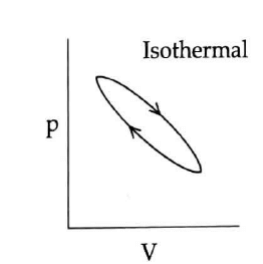
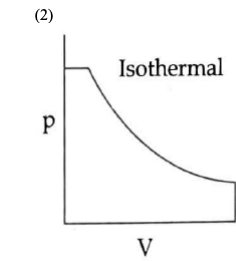
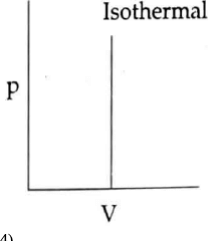
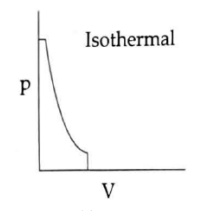
(Atomic mass of Ca= 40)
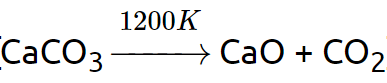
(A) is negative.
(B) is positive.
(C) is negative.
(D) is positive.
Choose the correct answer from the options given below:
List-I | List-II | ||
| (A) | Isothermal process | (I) | No heat exchange |
| (B) | Isochoric process | (II) | Carried out at constant temperature |
| (C) | Isobaric process | (III) | Carried out at constant volume |
| (D) | Adiabatic process | (IV) | Carried out at constant pressure |
Choose the correct answer from the options given below:
The standard heat of formation, in kcal/mol, of is:
Given: Standard heat of formation of SO₄²⁻(aq) = -216 kcal/mol, standard heat of crystallization of BaSO₄(s) = -4.5 kcal/mol, standard heat of formation of BaSO₄(s) = -349 kcal/mol.
About Thermodynamics - NEET-UG
Thermodynamics is a vital chapter for NEET-UG aspirants. Mastering the concepts covered in this chapter is essential for securing a top rank.
By rigorously practicing the previous year questions associated with this chapter, you can identify high-yield topics, understand the examiner's perspective, and boost your confidence during the actual exam.
Frequently Asked Questions
Why focus on Thermodynamics PYQs?
Analyzing PYQs for this specific chapter reveals the most frequently tested concepts and the typical complexity of questions, allowing you to tailor your study plan efficiently.
How to best use this analysis?
Review the topic breakdown to see which sub-topics within Thermodynamics carry the most weight. Then, tackle the questions iteratively to solidify your understanding.