It is due to the presence of ct-hydrogen atom in - NO and - NO compounds.
02
PYQ 2017
medium
chemistryID: neet-ug-
The correct statement regarding electrophile is :
1
Electrophile is a negatively charged species and can form a bond by accepting a pair of electrons from another electrophile
2
Electrophiles are generally neutral species and can form a bond by accepting a pair of electrons from a nucleophile
3
Electrophile can be either neutral or positively charged species and can form a bond by accepting a pair of electrons from a nucleophile
4
Electrophile is a negatively charged species and can form a bond by accepting a pair of electrons from a nucleophile
Official Solution
Correct Option:
(3)
Fact
03
PYQ 2019
medium
chemistryID: neet-ug-
The most stable carbocation, among the following is :-
1
2
3
4
Official Solution
Correct Option:
(3)
Due to effect of alkyl group (more
04
PYQ 2024
medium
chemistryID: neet-ug-
The following reaction method is not suitable for the preparation of the corresponding haloarene products, due to high reactivity of halogen, when X is :
1
F
2
I
3
Cl
4
Br
Official Solution
Correct Option:
(1)
The reaction shown is a free radical halogenation reaction. This method is unsuitable for the preparation of fluoroarenes because of the high reactivity of fluorine. Fluorine is so reactive that it is difficult to control the reaction, leading to multiple substitutions. In this reaction, the free radical is formed by using the metal Fe in dark conditions. For the other halogens, the reaction can be controlled to obtain the corresponding haloarenes.
05
PYQ 2024
medium
chemistryID: neet-ug-
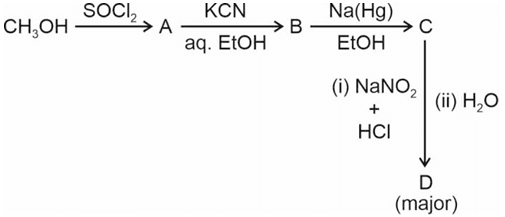
The major product D formed in the following reaction sequence is:
1
2
3
CH3CH2OH
4
CH3CH2Cl
Official Solution
Correct Option:
(3)
Let’s trace the reaction sequence Step 1: (methanol) reacts with thionyl chloride to form chloromethane (A):
Step 2: reacts with potassium cyanide (KCN) in aqueous ethanol to form acetonitrile (B):
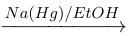
Step 3: Acetonitrile (B) is reduced using sodium amalgam in ethanol to form ethylamine (C):
Step 4: Ethylamine (C) undergoes diazotization with sodium nitrite and hydrochloric acid , followed by hydrolysis with water to produce ethanol (D) as the major product: Conclusion: The major product D is ethanol
06
PYQ 2024
medium
chemistryID: neet-ug-
Given below are two statements: Statement I: Propene on treatment with diborane gives an addition product with the formula . Statement II: Oxidation of with hydrogen peroxide in presence of NaOH gives propan-2-ol. In the light of the above statements, choose the most appropriate answer from the options given below:
1
Statement I is correct but Statement II is incorrect
2
Statement I is incorrect but Statement II is correct
3
Both Statement I and Statement II are correct
4
Both Statement I and Statement II are incorrect
Official Solution
Correct Option:
(2)
Statement I is incorrect. Propene reacts with diborane (B2H6) to form trialkyl borane, (CH3)2CH-B, which is then oxidized using hydrogen peroxide in the presence of NaOH to produce propan-2-ol. The formula given in Statement I is not the correct addition product. The actual addition product is a trialkyl borane which is formed in the first step.
Statement II is correct. Oxidation of the trialkyl borane by H2O2 in NaOH gives propan-2-ol. This is the hydroboration-oxidation reaction.
07
PYQ 2024
medium
chemistryID: neet-ug-
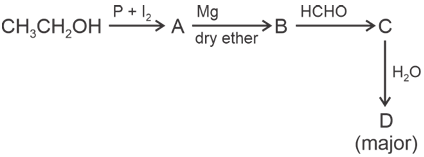
Identify D in the following sequence of reactions:
1
n-propyl alcohol
2
isopropyl alcohol
3
propanal
4
propionic acid
Official Solution
Correct Option:
(1)
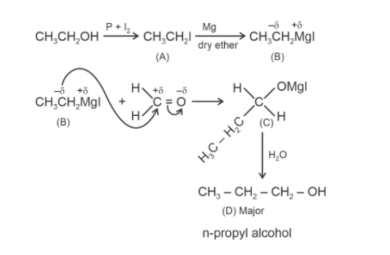
This reaction sequence involves several steps: 1. Formation of A (Grignard Reagent): Ethanol reacts with red phosphorus and iodine to form ethyl iodide which then reacts with magnesium in dry ether to form ethyl magnesium iodide (A). This is a Grignard Reagent which is very reactive. 2. Formation of B (Addition to Aldehyde): Ethylmagnesium iodide (A) reacts with formaldehyde (HCHO) to form a magnesium alkoxide intermediate (B). This addition reaction results in an increase in the carbon chain. 3. Formation of C (Acidification): Acidification of (B) leads to the protonation of the alkoxide intermediate which yields propanol(C). 4. Formation of D: No further reaction occurs as we get propan-1-ol (n-propyl alcohol). Conclusion: The major product D is n-propyl alcohol.
08
PYQ 2024
hard
chemistryID: neet-ug-
The major product C in the below mentioned reaction is:
1
Propan-1-ol
2
Propan-2-ol
3
Propane
4
Propyne
Official Solution
Correct Option:
(2)
Let's analyze the reaction step-by-step:
1.Step 1: Alcoholic KOH and heat promote elimination reactions. 1-Bromopropane reacts with alcoholic KOH to form propene (A) via a dehydrohalogenation reaction.
2. Step 2: Propene (A) reacts with HBr to form 2-bromopropane (B) as the major product according to Markovnikov's rule (the hydrogen atom adds to the carbon with more hydrogen atoms already attached).
3. Step 3: 2-Bromopropane (B) reacts with aqueous KOH and heat to form propan-2-ol (C) via a nucleophilic substitution reaction (specifically, an S 1 reaction is favored due to secondary alkyl halide and aqueous KOH).
Therefore, the major product C is propan-2-ol.
09
PYQ 2024
medium
chemistryID: neet-ug-
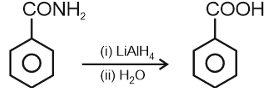
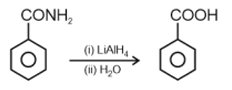
Select the incorrect reaction among the following:
1
2
3
4
Official Solution
Correct Option:
(2)
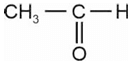
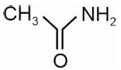
Let’s analyze each reaction: 1. Reaction (1): This reaction shows the hydrolysis of an acyl chloride (acetyl chloride) to a carboxylic acid (acetic acid). This is a standard reaction. Acyl chlorides readily react with water to form carboxylic acids. 2. Reaction (2):
This reaction depicts the attempted reduction of benzamide to benzoic acid using lithium aluminum hydride (LiAlH4). This is incorrect. LiAlH4 is a strong reducing agent that reduces amides to amines, not carboxylic acids. The correct product would be benzylamine.
3. Reaction (3):
This reaction shows the oxidation of ethanol to acetic acid using alkaline potassium permanganate (KMnO₄), followed by acidification. This is a standard oxidation reaction. 4. Reaction (4):
This reaction shows the oxidation of propanol to propanoic acid using a mixture of chromium trioxide (CrO₃) and sulfuric acid (H₂SO₄). This is also a standard oxidation reaction.
10
PYQ 2024
medium
chemistryID: neet-ug-
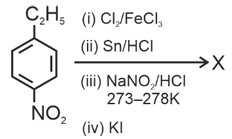
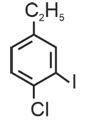
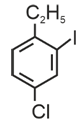
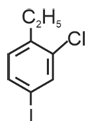
The major product X formed in the following reaction sequence is:
1
2
3
4
Official Solution
Correct Option:
(3)
This reaction sequence involves a series of transformations:
Chlorination: Chlorination of the ethylbenzene ring will occur preferentially at the para position due to the activating effect of the ethyl group and the deactivating meta-directing nature of the nitro group.
Reduction: Reduction of the nitro group (-NO2) to an amino group (-NH2) using tin and hydrochloric acid (Sn/HCl).
Diazotization: The amino group is converted into a diazonium group (-N2+) using sodium nitrite and hydrochloric acid (NaNO2/HCl) at a low temperature (273-278 K).
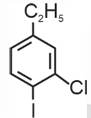
Sandmeyer Reaction: The diazonium group is replaced by an iodide (I) using potassium iodide (KI) via a Sandmeyer reaction. This replacement occurs at the same position as the original amino group (and thus the nitro group). Thus, we have 4-iodo-1-ethyl-2-chlorobenzene.
11
PYQ 2024
medium
chemistryID: neet-ug-
Baeyer’s reagent is :
1
Acidic potassium permanganate solution
2
Acidic potassium dichromate solution
3
Cold, dilute, aqueous solution of potassium permanganate
4
Hot, concentrated solution of potassium permanganate
Official Solution
Correct Option:
(3)
Baeyer's reagent is a cold, dilute, alkaline solution of potassium permanganate KMnO4. It is a powerful oxidizing agent and is used as a test for unsaturation (presence of double or triple bonds) in organic compounds. The permanganate ion MnO4- is a deep purple color. When it reacts with an unsaturated compound, the purple color disappears, and a brown precipitate of manganese dioxide MnO2 forms. This decolorization of the permanganate solution is a positive test for unsaturation. It's important that the solution be cold and dilute; otherwise, the reaction may proceed too vigorously, and the permanganate may oxidize the organic compound further.
12
PYQ 2024
easy
chemistryID: neet-ug-
The compound that does not undergo Friedel-Crafts alkylation reaction but gives a positive carbylamine test is :
1
Aniline
2
Pyridine
3
N-methylaniline
4
Triethylamine
Official Solution
Correct Option:
(1)
Friedel-Crafts alkylation requires an electrophilic aromatic substrate. Aniline does not undergo Friedel-Crafts alkylation because the amino group (- ) on the benzene ring strongly activates the ring towards electrophilic attack, leading to significant reactivity and making it difficult to control the reaction. Furthermore, the lone pair of electrons on the nitrogen atom in aniline coordinates with the Lewis acid catalyst (like ), deactivating the ring and preventing alkylation. The carbylamine test is positive for primary amines. Aniline is a primary amine and will give a positive test.
About Reaction Mechanism - NEET-UG
Reaction Mechanism is a vital chapter for NEET-UG aspirants. Mastering the concepts covered in this chapter is essential for securing a top rank.
By rigorously practicing the previous year questions associated with this chapter, you can identify high-yield topics, understand the examiner's perspective, and boost your confidence during the actual exam.
Frequently Asked Questions
Why focus on Reaction Mechanism PYQs?
Analyzing PYQs for this specific chapter reveals the most frequently tested concepts and the typical complexity of questions, allowing you to tailor your study plan efficiently.
How to best use this analysis?
Review the topic breakdown to see which sub-topics within Reaction Mechanism carry the most weight. Then, tackle the questions iteratively to solidify your understanding.