NEET-UG SERIES Chemistry
Isomerism
9 previous year questions.
Volume: 9 Ques
Yield: Medium
High-Yield Trend
1
2021 3
2017 1
2013 1
2004 1
2000 1
1995 1
1994 Chapter Questions 9 MCQs
01
PYQ 1994
medium
chemistry ID: neet-ug-
The process of separation of a racemic modification into d and l-enantiomers is called
1
resolution
2
dehydration
3
revolution
4
dehydrohalogenation
02
PYQ 1995
medium
chemistry ID: neet-ug-
The number of possible isomers of the compound with molecular formula is
1
3
2
5
3
7
4
9
03
PYQ 2000
medium
chemistry ID: neet-ug-
R and S enantiomer are differ in:
1
Rotation of PPL
2
Solubility in achiral solvent
3
Chemical properties
4
Dipole moment
04
PYQ 2004
medium
chemistry ID: neet-ug-
The molecular formula of diphenyl methane How many structural isomers are possible when one of the hydrogen is replaced by a chlorine atom?
1
6
2
4
3
8
4
7
05
PYQ 2013
medium
chemistry ID: neet-ug-
The order of stability of the following tautomeric compounds is
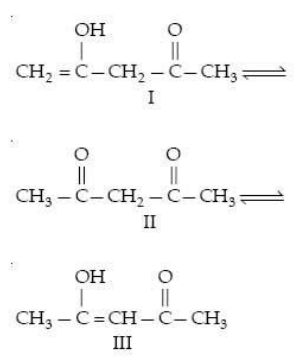
1
I > II > III
2
III > II > I
3
II > I > III
4
II > III > I
06
PYQ 2017
medium
chemistry ID: neet-ug-
With respect to the conformers of ethane, which of the following statements is true?
1
Bond angle remains same but bond length changes
2
Bond angle changes but bond length remains same
3
Both bond angle and bond length change
4
Both bond angles and bond length remains same
07
PYQ 2017
medium
chemistry ID: neet-ug-
Which of the following pairs of compounds is isoelectronic and isostructural ?
1
BeCl2, XeF2
2
TeI2, XeF2
3
Ibr2-, XeF2
4
IF3, XeF2
08
PYQ 2017
easy
chemistry ID: neet-ug-
The number of geometrical isomers of is
1
2
2
4
3
6
4
8
09
PYQ 2021
medium
chemistry ID: neet-ug-
The compound which shows metamerism is :
1
2
3
4
About Isomerism - NEET-UG
Isomerism is a vital chapter for NEET-UG aspirants. Mastering the concepts covered in this chapter is essential for securing a top rank.
By rigorously practicing the previous year questions associated with this chapter, you can identify high-yield topics, understand the examiner's perspective, and boost your confidence during the actual exam.
Frequently Asked Questions
Why focus on Isomerism PYQs?
Analyzing PYQs for this specific chapter reveals the most frequently tested concepts and the typical complexity of questions, allowing you to tailor your study plan efficiently.
How to best use this analysis?
Review the topic breakdown to see which sub-topics within Isomerism carry the most weight. Then, tackle the questions iteratively to solidify your understanding.