NEET-UG SERIES
Chemistry

Polymers

19 previous year questions.

Volume: 19 Ques
Yield: Medium

High-Yield Trend

1
2023
1
2020
2
2019
1
2018
2
2014
3
2013
1
2007
1
2004
1
2003
1
2001
2
2000
1
1996
1
1994
1
1992

Chapter Questions
19 MCQs

01
PYQ 1992
medium
chemistry ID: neet-ug-
Bakelite is a product of the reaction between
1
formaldehyde and NaOH
2
aniline and urea
3
phenol and methanal
4
phenol and chloroform
02
PYQ 1994
medium
chemistry ID: neet-ug-
Peptide bond is a key feature in
1
Polysaccharide
2
Proteins
3
Nucleotide
4
Vitamins
03
PYQ 1996
medium
chemistry ID: neet-ug-
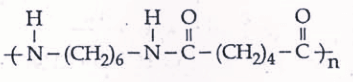
Nylon-66 is a polyamide obtained by the reaction of
1
2
3
4
04
PYQ 2000
medium
chemistry ID: neet-ug-
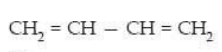
is a monomer of
1
buna-S
2
teflon
3
glyptal
4
nylon-6
05
PYQ 2000
easy
chemistry ID: neet-ug-
Which one of the following molecules will form a linear polymeric structure due to hydrogen bonding?
1
2
3
HCl
4
HF
06
PYQ 2001
medium
chemistry ID: neet-ug-
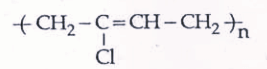
Which of the following is not correctly matched
1
Neoprene[-CH2-C_CL=CH-CH2]n
2
Nylon-66[-NH-(CH26-NH-CO-(CH2)-C||O-0-]n
3
Terylene[-OCH2-CH2-C||O-Oc||O]n
4
PMMA[-CH2-C-CH3-COOCH3]n
07
PYQ 2003
medium
chemistry ID: neet-ug-
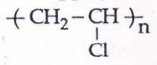
Which one of the following monomers gives the polymer neoprene on polymerization :
1

CH2=CHCl

2

CCl2=CCl2

3

4

CF2=CF2

08
PYQ 2004
medium
chemistry ID: neet-ug-
Which one of the following is a chain growth polymer
1

Nucleic acidv

2

Polystyrene

3

protein

4

Starch

09
PYQ 2007
medium
chemistry ID: neet-ug-
The two polynucleotide chain in are :
1
Semiconservative
2
Parallel
3
Discontinuous
4
Antiparallel
10
PYQ 2013
medium
chemistry ID: neet-ug-
Which of these is not a monomer for a high molecular mass silicone polymer ?
1
MeSiCl3
2
Me2SiCl2
3
Me3SiCl
4
PhSiCl3
11
PYQ 2013
medium
chemistry ID: neet-ug-
Nylon is an example of
1
Polyester
2
Polysaccharide
3
Polyamide
4
Polythene
12
PYQ 2013
medium
chemistry ID: neet-ug-
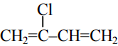
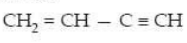
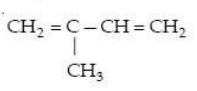
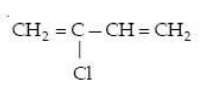
Which is the monomer of Neoprene in the following ?
1
Option A
2
Option B
3
Option C
4
Option D
13
PYQ 2014
medium
chemistry ID: neet-ug-
Which of the following organic compoundspolymerizes to form the polyester Dacron?
1
Benzoic acid and ethanol
2
Terephthalic acid and ethylene glycol
3
Benzoic acid and para
4
Propylene and para
14
PYQ 2014
medium
chemistry ID: neet-ug-
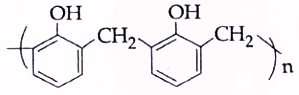
Which one of the following is an example of a thermosetting polymer?
1
Which one of the following is an example of a thermosetting polymer?
2
Which one of the following is an example of a thermosetting polymer?
3
Which one of the following is an example of a thermosetting polymer?
4
Which one of the following is an example of a thermosetting polymer?
15
PYQ 2018
medium
chemistry ID: neet-ug-
Regarding cross-linked or network polymers, which of the following statements is incorrect ?
1
They contain covalent bonds between various linear polymer chains.
2
Examples are bakelite and melamine.
3
They are formed from bi- and tri-functional monomers.
4
They contain strong covalent bonds in their polymer chains.
16
PYQ 2019
medium
chemistry ID: neet-ug-
The biodegradable polymer is:
1
nylon-6, 6
2
nylon 2-nylon 6
3
nylon-6
4
Buna-S
17
PYQ 2019
medium
chemistry ID: neet-ug-
The biodegradable polymer is
1
nylon-6
2
Buna-S
3
nylon-6,6
4
nylon 2-nylon 6
18
PYQ 2020
medium
chemistry ID: neet-ug-
Which of the following is a natural polymer?
1
Nylon
2
Teflon
3
Linen
4
Orion
19
PYQ 2023
medium
chemistry ID: neet-ug-
Which amongst the following molecules on polymerization produces neoprene?
1
2
3
4

About Polymers - NEET-UG

Polymers is a vital chapter for NEET-UG aspirants. Mastering the concepts covered in this chapter is essential for securing a top rank.

By rigorously practicing the previous year questions associated with this chapter, you can identify high-yield topics, understand the examiner's perspective, and boost your confidence during the actual exam.

Frequently Asked Questions

Why focus on Polymers PYQs?

Analyzing PYQs for this specific chapter reveals the most frequently tested concepts and the typical complexity of questions, allowing you to tailor your study plan efficiently.

How to best use this analysis?

Review the topic breakdown to see which sub-topics within Polymers carry the most weight. Then, tackle the questions iteratively to solidify your understanding.