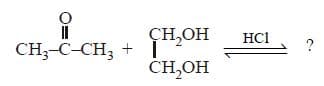
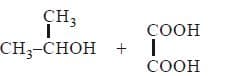
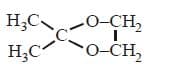
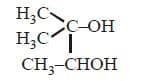
Step 1: Understand the reaction with LiAlH . Lithium aluminum hydride (LiAlH ) is a strong reducing agent. When alcohols react with LiAlH , they are reduced to the corresponding aldehydes or alcohols depending on the condition. Step 2: Conclusion. Thus, R–OH reacts with LiAlH to form a primary alcohol, RCH OH.
02
PYQ 2006
medium
chemistryID: viteee-2
Which one of the following is correct?
1
RCH OH + KMnO No reaction
2
CH CH OH + Na Cr O , H SO No reaction
3
CH CHO + Na Cr O , H SO No reaction
4
CH CHO + alkaline KMnO No reaction
Official Solution
Correct Option:
(4)
Step 1: Understand the reactions. Alkaline KMnO does not oxidize aldehydes like CH CHO under normal conditions. It only oxidizes aldehydes in acidic conditions. Step 2: Conclusion. Thus, CH CHO does not react with alkaline KMnO .
03
PYQ 2006
medium
chemistryID: viteee-2
Which one of the following products is obtained when diethyl ether is boiled with water in the presence of dilute acid?
1
Glycol
2
Ethyl alcohol
3
Ethylene oxide
4
Peroxide
Official Solution
Correct Option:
(2)
Step 1: Reaction of diethyl ether with water. When diethyl ether is heated with water in the presence of an acid catalyst, it undergoes hydrolysis to form ethyl alcohol. Step 2: Conclusion. Thus, the product is ethyl alcohol.
04
PYQ 2006
medium
chemistryID: viteee-2
What is the hybridization of the oxygen atom in an alcohol molecule?
1
sp
2
sp
3
sp
4
p
Official Solution
Correct Option:
(1)
Step 1: Hybridization of oxygen in alcohol. The oxygen atom in alcohol (R-OH) is bonded to two atoms, and it has two lone pairs. This corresponds to an sp hybridization. Step 2: Conclusion. Thus, the hybridization of oxygen in an alcohol molecule is sp .
05
PYQ 2006
medium
chemistryID: viteee-2
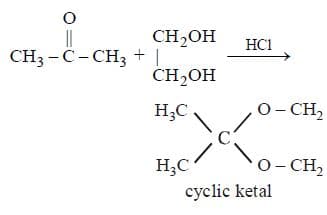
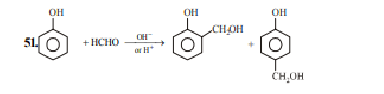
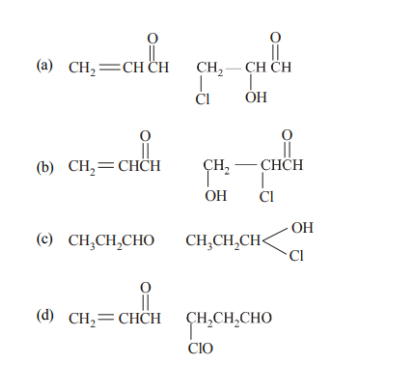
Identify the product for the following reaction
1
2
3
4
No reaction
Official Solution
Correct Option:
(2)
Correct answer is (b)
06
PYQ 2007
medium
chemistryID: viteee-2
Phenol is less acidic than
1
p-chlorophenol
2
p-nitrophenol
3
p-methoxyphenol
4
ethanol
Official Solution
Correct Option:
(1)
Step 1: Effect of substituents on acidity. Electron-withdrawing groups like or increase the acidity of phenols by stabilizing the negative charge on the oxygen after deprotonation. Conversely, electron-donating groups like reduce the acidity of phenol.
Step 2: Conclusion. Thus, phenol is less acidic than p-methoxyphenol, but more acidic than p-chlorophenol. Therefore, options (A) and (C) are correct.
Final Answer:
07
PYQ 2008
medium
chemistryID: viteee-2
When ethyl alcohol is heated with conc. H SO , product obtained is
1
CH COOC H
2
C H
3
C H
4
C H
Official Solution
Correct Option:
(4)
Step 1: Reaction of ethanol with conc. H SO . Concentrated sulphuric acid acts as a dehydrating agent. Step 2: Dehydration of ethanol. On heating ethanol at about , it loses water and forms ethene.
Step 3: Identify product. The product is ethene . Final Answer:
08
PYQ 2008
medium
chemistryID: viteee-2
Anisole is the product obtained from phenol by the reaction known as
1
coupling
2
etherification
3
oxidation
4
esterification
Official Solution
Correct Option:
(2)
Step 1: Identify anisole. Anisole is methoxybenzene:
Step 2: Formation from phenol. Phenol reacts with methyl halide in presence of base to form anisole via Williamson ether synthesis.
Step 3: Name of reaction type. Formation of ether from phenol is called etherification. Final Answer:
09
PYQ 2008
medium
chemistryID: viteee-2
Ethylene glycol gives oxalic acid on oxidation with
1
acidified K Cr O
2
acidified KMnO
3
alkaline KMnO
4
periodic acid
Official Solution
Correct Option:
(3)
Step 1: Identify ethylene glycol. Ethylene glycol is a dihydric alcohol:
Step 2: Strong oxidation converts glycol to dicarboxylic acid. Under strong oxidizing conditions, both terminal groups are oxidized to . Step 3: Oxidant required for complete oxidation. Alkaline KMnO is a strong oxidizing agent that oxidizes ethylene glycol to oxalic acid:
Step 1: First chlorination of ethanol. Chlorine acts as an oxidizing agent in presence of light and gives acetaldehyde:
So:
Step 2: Further chlorination of acetaldehyde. Acetaldehyde undergoes successive substitution of -hydrogens to form chloral:
So:
Final Answer:
11
PYQ 2010
medium
chemistryID: viteee-2
Glycerol on treatment with oxalic acid at forms
1
formic acid
2
and CO
3
allyl alcohol
4
acrolein
Official Solution
Correct Option:
(1)
Step 1: Reaction of glycerol with oxalic acid. When glycerol is heated with oxalic acid at , oxalic acid decomposes and produces formic acid. This is a known preparation method of formic acid in lab. Step 2: Note temperature dependence. At higher temperature ( ), glycerol gives acrolein by dehydration. But at , the major product is formic acid. Final Answer:
12
PYQ 2010
medium
chemistryID: viteee-2
The reaction, in the presence of , gives the following product
1
2
3
4
Official Solution
Correct Option:
(1)
Step 1: Identify the reagent. represents diazomethane ( ). Diazomethane is a methylating agent. Step 2: Role of . Strong acid protonates diazomethane to generate -like species. This methyl group then reacts with alcohol oxygen. Step 3: Product formed. Alcohol is converted into methyl ether: Final Answer:
13
PYQ 2010
medium
chemistryID: viteee-2
The formula of ethyl carbinol is
1
2
3
4
Official Solution
Correct Option:
(3)
Step 1: Meaning of carbinol. Carbinol is old name for methanol. Substituted carbinols are named depending on groups attached to carbon having . Step 2: Ethyl carbinol structure. Ethyl carbinol means one ethyl group attached to the carbon bearing . So structure becomes: which is isopropyl alcohol (2-propanol). Final Answer:
14
PYQ 2010
medium
chemistryID: viteee-2
Which of the following gives red colour in Victor Meyer’s test?
1
n-propyl alcohol
2
isopropyl alcohol
3
tert-butyl alcohol
4
sec-butyl alcohol
Official Solution
Correct Option:
(1)
Step 1: Recall Victor Meyer test. Victor Meyer test distinguishes between primary, secondary and tertiary alcohols. Step 2: Colour obtained. - Primary alcohol gives red colour. - Secondary alcohol gives blue colour. - Tertiary alcohol gives no colour. Step 3: Identify type of given alcohols. - n-propyl alcohol is primary. - isopropyl alcohol is secondary. - tert-butyl alcohol is tertiary. - sec-butyl alcohol is secondary. Step 4: Therefore red colour is given by primary alcohol. So correct is n-propyl alcohol. Final Answer:
15
PYQ 2011
medium
chemistryID: viteee-2
Sometimes explosion occurs while distilling ethers. It is due to the presence of:
1
peroxides
2
oxides
3
ketones
4
aldehydes
Official Solution
Correct Option:
(1)
Step 1: Understand the formation of peroxides. Peroxides are highly reactive compounds that can form during the storage of ethers. The accumulation of peroxides in ether can lead to explosive reactions when the ether is distilled. Step 2: Conclusion. Thus, the presence of peroxides is responsible for the explosion that can occur during the distillation of ethers. Final Answer:
16
PYQ 2011
medium
chemistryID: viteee-2
Glycerine is used as a preservative for fruits and vegetables because:
1
it makes them sweet
2
it acts as an insecticide
3
it preserves their color
4
it prevents microbial growth
Official Solution
Correct Option:
(4)
Step 1: Role of glycerine in preservation. Glycerine acts as a preservative by preventing microbial growth due to its hygroscopic nature, which reduces the water activity in food. Step 2: Conclusion. Thus, glycerine is used to prevent microbial growth and extend the shelf life of fruits and vegetables. Final Answer:
17
PYQ 2011
medium
chemistryID: viteee-2
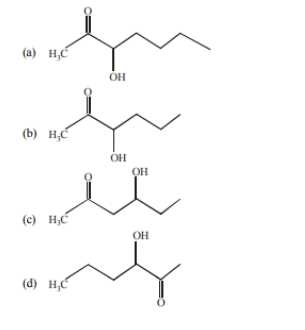
The alcohol having molecular formula , when shaken with a mixture of anhydrous and conc. gives an oily layer product after five minutes. The alcohol is
1
2
3
4
Official Solution
Correct Option:
(4)
Secondary alcohol, on reaction with anhydrous and conc. (Lucas reagent) gives an oily layer product after five minuts. oily layer product (turbidity) after 5 min.
18
PYQ 2012
medium
chemistryID: viteee-2
When glycerol is treated with excess of HI, it produces
1
2-iodopropane
2
Allyl iodide
3
Propene
4
Glycerol triiodide
Official Solution
Correct Option:
(2)
When glycerol reacts with excess iodine and heat, it undergoes substitution to form allyl iodide. The reaction involves the substitution of the hydroxyl group with an iodine atom.
Step 2: Conclusion.
The product of the reaction is allyl iodide, corresponding to option (b).
19
PYQ 2012
medium
chemistryID: viteee-2
Which of the following compounds will be most readily dehydrated?
1
A
2
B
3
C
4
D
Official Solution
Correct Option:
(3)
The compound that is most readily dehydrated is the one that can form the most stable carbocation or intermediate during dehydration. can form a stable secondary carbocation, making it the most easily dehydrated compared to the other compounds.
Step 2: Conclusion.
The compound is most readily dehydrated, corresponding to option (c).
20
PYQ 2013
medium
chemistryID: viteee-2
reacts with (one mole) followed by treatment with . The compound formed in this reaction is
1
A
2
B
3
C
4
D
Official Solution
Correct Option:
(3)
Step 1: Grignard reagent reaction.
Grignard reagents react with carbonyl compounds to form an alcohol. In this case, the reaction with the ketone forms a secondary alcohol.
Step 2: Conclusion.
The product is a secondary alcohol, , corresponding to option (3).
21
PYQ 2013
medium
chemistryID: viteee-2
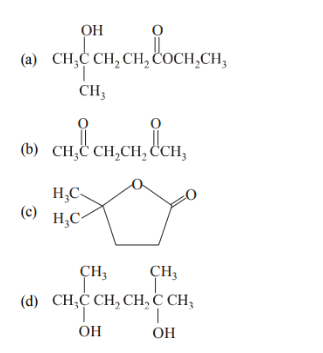
Glycerol reacts with , the product A is obtained. What is the structure of A?
1
A
2
B
3
C
4
D
Official Solution
Correct Option:
(2)
Step 1: Analyzing the reaction.
Glycerol reacts with HCl, which leads to the formation of a product where an additional chlorine atom replaces one of the hydroxyl groups. The molecular formula of the product is .
Step 2: Conclusion.
The correct product structure is , corresponding to option (2).
22
PYQ 2013
medium
chemistryID: viteee-2
Which is more basic oxygen in an ester?
1
Carbonyl oxygen,
2
Carboxyl oxygen,
3
Equally basic
4
Both are acidic oxygen
Official Solution
Correct Option:
(1)
oxygen atom can donate lone pair of electron more easily, therefore, it is more basic than -oxygen.
23
PYQ 2017
easy
chemistryID: viteee-2
1 -Propanol and 2-propanol can be distinguished by
1
oxidation with alkaline followed by reaction with Fehling solution
2
oxidation with acidic dichromate followed by reaction with Fehling solution
3
oxidation by heating with copper followed by reaction with Fehling solution
4
oxidation with concentrated followed by reaction with Fehling solution
Official Solution
Correct Option:
(3)
(a) No reaction
No reaction
No reaction
24
PYQ 2021
medium
chemistryID: viteee-2
In fructose, the possible optical isomers are:
1
12
2
16
3
8
4
4
Official Solution
Correct Option:
(2)
Fructose has multiple chiral centers, leading to the formation of 16 optical isomers. This can be calculated by the formula , where is the number of chiral centers. Fructose has 4 chiral centers, so the number of optical isomers is .
Step 2: Conclusion.
Thus, the correct answer is 16.
25
PYQ 2025
medium
chemistryID: viteee-2
The IUPAC name of CH -CH(OH)-COOH is:
1
2-Hydroxypropanoic acid
2
2-Hydroxyethanoic acid
3
3-Hydroxypropanoic acid
4
Ethanoic acid
Official Solution
Correct Option:
(1)
The parent chain has three carbons with OH on second carbon.
26
PYQ 2025
medium
chemistryID: viteee-2
Which of the following is a secondary alcohol?
1
CH CH OH
2
(CH ) CHOH
3
CH CH CH OH
4
(CH ) COH
Official Solution
Correct Option:
(2)
In (CH ) CHOH, the carbon bearing –OH is attached to two other carbons.
About Alcohols - VITEEE
Alcohols is a vital chapter for VITEEE aspirants. Mastering the concepts covered in this chapter is essential for securing a top rank.
By rigorously practicing the previous year questions associated with this chapter, you can identify high-yield topics, understand the examiner's perspective, and boost your confidence during the actual exam.
Frequently Asked Questions
Why focus on Alcohols PYQs?
Analyzing PYQs for this specific chapter reveals the most frequently tested concepts and the typical complexity of questions, allowing you to tailor your study plan efficiently.
How to best use this analysis?
Review the topic breakdown to see which sub-topics within Alcohols carry the most weight. Then, tackle the questions iteratively to solidify your understanding.