The number of complementary Hydrogen bond(s) between a guanine and cytosine pair is
1
2
2
1
3
4
4
3
Official Solution
Correct Option:
(4)
(d) The number of hydrogen bonds between adenine and thymine are two where as the number of hydrogen bond between guanine and cytosine are three .
02
PYQ 2020
easy
chemistryID: ts-eamce
A, B and C are three biomolecules. The results of the tests performed on them are given below :
Molisch's lest
Barfoed Test
Biuret Test
A
Positive
Negative
Negativde
B
Positive
Positive
Negative
C
Negative
Negative
Positive
A, B and C are respectively :
1
A = Lactose, B = Glucose, C = Albumin
2
A = Lactose, B = Fructose, C = Alanine
3
A = Lactose, B = Glucose, C = Alanine
4
A = Glucose, B = Fructose,C = Albumin
Official Solution
Correct Option:
(1)
Alanine does not show Biuret test because Biuret test is used for deduction of peptide linkage & alanine is amino acid. Albumine is protein so have paptide linkage so it gives positive Biuret test. Positive Barfoed test is shown by monosaccharide but not disaccharide. Positive Molisch's test is shown by glucose.
03
PYQ 2024
medium
chemistryID: ts-eamce
Phosphodiester linkage that joins nucleotides together is present between which carbons of pentose sugar?
1
3', 3'
2
5', 3'
3
5', 2'
4
3', 2'
Official Solution
Correct Option:
(2)
In nucleic acids, phosphodiester bonds link nucleotides together. These bonds form between the 3'-hydroxyl group of one nucleotide and the 5'-phosphate group of another nucleotide. Therefore, the linkage is between the 5' carbon of one sugar and the 3' carbon of the next sugar.
Thus, the correct answer is between the 5' and 3' carbons.
04
PYQ 2024
medium
chemistryID: ts-eamce
The oxygen carrying capacity of blood is reduced due to binding of haemoglobin with
1
SO
2
CO
3
CO
4
NO
Official Solution
Correct Option:
(2)
Carbon monoxide (CO) binds with haemoglobin more effectively than oxygen, forming carboxyhemoglobin, which reduces the oxygen-carrying capacity of blood. Thus, the answer is CO.
05
PYQ 2025
medium
chemistryID: ts-eamce
The structure of which artificial sweetener contains aspartic acid and phenylalanine parts?
1
Saccharin
2
Sucralose
3
Alitame
4
Aspartame
Official Solution
Correct Option:
(4)
Step 1: Understanding the Concept:
Artificial sweeteners are chemical substances used as sugar substitutes. Each has a specific chemical composition. Aspartame is known to be a methyl ester of a dipeptide. Step 3: Detailed Explanation:
- Aspartame: It is the methyl ester of the dipeptide formed from Aspartic acid and Phenylalanine. Its chemical name is N-(L- -Aspartyl)-L-phenylalanine, 1-methyl ester.
- Saccharin: o-sulphobenzimide.
- Sucralose: Trichloro derivative of sucrose.
- Alitame: Dipeptide of aspartic acid and alanine. Step 4: Final Answer:
Aspartame contains aspartic acid and phenylalanine parts.
06
PYQ 2025
medium
chemistryID: ts-eamce
Which of the following hormones is an example of polypeptide?
1
Epinephrine
2
Insulin
3
Estrogen
4
Androgen
Official Solution
Correct Option:
(2)
Step 1: Understanding the Concept:
Hormones are chemically classified as peptides/proteins, steroids, or amino acid derivatives. We need to identify the polypeptide hormone from the list. Step 3: Detailed Explanation:
Epinephrine (Adrenaline): This is an amino acid derivative (specifically, a catecholamine derived from Tyrosine).
Insulin: This is a peptide hormone produced by beta cells of the pancreas. It consists of 51 amino acids arranged in two chains (A and B) linked by disulfide bridges. Thus, it is a polypeptide.
Estrogen: This is a steroid hormone (lipid-soluble).
Androgen (Testosterone): This is also a steroid hormone.
Step 4: Final Answer:
Insulin is the polypeptide hormone.
07
PYQ 2025
medium
chemistryID: ts-eamce
Identify the correct statements about photochemical smog
I. PAN is one of the components of photochemical smog
II. It forms cracks in rubber
III. It is an oxidizing smog
1
I, II, III
2
I, II only
3
I, III only
4
II, III only
Official Solution
Correct Option:
(1)
Step 1: Analyze Photochemical Smog:
Photochemical smog occurs in warm, dry, and sunny climates due to the action of sunlight on unsaturated hydrocarbons and nitrogen oxides. Step 2: Check Statements:
Statement I: The main components are Ozone, Nitric oxide, Acrolein, Formaldehyde, and PAN (Peroxyacetyl nitrate). True.
Statement II: Ozone, a major component of photochemical smog, attacks the double bonds in rubber, causing it to harden and crack (ozone cracking). True.
Statement III: Since it contains high concentrations of oxidizing agents like Ozone and PAN, it is termed as Oxidizing Smog. (Classical smog is reducing). True.
Step 3: Conclusion:
All three statements are correct.
08
PYQ 2025
easy
chemistryID: ts-eamce
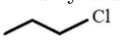
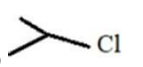
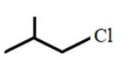
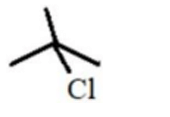
On prolonged heating with HI, glucose gives a compound 'C', which can be obtained by Wurtz reaction using sodium metal and compound 'D'. Identify 'D'
1
2
3
4
Official Solution
Correct Option:
(3)
Step 1: Understanding the Concept:
This question involves two classic organic reactions:
1. The reduction of glucose with hydroiodic acid (HI), a powerful reducing agent that converts oxygen-containing groups to hydrogen.
2. The Wurtz reaction, which couples two alkyl halide molecules in presence of sodium metal in dry ether to form a larger alkane. Step 2: Identifying Compound 'C':
Glucose (C H O ) contains an aldehyde group and several hydroxyl groups. When heated for a long time with concentrated HI, all oxygen atoms are replaced by hydrogen atoms. This reduces glucose completely to a straight-chain hydrocarbon containing six carbon atoms — n-hexane.
This experiment demonstrates that all six carbon atoms in glucose are arranged in an unbranched chain. Therefore, ‘C’ = n-hexane. Step 3: Formation of 'C' by Wurtz Reaction:
The Wurtz reaction is given by:
To obtain n-hexane (C H ), each alkyl halide must contain half the total number of carbon atoms, i.e., 3 carbons. Thus, the required alkyl halide is a propyl halide. When two molecules of 1-chloropropane react with sodium, they couple to form n-hexane:
Hence, the halide ‘D’ must be 1-chloropropane. Wurtz reaction gives the best yield with primary halides, making 1-chloropropane the most suitable choice. Step 4: Evaluating the Options:
Let us analyze the given options: (A) 1-Chloropropane: CH CH CH Cl — correct, forms n-hexane. (B) 2-Chloropropane: (CH ) CHCl — gives 2,3-dimethylbutane (branched). (C) 2-Chlorobutane: CH CH CH(Cl)CH — 4-carbon chain, incorrect. (D) 1-Chloro-2-methylpropane: (CH ) CHCH Cl — branched 4-carbon halide, incorrect. Only option (A) can give a straight-chain C H via the Wurtz reaction. Step 5: Conclusion:
The compound ‘C’ obtained from glucose is n-hexane, and to prepare it by the Wurtz reaction, the halide ‘D’ must be 1-chloropropane.
09
PYQ 2025
medium
chemistryID: ts-eamce
Maltose on hydrolysis gives two monosaccharide units. The incorrect statement about the monosaccharides formed is
1
Both are -D-glucose units only
2
One is -D-glucose and second one is -D-fructose
3
Both are reducing sugars
4
In maltose, they are joined through 1,4-glycosidic linkage
Official Solution
Correct Option:
(2)
Let's analyze the properties of maltose and its hydrolysis products. Maltose is a disaccharide, also known as malt sugar. The hydrolysis of maltose yields two molecules of glucose. Specifically, it yields two molecules of -D-glucose. Maltose -D-glucose + -D-glucose Now let's evaluate the given statements based on this information. The question asks for the incorrect statement about the products (which are two glucose units). (A) Both are -D-glucose units only:
This is the correct product of maltose hydrolysis. This statement is correct. (B) One is -D-glucose and second one is -D-fructose:
This describes the hydrolysis products of sucrose, not maltose. Sucrose hydrolysis gives one molecule of glucose and one molecule of fructose. This statement is incorrect. (C) Both are reducing sugars:
The product is glucose. Glucose is a monosaccharide with a free hemiacetal group, which can open to form an aldehyde group. Aldehyde groups can be oxidized, making glucose a reducing sugar. Since both units are glucose, this statement is correct. (D) In maltose, they are joined through 1,4-glycosidic linkage:
This statement is about the structure of maltose itself, not the products. In maltose, the two -D-glucose units are linked by a glycosidic bond between the C1 of the first glucose unit and the C4 of the second glucose unit. This is called an -1,4-glycosidic linkage. This statement is correct. The question asks for the incorrect statement. Statement (B) is factually incorrect for the hydrolysis of maltose.
10
PYQ 2025
medium
chemistryID: ts-eamce
Observe the following reactions I. II. The catalysts and in the above reactions are respectively
1
2
3
4
Official Solution
Correct Option:
(3)
Step 1: Analyze Reaction I.
Reaction I is the reduction of carbon monoxide ( ) with hydrogen ( ) to form methanal (formaldehyde, ):
This reaction is a specific hydrogenation reaction. Copper ( ) catalysts are known to be selective for the formation of aldehydes and alcohols (like methanol, ) from Syngas ( ) under certain conditions (usually lower temperatures and pressures).
The catalyst is Copper ( ).
Step 2: Analyze Reaction II.
Reaction II is the complete reduction of carbon monoxide ( ) with hydrogen ( ) to form methane ( ) and water:
This reaction is known as the Sabatier reaction or methanation reaction. Nickel ( ) is a highly effective and typical catalyst for the complete methanation of (and ) at elevated temperatures.
The catalyst is Nickel ( ).
Step 3: Conclude the final answer.
The catalysts and are and respectively.
11
PYQ 2025
medium
chemistryID: ts-eamce
Amino acid 'X' contains phenolic hydroxy group and amino acid 'Y' contains amide group. 'X' and 'Y' respectively are
1
2
3
4
Official Solution
Correct Option:
(4)
Step 1: Identify the amino acid X with a phenolic hydroxy group.
A phenolic hydroxy group is a hydroxyl ( ) group attached directly to a benzene ring.
We check the standard amino acids (AAs):
- ( ) has an aliphatic primary alcohol ( ).
- ( ) has a -hydroxyphenyl side chain ( ), which contains a phenolic hydroxy group.
Therefore, amino acid X is .
Step 2: Identify the amino acid Y with an amide group.
An amide group has the structure .
We check the standard amino acids:
- ( ) has a side chain with an amide group ( ).
- ( ) has a side chain with an amide group ( ).
Since the options list (X) with either or , and is the second member of option (D), let's check the options.
Option (D) lists ( ) and ( ). contains an amide group.
Option (C) lists ( , which is wrong) and ( , which is correct).
Step 3: Conclude the final correct option.
Amino acid X ( ) has a phenolic group.
Amino acid Y ( ) has an amide group.
The pair (X, Y) is .
12
PYQ 2025
hard
chemistryID: ts-eamce
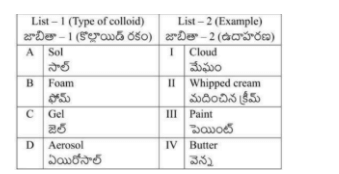
Match the following The correct answer is
1
A-IV, B-II, C-III, D-I
2
A-III, B-I, C-IV, D-II
3
A-III, B-II, C-IV, D-I
4
A-IV, B-I, C-II, D-III
Official Solution
Correct Option:
(3)
Let's define each type of colloid based on its dispersed phase and dispersion medium. A. Sol: A sol is a colloid where a solid is the dispersed phase and a liquid is the dispersion medium.
- Example: Paint consists of solid pigment particles dispersed in a liquid medium. So, A matches with III. B. Foam: A foam is a colloid where a gas is the dispersed phase and a liquid is the dispersion medium.
- Example: Whipped cream is made by dispersing air (gas) into cream (liquid). So, B matches with II. C. Gel: A gel is a colloid where a liquid is the dispersed phase and a solid is the dispersion medium. It forms a semi-solid network.
- Example: Butter is an emulsion of water (liquid) dispersed in fat (solid). It has a gel-like consistency. So, C matches with IV. (Jelly is another common example). D. Aerosol: An aerosol is a colloid where either a solid or a liquid is the dispersed phase and a gas is the dispersion medium.
- Example: Cloud consists of fine water droplets (liquid) dispersed in air (gas). Fog and mist are similar examples. So, D matches with I. Matching the lists:
A III
B II
C IV
D I This corresponds to option (C).
13
PYQ 2025
medium
chemistryID: ts-eamce
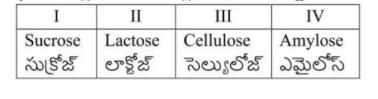
Which of the following saccharides contain -D-glucose units?
1
II, IV
2
II, III
3
I, III
4
I, IV
Official Solution
Correct Option:
(2)
Step 1: Analyze Monomer Units and Linkages:
I. Sucrose: -D-Glucose + -D-Fructose. (Linkage: ).
II. Lactose: -D-Galactose + -D-Glucose. (Linkage: ). Contains -D-glucose.
III. Cellulose: Polymer of -D-Glucose. (Linkage: ). Purely -D-glucose units.
IV. Amylose (Starch): Polymer of -D-Glucose. (Linkage: ).
Step 2: Selection:
Lactose and Cellulose contain -D-Glucose units.
This corresponds to II and III.
14
PYQ 2025
medium
chemistryID: ts-eamce
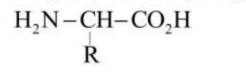
The general structure of alpha amino acid can be represented as . Which amino acid is not correctly matched with R-given?
1
R = -CH -C H -OH(p) - (Tyrosine)
2
R = -CH -SH - (Cysteine)
3
R = -CH -CH -S-CH - (Serine)
4
Official Solution
Correct Option:
(3)
We need to check if the given R group (side chain) corresponds to the named amino acid. (A) Tyrosine (Tyr, Y): Its side chain is a p-hydroxybenzyl group. The formula is -CH -C H -OH. This match is correct. (B) Cysteine (Cys, C): Its side chain contains a thiol group. The formula is -CH -SH. This match is correct. (C) Serine (Ser, S): Its side chain is a hydroxymethyl group. The formula is -CH -OH. The R group given is -CH -CH -S-CH . This R group actually belongs to Methionine (Met, M). Therefore, the match with Serine is incorrect. (D) Asparagine (Asn, N): Its side chain is the amide derivative of aspartic acid. The formula is -CH -C(=O)-NH . This match is correct. The incorrectly matched pair is (C).
15
PYQ 2025
medium
chemistryID: ts-eamce
Consider the following
Assertion (A): Aspirin is useful in the prevention of heart attacks
Reason (R): Aspirin acts as anti-blood clotting agent
The correct answer is
1
Both A and R are correct and R is the correct explanation of A
2
Both A and R are correct and R is not the correct explanation of A
3
A is correct and R is not correct
4
A is incorrect and R is correct
Official Solution
Correct Option:
(1)
Let's analyze the Assertion and the Reason. Assertion (A): Aspirin is useful in the prevention of heart attacks. This is a well-established medical fact. Low-dose aspirin is widely prescribed for secondary prevention of cardiovascular events, including heart attacks, in high-risk patients. So, the assertion is correct. Reason (R): Aspirin acts as an anti-blood clotting agent. This is also correct. The mechanism of action of aspirin involves the irreversible inhibition of the cyclooxygenase (COX) enzyme. In platelets, this prevents the synthesis of thromboxane A2, a substance that promotes platelet aggregation and vasoconstriction. By inhibiting platelet aggregation, aspirin reduces the formation of blood clots (thrombi). This property is known as its antiplatelet or anti-blood clotting effect. So, the reason is correct. Relationship between A and R: Heart attacks (myocardial infarctions) are most often caused by the formation of a blood clot in a coronary artery, which blocks blood flow to a part of the heart muscle. Since aspirin helps to prevent the formation of these blood clots, it is useful in preventing heart attacks. Therefore, the reason (R) is the correct explanation for the assertion (A). Both statements are correct, and R correctly explains A.
16
PYQ 2025
medium
chemistryID: ts-eamce
The source of an enzyme is malt and that enzyme converts X into Y. X and Y respectively are
1
Starch, maltose
2
Maltose, glucose
3
Proteins, peptides
4
Glucose, fructose
Official Solution
Correct Option:
(1)
Step 1: Understanding the Concept:
This question is about enzymes and their specific actions in biochemical reactions, particularly related to carbohydrates. Malt, which is germinated barley, is a rich source of enzymes used in brewing and other processes. Step 2: Analyzing the Enzymes in Malt:
Malt contains several enzymes, but the most prominent ones involved in carbohydrate breakdown are:
1. Diastase (Amylase): This is a class of enzymes that catalyze the hydrolysis of starch into smaller sugar molecules. Specifically, diastase breaks down starch (a complex polysaccharide) into maltose (a disaccharide).
2. Maltase: This enzyme catalyzes the hydrolysis of the disaccharide maltose into two molecules of the monosaccharide glucose. Step 3: Evaluating the Options:
The question states that an enzyme from malt converts X into Y.
- (A) Starch, maltose: The enzyme diastase, found in malt, converts starch (X) into maltose (Y). This is a correct and very well-known biochemical process.
- (B) Maltose, glucose: The enzyme maltase, also found in malt, converts maltose (X) into glucose (Y). This is also a correct process.
- (C) Proteins, peptides: This conversion is done by protease enzymes, which are not the primary enzymes for which malt is known in this context.
- (D) Glucose, fructose: This is an isomerization reaction catalyzed by an isomerase enzyme. Step 4: Choosing the Best Answer:
Both (A) and (B) describe reactions catalyzed by enzymes found in malt. However, the term "malt" in biochemistry and industry is most famously associated with the initial breakdown of starch reserves in the grain. The primary enzyme responsible for this is diastase (amylase). Therefore, the conversion of starch to maltose is the most characteristic and fundamental enzymatic reaction associated with malt. The question asks for "an enzyme," and diastase converting starch to maltose is the most fitting answer. Final Answer: The most appropriate answer describing the action of an enzyme from malt is the conversion of Starch to Maltose. Therefore, option (A) is correct.
17
PYQ 2025
medium
chemistryID: ts-eamce
Consider the following statements Statement-I: Oxides of sulphur and nitrogen are air pollutants Statement-II: Photochemical smog is a reducing smog The correct answer is
1
Both statements I and II are correct
2
Both statements I and II are not correct
3
Statement I is correct, but statement II is not correct
4
Statement I is not correct, but statement II is correct
Official Solution
Correct Option:
(3)
1. Statement I: SO (e.g., SO ) and NO (e.g., NO, NO ) are major air pollutants, causing acid rain and health issues, so I is correct.
2. Statement II: Photochemical smog, formed from NO and VOCs under sunlight, is oxidizing (produces O , oxidants), not reducing (like London smog with SO ).
3. Thus, II is incorrect.
4. Therefore, the correct option is (3) Statement I is correct, but statement II is not correct.
18
PYQ 2025
medium
chemistryID: ts-eamce
The hormone 'X' increases glucose levels in blood. Low levels of other hormone 'Y' causes lethargyness. What are X, Y respectively?
1
Glucagon, thyroxine
2
Insulin, epinephrine
3
Glucagon, estradiol
4
Insulin, thyroxine
Official Solution
Correct Option:
(1)
1. Hormone X increases blood glucose: Glucagon raises glucose by promoting glycogenolysis and gluconeogenesis, correct. Insulin lowers glucose, so incorrect.
2. Hormone Y, low levels cause lethargy: Thyroxine (T4) regulates metabolism; deficiency (hypothyroidism) causes lethargy, correct.
3. Epinephrine increases glucose but is not linked to lethargy. Estradiol affects reproduction, not lethargy.
4. Thus, X = glucagon, Y = thyroxine, so the answer is (1) Glucagon, thyroxine.
19
PYQ 2025
medium
chemistryID: ts-eamce
Increase in concentration of 'X' in blood of pregnant women who smoke may induce premature delivery. What is 'X'?
1
CO
2
O
3
CO
4
NO
Official Solution
Correct Option:
(1)
Carbon monoxide (CO) binds to hemoglobin forming carboxyhemoglobin, reducing oxygen transport. In pregnant women, this can induce fetal hypoxia, increasing risk of premature delivery. Other gases listed do not have the same effect.
20
PYQ 2025
medium
chemistryID: ts-eamce
Source for vitamin C and vitamin E respectively are:
1
Citrus fruits, eggs
2
Amla, Sunflower oil
3
Green vegetables, fish
4
Green leafy vegetables, Fish liver oil
Official Solution
Correct Option:
(2)
Vitamin C is abundant in Amla (Indian gooseberry), and Vitamin E is abundant in sunflower oil. Other options are incorrect sources.
About Biomolecules - TS-EAMCET
Biomolecules is a vital chapter for TS-EAMCET aspirants. Mastering the concepts covered in this chapter is essential for securing a top rank.
By rigorously practicing the previous year questions associated with this chapter, you can identify high-yield topics, understand the examiner's perspective, and boost your confidence during the actual exam.
Frequently Asked Questions
Why focus on Biomolecules PYQs?
Analyzing PYQs for this specific chapter reveals the most frequently tested concepts and the typical complexity of questions, allowing you to tailor your study plan efficiently.
How to best use this analysis?
Review the topic breakdown to see which sub-topics within Biomolecules carry the most weight. Then, tackle the questions iteratively to solidify your understanding.