Chemical Kinetics
18 previous year questions.
High-Yield Trend
Chapter Questions 18 MCQs
The rate law for the decomposition of hydrogen iodide is - = d[HI]/dt = k[HI]2. The units of rate constant k are:
L mol-1 s-1
L-1 mol s-1
L2 mol-2 s-1
L1/2 mol1/2 s-1
45
Match the following industrial processes with the catalysts used:
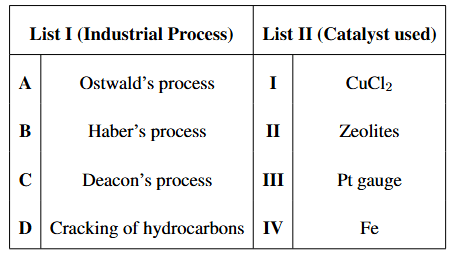
Cracking of hydrocarbons – Fe
Among the following, the calcination process is:
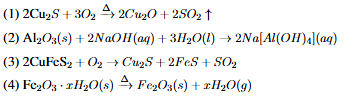
(1) 2Cu2S + 3O2 →Δ 2Cu2O + 2SO2 ↑
(2) Al2O3(s) + 2NaOH(aq) + 3H2O(l) → 2Na[Al(OH)4](aq)
(3) 2CuFeS2 + O2 → Cu2S + 2FeS + SO2
(4) Fe2O3 · xH2O(s) →Δ Fe2O3(s) + xH2O(g)
Match the following:
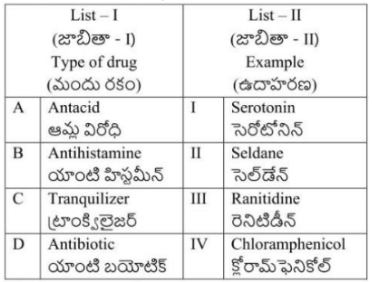
In Haber’s process of manufacture of ammonia, the ‘catalyst’, the ‘promoter’, and‘ poison for the catalyst’ are respectively:
For a first-order reaction, the graph between (on y-axis) and time (in min, on x-axis) gave a straight line passing through the origin. The slope is min . What is the rate constant (in min )?
For a first order decomposition of a certain reaction, rate constant is given by the equation
. The activation energy of the reaction (in kJ mol⁻¹) is ( )
Note: The provided value for R is 8.3. We will use the more precise value R=8.314 J K⁻¹ mol⁻¹ for accuracy, as is standard.
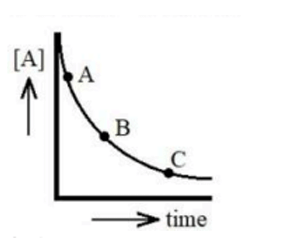
About Chemical Kinetics - TS-EAMCET
Chemical Kinetics is a vital chapter for TS-EAMCET aspirants. Mastering the concepts covered in this chapter is essential for securing a top rank.
By rigorously practicing the previous year questions associated with this chapter, you can identify high-yield topics, understand the examiner's perspective, and boost your confidence during the actual exam.
Frequently Asked Questions
Why focus on Chemical Kinetics PYQs?
Analyzing PYQs for this specific chapter reveals the most frequently tested concepts and the typical complexity of questions, allowing you to tailor your study plan efficiently.
How to best use this analysis?
Review the topic breakdown to see which sub-topics within Chemical Kinetics carry the most weight. Then, tackle the questions iteratively to solidify your understanding.