Chemical Reactions
34 previous year questions.
High-Yield Trend
Chapter Questions 34 MCQs
Aluminum reacts with dilute HCL and liberates a gas 'A' and with aqueous alkali liberates a gas 'B'. A and B respectively are
Cl2, O2
O2,O2
Cl2.H2
H2,H2
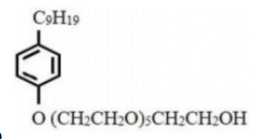
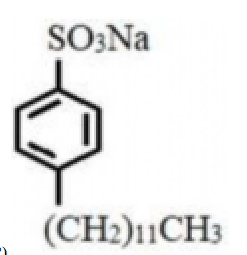
NO
Statement II: A closed vessel containing , , , has a pressure of 9 atm. About 1 g of charcoal was added to this vessel and after some time its pressure is atm. It is observed that . Choose the correct answer.
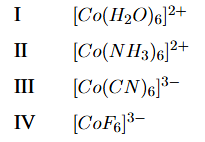
Arrange the following in increasing order of their crystal field splitting energy:
The effects that aspirin can produce in the body are:
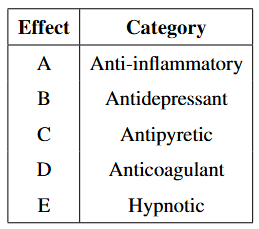
C, D, E
Fractional distillation
The proper conditions of storing are:
(1) Placing in wax-lined plastic bottle and kept in a dark
(2) Placing in a wax-lined plastic bottle and exposed to light
(3) Placing in a wax-lined plastic bottle containing traces of base
(4) Placing in metal vessel and exposed to light
Placing in metal vessel and exposed to light
Two statements are given below:
I. Milk sugar is a disaccharide of -D-galactose and -D-glucose.
II. Sucrose is a disaccharide of -D-glucose and -D-fructose. The correct answer is:
g
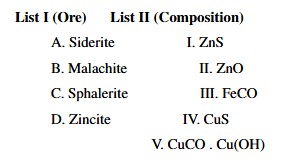
Match the following: List I (Ore) List II (Composition)
A few sols are given below:
As2S3 sol, starch sol, Al2O3 ·
xH2O sol, TiO2 sol, gold sol, congo red sol, blood, methylene blue sol, CdS sol
The number of positively charged sols in the above list is:
Statement I: Chlorobenzene is less reactive than benzene towards electrophilic substitution due to the -I effect of chlorine.
Statement II: Because of the -I effect of chlorine, it is a meta directing group.
What are and respectively in the following reactions?
X → CO B2H6 → NaH → (C2H5)2O Y
Options:
- (1) BH3, 2CO; NaBO2
- (2) BH3, CO; NaBH4
- (3) BH3, CO; NaBO2
- (4) BH3, CO; Na2B4O7
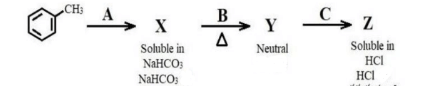
What are the reagents A, B, and C respectively in the following reaction sequence? Reaction Sequence:
II. is used in the industrial preparation of sodium perborate
III. is insoluble in water
Match the following:
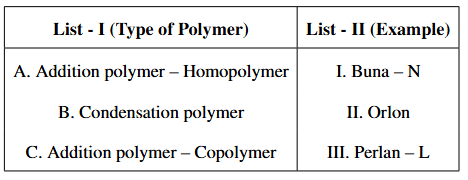
Chemical Compounds
A: CH3CH2CHO
B: CH3COCH3
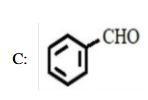
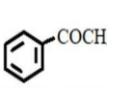
D:
About Chemical Reactions - TS-EAMCET
Chemical Reactions is a vital chapter for TS-EAMCET aspirants. Mastering the concepts covered in this chapter is essential for securing a top rank.
By rigorously practicing the previous year questions associated with this chapter, you can identify high-yield topics, understand the examiner's perspective, and boost your confidence during the actual exam.
Frequently Asked Questions
Why focus on Chemical Reactions PYQs?
Analyzing PYQs for this specific chapter reveals the most frequently tested concepts and the typical complexity of questions, allowing you to tailor your study plan efficiently.
How to best use this analysis?
Review the topic breakdown to see which sub-topics within Chemical Reactions carry the most weight. Then, tackle the questions iteratively to solidify your understanding.