TS-EAMCET SERIES
Chemistry

Thermodynamics Terms

5 previous year questions.

Volume: 5 Ques
Yield: Medium

High-Yield Trend

1
2025
3
2024
1
2017

Chapter Questions
5 MCQs

01
PYQ 2017
easy
chemistry ID: ts-eamce
Which of the following is true for spontaneous adsorption of gas without dissociation on solid surface
1
Process is exothermic and
2
Process is endothermic and
3
Process is exothermic and
4
Process is endothermic and
02
PYQ 2024
medium
chemistry ID: ts-eamce
At T(K), for the dissociation of is mol L . The number of moles of that must be taken in 1.0 L flask at the same temperature to get 0.2 mol of chlorine at equilibrium is
1

2

3

4

03
PYQ 2024
medium
chemistry ID: ts-eamce
The incorrect rule regarding the determination of significant figures is:
1
Zeros preceding to first non-zero digit are not significant.
2
Zeros between two non-zero digits are not significant.
3
Zeros at the right end of the number are significant if they are on the right side of decimal point.
4
All non-zero digits are significant.
04
PYQ 2024
easy
chemistry ID: ts-eamce
At 61 K, one mole of an ideal gas of 1.0 L volume expands isothermally and reversibly to a final volume of 10.0 L. What is the work done in the expansion?
1
L atm
2
L atm
3
L atm
4
L atm
05
PYQ 2025
easy
chemistry ID: ts-eamce

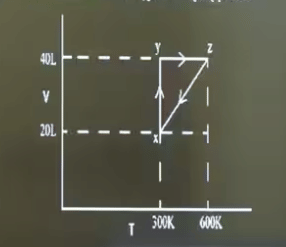
The following graph indicates the system containing 1 mole of gas involving various steps. When it moves from Z to X, the type of undergoing process is: 
 

1
Cyclic
2
Isothermal
3
Isobaric
4
Adiabatic

About Thermodynamics Terms - TS-EAMCET

Thermodynamics Terms is a vital chapter for TS-EAMCET aspirants. Mastering the concepts covered in this chapter is essential for securing a top rank.

By rigorously practicing the previous year questions associated with this chapter, you can identify high-yield topics, understand the examiner's perspective, and boost your confidence during the actual exam.

Frequently Asked Questions

Why focus on Thermodynamics Terms PYQs?

Analyzing PYQs for this specific chapter reveals the most frequently tested concepts and the typical complexity of questions, allowing you to tailor your study plan efficiently.

How to best use this analysis?

Review the topic breakdown to see which sub-topics within Thermodynamics Terms carry the most weight. Then, tackle the questions iteratively to solidify your understanding.