Biotechnology
99 previous year questions.
High-Yield Trend
Chapter Questions 99 MCQs
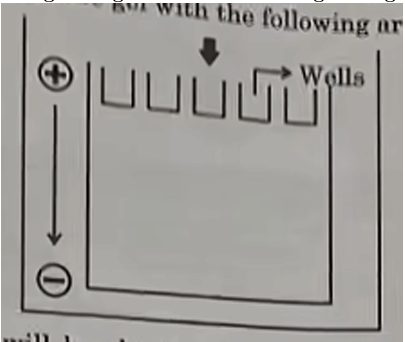
(ii) (1) State the importance of gel electrophoresis in biotechnology.
(2) Explain the principle on which this technique works.
(3) Mention why ethidium bromide is used in this technique.
OR
(b) (i) How was Bt cotton, the genetically modified crop, has greatly helped the cotton farmers to increase their crop yield?
(ii) Describe the mechanism that leads to the death of bollworms feeding on Bt cotton plants.
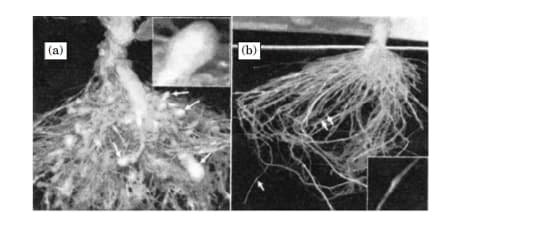
(a) Roots of a typical control tobacco crop plant (infected).
(b) Transgenic tobacco plant showing healthy roots even after deliberate infection by nematode.
Explain how this transformation was achieved in the tobacco plant.
Reason (R): Fungal cell wall is degraded by the enzyme cellulase.
Reason (R): Genetic modification of organisms has no effect when such organisms are introduced into the ecosystem.
Reason (R): It is able to deliver a piece of DNA known as ‘T-DNA’ to transform normal plant cells into a tumor.
Assertion (A): Linked genes do not show dihybrid F2 ratio 9 : 3 : 3 : 1.
Reason (R): Linked genes do not undergo independent assortment.
(a) Write the palindromic nucleotide sequence for following sequence of DNA segment:
5' – GAATTC – 3'
(b) Name the restriction endonuclease that recognizes this sequence.
(c) How are sticky ends produced? Mention their role.
- Why are transgenic animals so called?
- With the help of an example each, explain the role of transgenic animals in the following:
- [(i)] Vaccine safety
- [(ii)] Biological products
Answer the following questions:
[(i)] Explain why the insecticidal protein produced by Bacillus thuringiensis does not kill the bacteria itself.
[(ii)] How has man exploited this protein to produce cotton bollworm-resistant Bt cotton plant?
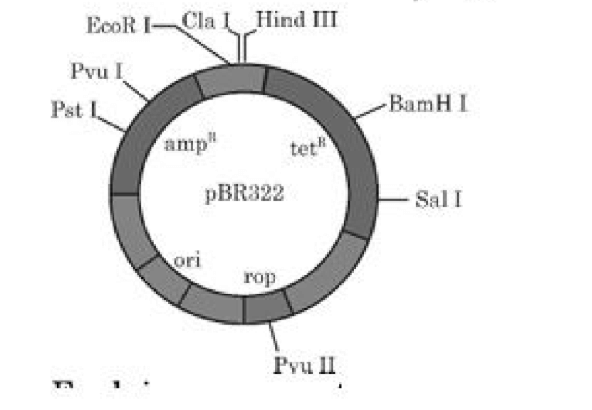
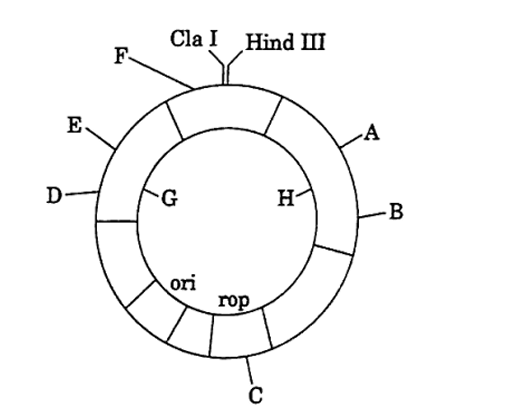
[(i)] Identify the selectable markers labelled as ‘a’ and ‘b’ in the given diagram of E. coli vector.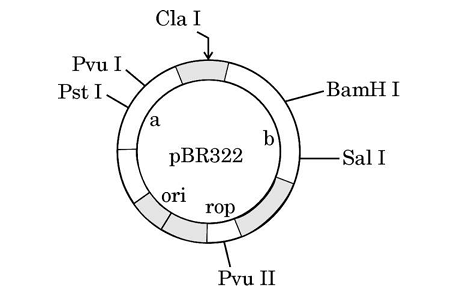
[(ii)] How is the coding sequence of enzyme -galactosidase considered a better marker than the ones identified by you in the diagram? Explain.
[(iii)] List any two uses of cloning vectors in biotechnology.
Reason (R): Suitable special nutrient media and sterile conditions are required in ‘in vitro’ conditions for the division of cells in explants.
Student to attempt either option (A) or (B).
(A)
(i) Explain how is a bacterial cell made ‘competent’ to take up recombinant DNA from the medium.
(ii) Explain the steps of amplification of gene of interest using PCR technique.
OR
(B) (i) What are transgenic animals?
(ii) Why are these animals being produced? Explain any four reasons.
(b) Why the insulin extracted from an animal source is not in use these days?
Observe the given sequence of nitrogenous bases on a DNA fragment and answer the following questions: 
(a) Name the restriction enzyme which can recognise the DNA sequence.
(b) Write the sequence after restriction enzyme cut the palindrome.
(c) Why are the ends generated after digestion called as ‘Sticky Ends’?
Reason (R): Palindromic sequence has two unique recognition sites PstI and PvuI recognised by the restriction endonuclease.
(ii) Describe all the methods used to treat or cure Adenosine deaminase deficiency in humans.
Reason (R): Suitable special nutrient media and sterile conditions are required in in vitro conditions for the division of cells in explants.
(A) Name the Indian crop variety for which, in 1997, an American company got patent rights through the US Patent and Trademark Office. This is considered a case of Biopiracy. Justify.
OR
(B) State two purposes for which the Indian Government has set up GEAC (Genetic Engineering Approval Committee).
(b) Write in brief how the process is carried out in the laboratory.
(c) Name any two important food plants grown commercially by this method.
(b) With the help of an example each, explain the role of transgenic animals in the following:
- [(i)] Vaccine safety
- [(ii)] Biological products
Is it a permanent cure? How can ADA be cured permanently?
OR
(B) Explain how human functional insulin was produced by using recombinant DNA (rDNA) technology.
Reason (R): \textit{Chromosomes have specific sequences called ‘ori’ region, where DNA replication is initiated.
Reason (R): Transgenic microorganisms can be developed to produce proteins of human use, like insulin.
OR
(B) Explain any two molecular diagnostic techniques that help to detect pathogens from suspected patient.
5' – GAATTC – 3'
(b) Name the restriction endonuclease that recognizes this sequence.
(c) How are sticky ends produced? Mention their role.
Assertion (A): The meristems are grown ‘in vitro’ to obtain virus-free plants from an infected plant.
Reason (R): If the plant is infected with a virus, the roots and the stems are free of virus.
DNA ligase
Step-2 \quad Recombinant DNA molecule
Step-3 \quad Transfer of recombinant DNA molecule to the host cell
Step-4 \quad Replication of recombinant DNA molecule in the host cell \end{center} (a) Name the specific enzyme that might have been used to make the multiple copies of foreign DNA before undergoing Step-1 of the process.
(b) How does the use of restriction enzyme EcoR I in Step-1 facilitate the action of DNA ligase to form the recombinant DNA molecule? Explain.
(c) Name the most commonly used host in the above process.
Reason (R): Suitable special nutrient media and sterile conditions are required in ‘in vitro’ conditions for the division of cells in explants.
(A) is false, but (R) is true.
Protease
(a) Name and explain the biotechnological strategy wherein the infection by the nematode Meloidogyne incognitia can be prevented using Agrobacterium vectors in the roots of tobacco plant by RNA interference.
The basic scheme of the essential steps involved in the process of recombinant DNA technology is summarized below in the form of a flow diagram. Study the given flow diagram and answer the questions that follow.
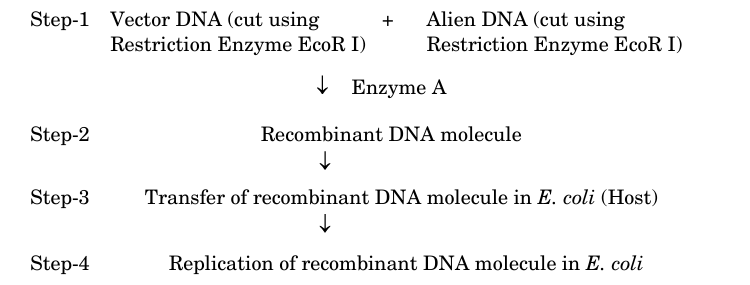
(a) Name the enzyme used in Step-1 to join the cut plasmid and alien DNA.
(b) State the technical term used for Step-3.
(c) Justify the use of the same Restriction Enzyme EcoRI to cut both the vector DNA and the alien DNA.
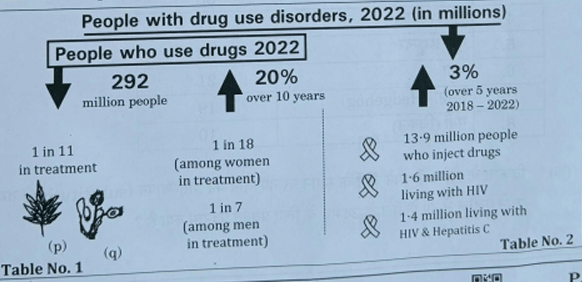
Prevention is the frontline response to drug use. Effective interventions address the underlying conditions contributing to drug use, such as a lack of connection to family or community, instability, insecurity, trauma, mental health issues, etc. When addressed, these factors can effectively prevent the initiation of drug use and the progression to drug use disorders. Study the few key figures of drug use given below and answer the questions that follow.
Reason (R) : Cells selected for somatic hybridisation have desirable characters.
(α) −1−antitrypsin
We know that plasmids and bacteriophages are the most commonly used vectors in biotechnology experiments. If we can link an alien piece of DNA to the plasmid DNA, the alien DNA can be multiplied equal to the copy number of the plasmid. Engineered vectors are used these days. Study the diagram of the E. coli cloning vector pBR322 and answer the questions that follow:
Reason (R) : It was human protein enriched milk containing human alpha lactalbumin.
About Biotechnology - CBSE-CLASS-XII
Biotechnology is a vital chapter for CBSE-CLASS-XII aspirants. Mastering the concepts covered in this chapter is essential for securing a top rank.
By rigorously practicing the previous year questions associated with this chapter, you can identify high-yield topics, understand the examiner's perspective, and boost your confidence during the actual exam.
Frequently Asked Questions
Why focus on Biotechnology PYQs?
Analyzing PYQs for this specific chapter reveals the most frequently tested concepts and the typical complexity of questions, allowing you to tailor your study plan efficiently.
How to best use this analysis?
Review the topic breakdown to see which sub-topics within Biotechnology carry the most weight. Then, tackle the questions iteratively to solidify your understanding.