Ecology And Environment
9 previous year questions.
High-Yield Trend
Chapter Questions 9 MCQs
(b) Explain the biological treatment of the major part of the sludge transferred from the large aeration tank into the anaerobic sludge digesters before its final release into the natural water bodies.
(b) Define BOD. Explain how it is a measure of the organic matter present in the water body.
Study the figure given below and answer the questions that follow.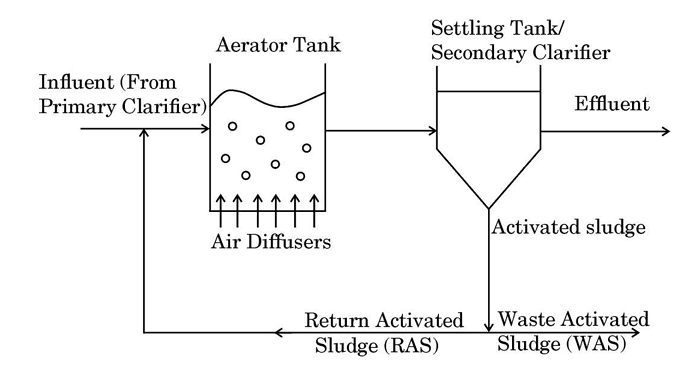
- Identify the figure and state its importance.
- Why is air diffused into the aerator tank? Explain.
-
- [(i)] What changes take place in the settling tank?
OR - [(ii)] How is BOD related to organic matter present in the water?
- [(i)] What changes take place in the settling tank?
Highly conserved proteins such as Haemoglobin and Cytochrome-C provide the best biochemical evidence to trace evolutionary relationships between different groups. Cytochrome-C is formed of 104 amino acids. Cytochrome-C is the respiratory pigment present in all eukaryotic cells. It has evolved at a constant rate during evolution. In chimpanzees and humans, Cytochrome-C genes are identical. The given data shows the evolution of the Cytochrome-C gene in different mammals from kangaroos, cows, rodents to humans:
| Groups | Nucleotide substitution in the gene of Cytochrome-C | Millions of years ago |
|---|---|---|
| Human/Kangaroo | 100 | 125 mya |
| Human/Cow | 75 | 120 mya |
| Human/Rodent | 60 | 75 mya |
(a) Select the correct option for the time of separation of two groups and the number of nucleotide substitutions in the gene of Cytochrome-C:
| Options | Time of separation of two groups during evolution | Number of nucleotide substitutions |
|---|---|---|
| (i) | Lesser | Greater |
| (ii) | Greater | Lesser |
| (iii) | Greater | Greater |
(b) What do you infer about the type of evolution (convergent or divergent) for the given pair of groups and why?
(i) Human and Kangaroo
(ii) Human and Rodent
(c)
(i) Define convergent evolution.
OR
(ii) Define divergent evolution.
About Ecology And Environment - CBSE-CLASS-XII
Ecology And Environment is a vital chapter for CBSE-CLASS-XII aspirants. Mastering the concepts covered in this chapter is essential for securing a top rank.
By rigorously practicing the previous year questions associated with this chapter, you can identify high-yield topics, understand the examiner's perspective, and boost your confidence during the actual exam.
Frequently Asked Questions
Why focus on Ecology And Environment PYQs?
Analyzing PYQs for this specific chapter reveals the most frequently tested concepts and the typical complexity of questions, allowing you to tailor your study plan efficiently.
How to best use this analysis?
Review the topic breakdown to see which sub-topics within Ecology And Environment carry the most weight. Then, tackle the questions iteratively to solidify your understanding.