CBSE-CLASS-XII SERIES
Biology

Immunology

10 previous year questions.

Volume: 10 Ques
Yield: Medium

High-Yield Trend

3
2026
5
2025
2
2024

Chapter Questions
10 MCQs

01
PYQ 2024
medium
biology ID: cbse-cla
(a) Differentiate between humoral immune response and cell-mediated immune response.
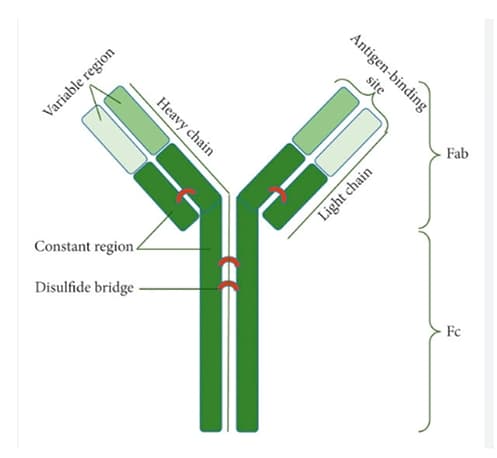
(b) Draw a schematic diagram of an antibody molecule and label any four parts.
02
PYQ 2024
medium
biology ID: cbse-cla
Assertion (A): Virus-infected cells produce interferons.
Reason (R): Interferons can cause inflammation of virus-infected cells.
1
Both Assertion (A) and Reason (R) are true and Reason (R) is the correct explanation of the Assertion (A).
2
Both Assertion (A) and Reason (R) are true, but Reason (R) is not the correct explanation of the Assertion (A).
3
Assertion (A) is true, but Reason (R) is false.
4
Assertion (A) is false, but Reason (R) is true.
03
PYQ 2025
medium
biology ID: cbse-cla
The decrease in the T-Lymphocytes count in human blood will finally result in
1
decrease in antigens
2
decrease in antibodies
3
increase in antibodies
4
increase in antigens
04
PYQ 2025
medium
biology ID: cbse-cla
Immunity in our body is of two types: (i) Innate immunity and (ii) acquired immunity. Innate immunity is a non-specific defence mechanism, whereas acquired immunity is pathogen-specific; it is called specific immunity too. Acquired immunity is characterised by memory. Antibodies are specific to antigens and there are different types of antibodies produced in our body: they are IgA, IgE, IgG, IgC, and IgM. It shows primary response when it encounters the pathogen for the first time and secondary response during the subsequent encounters with the same antigen/pathogen.

(d) How is active immunity different from passive immunity?

05
PYQ 2025
medium
biology ID: cbse-cla
Immunity in our body is of two types: (i) Innate immunity and (ii) acquired immunity. Innate immunity is a non-specific defence mechanism, whereas acquired immunity is pathogen-specific; it is called specific immunity too. Acquired immunity is characterised by memory. Antibodies are specific to antigens and there are different types of antibodies produced in our body: they are IgA, IgE, IgG, IgC, and IgM. It shows primary response when it encounters the pathogen for the first time and secondary response during the subsequent encounters with the same antigen/pathogen.

(c) The organ transplants are often rejected if not taken from suitable compatible persons. [(i)] Mention the characteristic of our immune system that is responsible for the graft rejection. [(ii)] Name the type of immune response and the cell involved in it.

06
PYQ 2025
medium
biology ID: cbse-cla
Immunity in our body is of two types: (i) Innate immunity and (ii) acquired immunity. Innate immunity is a non-specific defence mechanism, whereas acquired immunity is pathogen-specific; it is called specific immunity too. Acquired immunity is characterised by memory. Antibodies are specific to antigens and there are different types of antibodies produced in our body: they are IgA, IgE, IgG, IgC, and IgM. It shows primary response when it encounters the pathogen for the first time and secondary response during the subsequent encounters with the same antigen/pathogen.

Why is the antibody-mediated immunity also called humoral immune response?

07
PYQ 2025
medium
biology ID: cbse-cla
Immunity in our body is of two types: (i) Innate immunity and (ii) acquired immunity. Innate immunity is a non-specific defence mechanism, whereas acquired immunity is pathogen-specific; it is called specific immunity too. Acquired immunity is characterised by memory. Antibodies are specific to antigens and there are different types of antibodies produced in our body: they are IgA, IgE, IgG, IgC, and IgM. It shows primary response when it encounters the pathogen for the first time and secondary response during the subsequent encounters with the same antigen/pathogen. Name the two types of specialised cells which carry out the primary and secondary immune response.
08
PYQ 2026
medium
biology ID: cbse-cla
Mention the source and the role of the following in providing defence against infection in the human body: (I) Histamine (II) Interferons
09
PYQ 2026
medium
biology ID: cbse-cla
Differentiate between active and passive immunity. Write any three differences.
10
PYQ 2026
medium
biology ID: cbse-cla
Draw the structure of an antibody molecule and label any four of its parts.