To solve the problem, we need to determine the relationship between compounds A and C in the given reaction sequence starting from CH₃CHO (acetaldehyde) and leading to the final product C.
1. Understanding the First Step (CH₃CHO to A):
The starting compound is CH₃CHO (acetaldehyde), and the reagents are (i) CH₃MgBr and (ii) H₃O⁺. CH₃MgBr is a Grignard reagent, which reacts with the carbonyl group of aldehydes to form alcohols. For acetaldehyde (CH₃CHO), the carbonyl carbon is attacked by the nucleophilic CH₃⁻ from CH₃MgBr, forming a tetrahedral intermediate. After hydrolysis with H₃O⁺, this yields a secondary alcohol:
CH₃CHO + CH₃MgBr → (CH₃)₂CHOMgBr → (CH₃)₂CHOH (2-propanol, a secondary alcohol).
Thus, A is (CH₃)₂CHOH.
2. Analyzing the Second Step (A to B):
Compound A undergoes a reaction with conc. H₂SO₄ and heat (Δ). Concentrated H₂SO₄ at high temperature typically dehydrates alcohols to form alkenes via an elimination reaction (E1 or E2 mechanism). For (CH₃)₂CHOH (2-propanol), dehydration removes a water molecule, forming propene:
(CH₃)₂CHOH → CH₃CH=CH₂ + H₂O.
Thus, B is CH₃CH=CH₂ (propene).
3. Analyzing the Third Step (B to C):
Compound B reacts with (i) B₂H₆ and (ii) H₂O₂, OH⁻. This is a hydroboration-oxidation reaction, which converts alkenes to alcohols with anti-Markovnikov addition and syn orientation. For propene (CH₃CH=CH₂), the double bond is between the first and second carbons. In hydroboration, the boron from B₂H₆ adds to the less substituted carbon (the terminal carbon, CH₂), and the hydrogen adds to the more substituted carbon (CHCH₃). Subsequent oxidation with H₂O₂ and OH⁻ replaces the boron with an OH group, yielding a primary alcohol:
CH₃CH=CH₂ → CH₃CH₂CH₂OH (1-propanol, a primary alcohol).
Thus, C is CH₃CH₂CH₂OH.
4. Comparing Compounds A and C:
- A is (CH₃)₂CHOH (2-propanol), a secondary alcohol with the structure CH₃-CH(OH)-CH₃.
- C is CH₃CH₂CH₂OH (1-propanol), a primary alcohol with the structure CH₃-CH₂-CH₂-OH.
Both A and C have the same molecular formula (C₃H₈O) since they are both alcohols with three carbons. However, the position of the OH group differs: in A, the OH is on the second carbon, and in C, the OH is on the first carbon.
5. Determining the Type of Isomerism:
- Since A and C have the same molecular formula (C₃H₈O) but differ in the position of the functional group (OH), they are positional isomers.
- They are not identical (different structures).
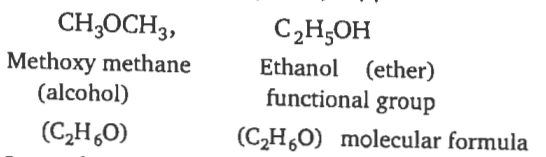
- They are not functional isomers (both are alcohols).
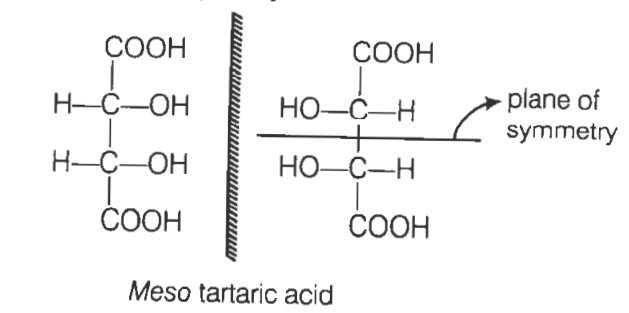
- They are not optical isomers (neither has a chiral center; A has a plane of symmetry, and C is a primary alcohol with no chiral carbon).
Final Answer:
A and C are positional isomers, so the answer is (B).