Which one of the following vitamins is not stored in adipose tissue?
1
E
2
A
3
B6
4
D
Official Solution
Correct Option:
(3)
Vitamins A, D, and E are fat-soluble vitamins and are typically stored in the adipose tissue of the body. On the other hand, Vitamin B is a water-soluble vitamin, and it is not stored in adipose tissue. Water-soluble vitamins are generally excreted through urine and do not accumulate in the body like fat-soluble vitamins.
The correct option is(C): B6
02
PYQ 2026
medium
chemistryID: kcet-202
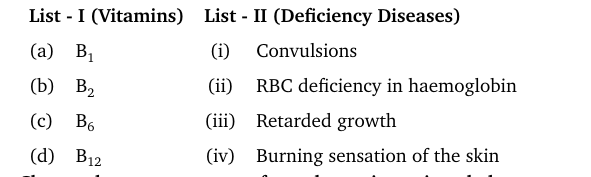
Match List - I with List – II
Choose the correct answer from the options given below.
1
a – ii, b – iv, c – iii, d – i
2
a – iii, b – iv, c – i, d – ii
3
a – i, b – ii, c – iii, d – iv
4
a – iv, b – iii, c – ii, d – i
Official Solution
Correct Option:
(2)
Step 1: Match each vitamin with its known deficiency disease. (a) Vitamin B (Thiamine): Deficiency of Thiamine causes the disease Beriberi, which affects the nervous system and heart. It can also lead to stunted or retarded growth in children. So, a plausible match is (iii). (b) Vitamin B (Riboflavin): Deficiency of Riboflavin can cause cheilosis (cracks at the corners of the mouth), skin disorders, and a burning sensation of the skin or tongue. So, a plausible match is (iv). (c) Vitamin B (Pyridoxine): Deficiency of Pyridoxine can lead to neurological symptoms, including depression, confusion, and convulsions. So, a plausible match is (i). (d) Vitamin B (Cobalamin): Deficiency of Vitamin B causes pernicious anemia, which is a type of megaloblastic anemia characterized by a deficiency of red blood cells (RBC). So, a plausible match is (ii). Step 2: Compile the matches.
The most likely correct matches are:
a iii
b iv
c i
d ii
Step 3: Final Answer.
This combination corresponds to option (B).
About Vitamins - KCET
Vitamins is a vital chapter for KCET aspirants. Mastering the concepts covered in this chapter is essential for securing a top rank.
By rigorously practicing the previous year questions associated with this chapter, you can identify high-yield topics, understand the examiner's perspective, and boost your confidence during the actual exam.
Frequently Asked Questions
Why focus on Vitamins PYQs?
Analyzing PYQs for this specific chapter reveals the most frequently tested concepts and the typical complexity of questions, allowing you to tailor your study plan efficiently.
How to best use this analysis?
Review the topic breakdown to see which sub-topics within Vitamins carry the most weight. Then, tackle the questions iteratively to solidify your understanding.