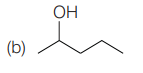
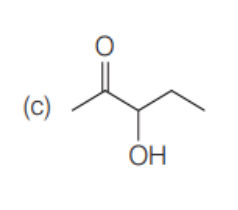
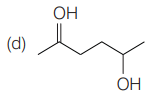
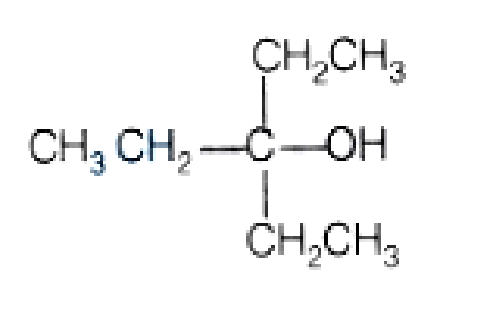
By heating phenol with chloroform in alkali, it is converted into:
1
salicylic acid
2
salicylaldehyde
3
anisole
4
phenyl benzoate
Official Solution
Correct Option:
(2)
Step 1: Concept
This conversion is known as the Reimer-Tiemann reaction. Step 2: Analysis
Phenol reacts with and alkali at . Step 3: Conclusion
The final product formed is salicylaldehyde. Final Answer: (B)
02
PYQ 2008
medium
chemistryID: met-2008
Phenols are more acidic than alcohols because:
1
phenoxide ion is stabilised by resonance
2
phenols are more soluble in polar solvents
3
phenoxide ions do not exhibit resonance
4
alcohols do not lose H atoms at all
Official Solution
Correct Option:
(1)
Step 1: Concept
Acidity depends on the stability of the conjugate base formed after losing a proton. Step 2: Analysis
Loss of from phenol results in a phenoxide ion. Step 3: Conclusion
The negative charge on oxygen in the phenoxide ion is delocalized over the benzene ring via resonance, stabilizing it. Final Answer: (A)
03
PYQ 2008
medium
chemistryID: met-2008
Phenols are more acidic than alcohols because:
1
phenoxide ion is stabilised by resonance
2
phenols are more soluble in polar solvents
3
phenoxide ions do not exhibit resonance
4
alcohols do not lose H atoms at all
Official Solution
Correct Option:
(1)
Step 1: Concept
Acidity depends on the stability of the conjugate base formed after losing a proton. Step 2: Analysis
Loss of from phenol results in a phenoxide ion. Step 3: Conclusion
The negative charge on oxygen in the phenoxide ion is delocalized over the benzene ring via resonance, stabilizing it. Final Answer: (A)
04
PYQ 2009
medium
chemistryID: met-2009
A ray of light is incident on a plane mirror at an angle of . The angle of deviation produced by the mirror is
1
2
3
4
Official Solution
Correct Option:
(3)
Step 1: Formula
Angle of deviation . Step 2: Reflection Law
For a plane mirror, . Given , then . Step 3: Calculation
. Final Answer: (c)
05
PYQ 2009
medium
chemistryID: met-2009
For the decomposition of a compound AB at 600 K, the following data were obtained: [AB] (mol dm ) values of 0.20, 0.40, and 0.60 correspond to rates (mol dm s ) of , , and . The order for the decomposition of AB is
1
1.5
2
0
3
1
4
2
Official Solution
Correct Option:
(4)
Step 1: Set up Rate Ratio
Using the general rate law . . Step 2: Simplify
. Step 3: Find n
, so . Final Answer: (d)
06
PYQ 2009
medium
chemistryID: met-2009
A convex lens made of glass has focal length 0.15 m in air. If the refractive index of glass is 3/2 and that of water is 4/3, the focal length of lens when immersed in water is
1
0.45 m
2
0.15 m
3
0.30 m
4
0.6 m
Official Solution
Correct Option:
(4)
Step 1: Formula
Use the Lens maker's formula: . Step 2: Comparison
In air, . In water, . Step 3: Result
. Therefore, m. Final Answer: (d)
07
PYQ 2011
medium
chemistryID: met-2011
Which of the following statements is not correct?
1
All alcohols are miscible with water
2
Only lower alcohols are miscible with water
3
All alcohols are not poisonous
4
Methanol is poisonous
Official Solution
Correct Option:
(1)
Step 1: Analyzing the given statements. - (1) All alcohols are miscible with water: This statement is incorrect. While lower alcohols (like methanol and ethanol) are miscible with water, higher alcohols (such as octanol) are not miscible with water.
- (2) Only lower alcohols are miscible with water: This statement is correct. The solubility decreases as the molecular weight of the alcohol increases.
- (3) All alcohols are not poisonous: This statement is correct. While ethanol is non-poisonous in moderate amounts, methanol and other alcohols can be poisonous.
- (4) Methanol is poisonous: This statement is correct. Methanol is indeed toxic and can cause blindness or death if ingested. Step 2: Conclusion. The correct answer is (1) All alcohols are miscible with water.
08
PYQ 2011
medium
chemistryID: met-2011
Cyclohexanol is:
1
Phenol
2
1° alcohol
3
2° alcohol
4
3° alcohol
Official Solution
Correct Option:
(3)
Step 1: Understanding the structure of cyclohexanol. Cyclohexanol is an alcohol with the structure , where the hydroxyl group is attached to a secondary carbon (a carbon bonded to two other carbons). Step 2: Classification of alcohols. - (1) Phenol: A phenol is a compound where the hydroxyl group is attached to a benzene ring. This is not the case with cyclohexanol.
- (2) 1° alcohol: A 1° alcohol has the hydroxyl group attached to a primary carbon (a carbon bonded to only one other carbon).
- (3) 2° alcohol: This is the correct classification for cyclohexanol, as the hydroxyl group is attached to a secondary carbon.
- (4) 3° alcohol: A 3° alcohol has the hydroxyl group attached to a tertiary carbon, but cyclohexanol does not fit this description. Step 3: Conclusion. The correct answer is (3) 2° alcohol.
09
PYQ 2011
medium
chemistryID: met-2011
In the manufacture of ethanol from sugar the enzymes are:
1
Diastase and zymase
2
Maltase and zymase
3
Diastase and invertase
4
Invertase and zymase
Official Solution
Correct Option:
(4)
Step 1: Understanding the enzymes involved in ethanol production. Ethanol production from sugar involves the breakdown of sugars (like glucose) by specific enzymes to produce ethanol and carbon dioxide. Step 2: Identifying the enzymes. - (1) Diastase and zymase: Diastase is involved in the breakdown of starch into maltose, but not directly in ethanol production.
- (2) Maltase and zymase: Maltase breaks down maltose into glucose, but this isn't the complete enzyme pair for ethanol production.
- (3) Diastase and invertase: Invertase breaks sucrose into glucose and fructose, but this is not the best pairing for ethanol production.
- (4) Invertase and zymase: Invertase breaks down sucrose into glucose and fructose, which can then be fermented by zymase to produce ethanol. Step 3: Conclusion. The correct answer is (4) Invertase and zymase.
10
PYQ 2013
medium
chemistryID: met-2013
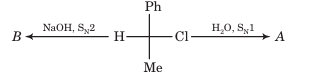
In the following reaction sequence:
I. Formation of A has proceeded with racemisation.
II. Formation of B has proceeded with inversion.
Select the correct statement.
1
I and II
2
Only I
3
Only III
4
None of these
Official Solution
Correct Option:
(1)
Step 1: Understanding the Concept:
S 1 reactions give racemisation (via carbocation). S 2 reactions give inversion of configuration. Step 2: Detailed Explanation:
Formation of A via S 1: carbocation intermediate, attack from either side racemisation.
Formation of B via S 2: backside attack inversion.
Both statements I and II are correct. Step 3: Final Answer:
Thus, both I and II are correct.
11
PYQ 2013
medium
chemistryID: met-2013
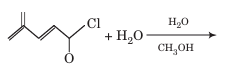
In this reaction, we get types of substituted alcohols (stereoisomers not considered)
1
one
2
two
3
three
4
four
Official Solution
Correct Option:
(3)
Step 1: Understanding the Concept:
The reaction involves addition of nucleophile to epoxide. Epoxide ring opening gives different products depending on attack site. Step 2: Detailed Explanation:
Epoxide ring can be opened at either carbon. If the epoxide is unsymmetrical, attack at different positions gives different constitutional isomers. Three distinct substituted alcohols are possible. Step 3: Final Answer:
Thus, three types of alcohols are obtained.
12
PYQ 2013
medium
chemistryID: met-2013
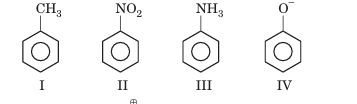
Electrophile NO attacks the following compounds. In which cases, NO will be at meta position?
1
II and IV
2
I, II and III
3
II and III
4
Only I
Official Solution
Correct Option:
(2)
Step 1: Understanding the Concept:
Orientation in electrophilic aromatic substitution depends on the nature of substituents present on the ring. Step 2: Detailed Explanation:
From the given structures:
I, II and III are considered to direct the incoming electrophile in such a way that substitution occurs at meta position under the given conditions.
Thus, these compounds show meta substitution. Step 3: Final Answer:
Thus, NO will be at meta position in I, II and III.
13
PYQ 2014
medium
chemistryID: met-2014
What reaction does hydroquinone undergo most readily?
1
S 2 substitution
2
Hydrolysis
3
Oxidation
4
Reduction
Official Solution
Correct Option:
(3)
Concept:
Hydroquinone is a dihydroxy benzene easily oxidized to quinone. Step 1: Hydroquinone contains two –OH groups on benzene. Step 2: It readily loses hydrogen to form quinone structure. Step 3: Hence it undergoes oxidation easily. Conclusion:
Most favorable reaction = Oxidation
14
PYQ 2020
medium
chemistryID: met-2020
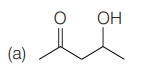
Which one of the following will most readily be dehydrated in acidic solution?
1
Secondary alcohol with carbonyl nearby
2
Secondary alcohol
3
Tertiary alcohol
4
Diol
Official Solution
Correct Option:
(1)
Concept:
Dehydration in acidic medium proceeds via carbocation formation. Stability of carbocation determines ease of dehydration. Additionally, nearby functional groups can stabilize carbocation via resonance. Step 1: Effect of carbonyl group.
A carbonyl group ( ) adjacent to the carbocation can stabilize it through resonance and electron-withdrawing effects. Step 2: Compare options.
• (A) Secondary alcohol with nearby carbonyl → extra resonance stabilization → most favorable
• (B) Secondary alcohol → only moderate stability
• (C) Tertiary alcohol → stable, but no additional resonance stabilization
• (D) Diol → follows different dehydration pathway Step 3: Conclusion.
Due to resonance stabilization by the carbonyl group, option (A) undergoes dehydration most readily.
15
PYQ 2021
medium
chemistryID: met-2021
A sample of 4.12 mg of unknown alcohol is added to . 1.56 mL of methane at STP was liberated. The alcohol is :
Cyclohexanol is dehydrated to cyclohexene on heating with conc. . If the yield of this reaction is 75% how much cyclohexene will be obtained from 100 g of cyclohexanol?
1
61.5 g
2
75.0 g
3
20.0 g
4
41.0 g
Official Solution
Correct Option:
(1)
Concept:
Dehydration:
Step 1: Molar masses.
Step 2: Theoretical yield.
Step 3: Actual yield.
17
PYQ 2021
medium
chemistryID: met-2021
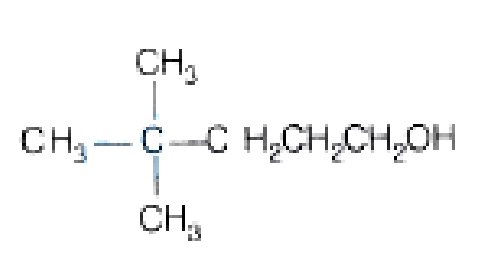
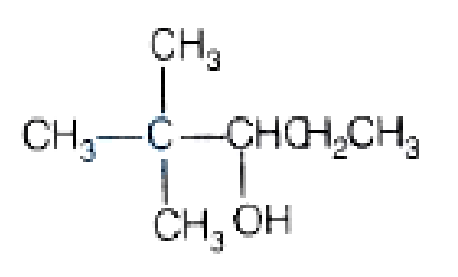
The structure for neo-heptyl alcohol is:
1
2
3
4
Official Solution
Correct Option:
(2)
Concept:
Prefix “neo-” indicates a tert-butyl group . Step 1: Structure of neo-heptyl alcohol.
Heptyl alcohol has 7 carbons. Neo-heptyl alcohol contains group with :
Step 2: Identify correct option.
Only option (B) shows tert-butyl group attached to . Step 3: Conclusion.
Option (B) is the correct neo-structure.
18
PYQ 2022
medium
chemistryID: met-2022
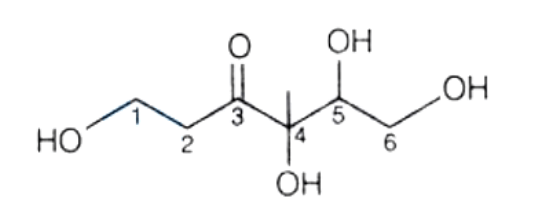
Alcoholic group of which position in the given molecule reacts fastest with Lucas' reagent?
1
1
2
4
3
5
4
6
Official Solution
Correct Option:
(2)
Concept:
Lucas test:
• Tertiary alcohol fastest reaction
• Secondary alcohol moderate
• Primary alcohol slow Step 1: Identify alcohol types.
Position 1 primary
Position 6 primary
Position 5 secondary
Position 4 tertiary (attached to three carbons) Step 2: Apply Lucas rule.
Tertiary alcohol reacts fastest. Step 3: Conclusion.
Position 4 reacts fastest.
Alcohols Phenols And Ethers is a vital chapter for MET aspirants. Mastering the concepts covered in this chapter is essential for securing a top rank.
By rigorously practicing the previous year questions associated with this chapter, you can identify high-yield topics, understand the examiner's perspective, and boost your confidence during the actual exam.
Frequently Asked Questions
Why focus on Alcohols Phenols And Ethers PYQs?
Analyzing PYQs for this specific chapter reveals the most frequently tested concepts and the typical complexity of questions, allowing you to tailor your study plan efficiently.
How to best use this analysis?
Review the topic breakdown to see which sub-topics within Alcohols Phenols And Ethers carry the most weight. Then, tackle the questions iteratively to solidify your understanding.