Step 1: Path to A
Benzene + Benzene sulphonic acid (A). Step 2: Path to B
Alkali fusion of (A) converts the group into a hydroxyl group, giving Phenol (B). Step 3: Path to C
Phenol reacts with excess bromine water ( ) to undergo poly-substitution. Step 4: Conclusion
The final product C is 2, 4, 6-tribromophenol. Final Answer: (D)
02
PYQ 2010
medium
chemistryID: met-2010
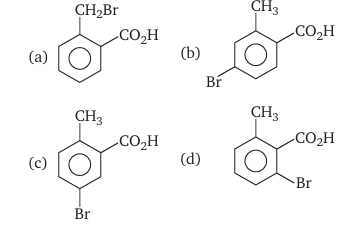
o-toluic acid on reaction with + Fe gives ________.
1
A
2
B
3
C
4
D
Official Solution
Correct Option:
(3)
Step 1: Analysis
o-toluic acid contains a methyl group ( ) and a carboxylic acid group ( ). Step 2: Directing Effects
- is an activating, ortho/para directing group. - is a deactivating, meta directing group. Step 3: Conclusion
Both groups direct the incoming electrophile ( ) to the same position. In the major product, Bromine is para to and meta to . Final Answer: (C)
03
PYQ 2016
easy
chemistryID: met-2016
Which one of the following is aromatic?
Official Solution
Correct Option:
(1)
04
PYQ 2016
easy
chemistryID: met-2016
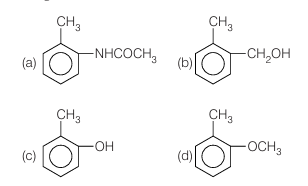
The most reactive towards electrophilic reagent is
Official Solution
Correct Option:
(1)
About Aromatic Hydrocarbon - MET
Aromatic Hydrocarbon is a vital chapter for MET aspirants. Mastering the concepts covered in this chapter is essential for securing a top rank.
By rigorously practicing the previous year questions associated with this chapter, you can identify high-yield topics, understand the examiner's perspective, and boost your confidence during the actual exam.
Frequently Asked Questions
Why focus on Aromatic Hydrocarbon PYQs?
Analyzing PYQs for this specific chapter reveals the most frequently tested concepts and the typical complexity of questions, allowing you to tailor your study plan efficiently.
How to best use this analysis?
Review the topic breakdown to see which sub-topics within Aromatic Hydrocarbon carry the most weight. Then, tackle the questions iteratively to solidify your understanding.