Electrostatics
83 previous year questions.
High-Yield Trend
Chapter Questions 83 MCQs
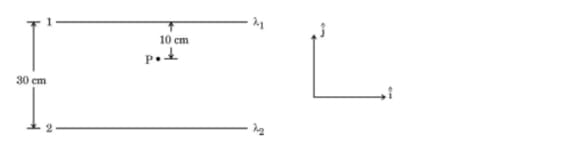
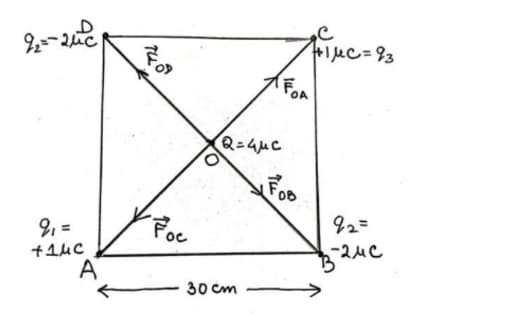
Reason (R): It is so because the net potential at O is not zero.
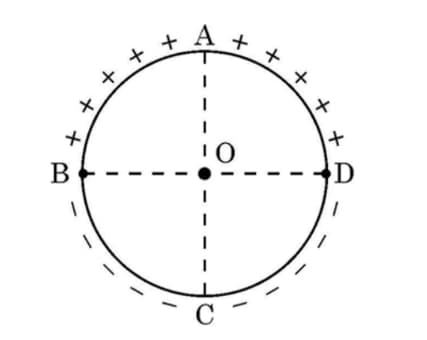
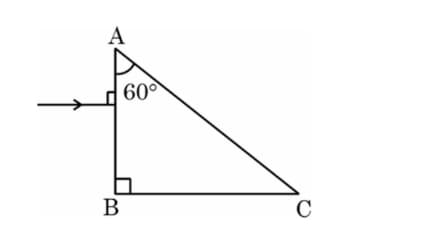
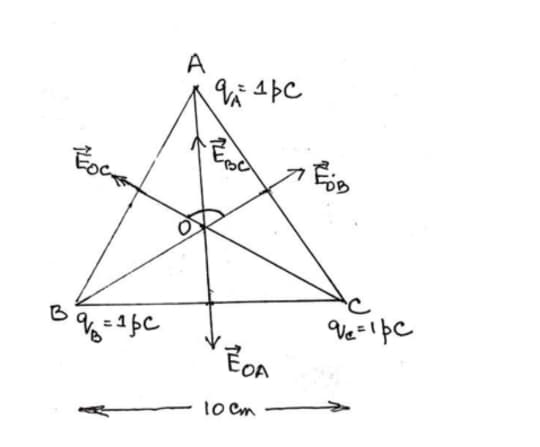
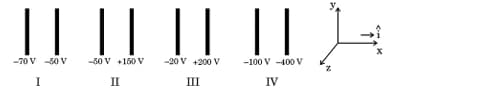
(i) For which pair of the plates is the electric field E alongˆ i?
(i) The charge density on the outer surface of the shell.
(ii) The potential at a distance from the center of the shell.
(i) Outside the shell.
(ii) Inside the shell.

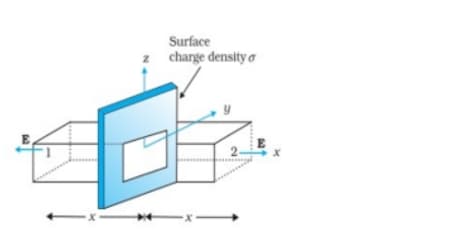
\textbf{(a) the flux passing through the cube, and
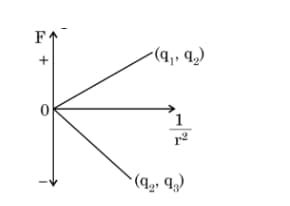
(b) A hydrogen atom de-excites from level n to (n-1). Show that emitted frequency ν ∝ α/n³ for large n (α = constant).
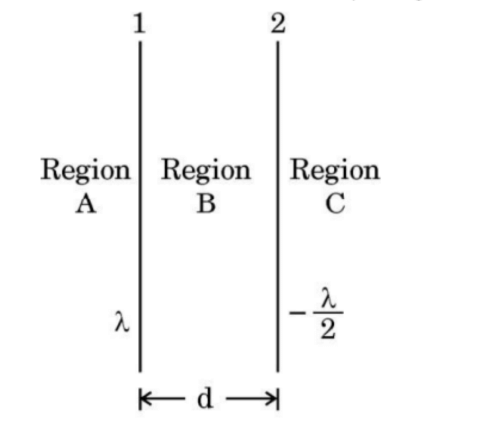
(a) Calculate the amount of work done to separate the two charges at infinite distance.
(b) If this system of charges was initially kept in an electric field calculate the electrostatic potential energy of the system.
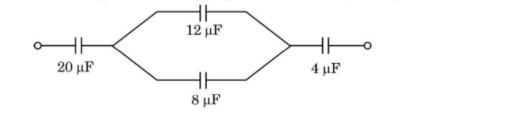
A parallel plate capacitor consists of two conducting plates kept generally parallel to each other at a distance. When the capacitor is charged, the charge resides on the inner surfaces of the plates and an electric field is set up between them. Thus, electrostatic energy is stored in the capacitor.
The figure shows three large square metallic plates, each of side ‘L’, held parallel and equidistant from each other. The space between P1 and P2, and P2 and P3 is completely filled with mica sheets of dielectric constant ‘K’.
The plate P2 is connected to point A and the other plates P1 and P3 are connected to point B. Point A is maintained at a positive potential with respect to point B and the potential difference between A and B is V .
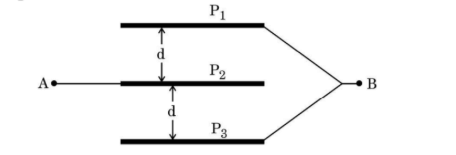
1. Find the capacitance of the system.
2. If the air between the capacitor is replaced by a dielectric medium of di electric constant K, what will be the potential difference between the two conductors?
3. If the charges on two conductors are changed to +160µC and −160µC, will the capacitance of the system change? Give reason for your answer.
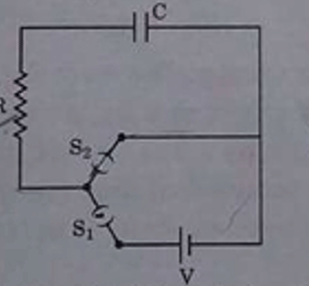
The key S1 is closedand S2 is open. The value of current in the resistor after 5 secondsis:
The final charge on the capacitor, when key S1 is closed and S2 is open, is:
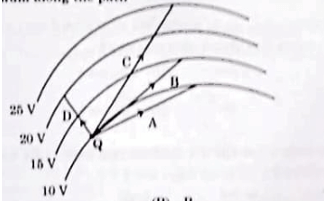
The electric potential (V ) and electric field (⃗ E) are closely related concepts in electrostatics. The electric field is a vector quantity that represents the force per unit charge at a given point in space, whereas electric potential is a scalar quantity that represents the potential energy per unit charge at a given point in space. Electric field and electric potential are related by the equation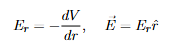
i.e., electric field is the negative gradient of the electric potential. This means that electric field points in the direction of decreasing potential and its magnitude is the rate of change of potential with distance. The electric field is the force that drives a unit charge to move from higher potential region to lower potential region and electric potential difference between the two points determines the work done in moving a unit charge from one point to the other point.
A pair of square conducting plates having sides of length 0.05 m are arranged parallel to each other in the x–y plane. They are 0.01 m apart along the z-axis and are connected to a 200 V power supply as shown in the figure. An electron enters with a speed of 3 × 10⁷ m s−1 horizontally and symmetrically in the space between the two plates. Neglect the effect of gravity on the electron.
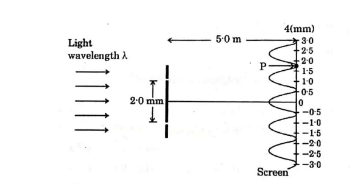
About Electrostatics - CBSE-CLASS-XII
Electrostatics is a vital chapter for CBSE-CLASS-XII aspirants. Mastering the concepts covered in this chapter is essential for securing a top rank.
By rigorously practicing the previous year questions associated with this chapter, you can identify high-yield topics, understand the examiner's perspective, and boost your confidence during the actual exam.
Frequently Asked Questions
Why focus on Electrostatics PYQs?
Analyzing PYQs for this specific chapter reveals the most frequently tested concepts and the typical complexity of questions, allowing you to tailor your study plan efficiently.
How to best use this analysis?
Review the topic breakdown to see which sub-topics within Electrostatics carry the most weight. Then, tackle the questions iteratively to solidify your understanding.