CBSE-CLASS-XII SERIES Physics
Image Formation
5 previous year questions.
Volume: 5 Ques
Yield: Medium
High-Yield Trend
5
2025 Chapter Questions 5 MCQs
01
PYQ 2025
medium
physics ID: cbse-cla
In a compound microscope, an object is placed at a distance of 1.5 cm from the objective of focal length 1.25 cm. The eyepiece has a focal length of 5 cm. The final image is formed at infinity. Calculate the distance between the objective and the eyepiece.
02
PYQ 2025
easy
physics ID: cbse-cla
In a refracting telescope, the focal length of the objective is 50 times the focal length of the eyepiece. When the final image is formed at infinity, the length of the tube is 102 cm. Find the focal lengths of the two lenses.
03
PYQ 2025
easy
physics ID: cbse-cla
Draw a ray diagram of a reflecting telescope (Cassegrain) and explain the formation of the image. State two important advantages that a reflecting telescope has over a refracting telescope.
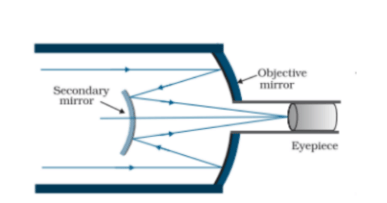
04
PYQ 2025
hard
physics ID: cbse-cla
A thin plano-concave lens with its curved face of radius of curvature R is made of glass of refractive index . It is placed coaxially in contact with a thin equiconvex lens of same radius of curvature of refractive index . Obtain the power of the combination lens.
05
PYQ 2025
medium
physics ID: cbse-cla
Draw a ray diagram to show the image formation by a compound microscope. Obtain the expression for the total magnification of the microscope when the final image is formed at infinity.
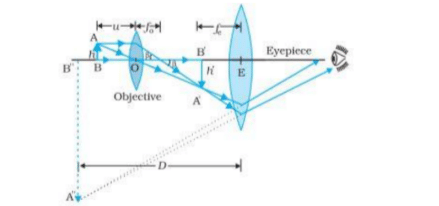
About Image Formation - CBSE-CLASS-XII
Image Formation is a vital chapter for CBSE-CLASS-XII aspirants. Mastering the concepts covered in this chapter is essential for securing a top rank.
By rigorously practicing the previous year questions associated with this chapter, you can identify high-yield topics, understand the examiner's perspective, and boost your confidence during the actual exam.
Frequently Asked Questions
Why focus on Image Formation PYQs?
Analyzing PYQs for this specific chapter reveals the most frequently tested concepts and the typical complexity of questions, allowing you to tailor your study plan efficiently.
How to best use this analysis?
Review the topic breakdown to see which sub-topics within Image Formation carry the most weight. Then, tackle the questions iteratively to solidify your understanding.