- Potassium nitrate (KNO ) is commonly known as Indian saltpetre.
- It is used in fertilizers, explosives, and food preservation.
- NaNO is called Chile saltpetre.
02
PYQ 2022
medium
chemistryID: ap-eapce
Hydrolysis of nucleic acid gives nitrogenous base sugar and ________
1
Sulphuric acid
2
Phosphorous acid
3
Sulphurous acid
4
Phosphoric acid
Official Solution
Correct Option: (4)
Nucleic acids (DNA and RNA) are polymers of nucleotides.
Each nucleotide unit consists of three components:
1. A nitrogenous base (purine or pyrimidine).
2. A pentose sugar (deoxyribose in DNA, ribose in RNA).
3. A phosphate group (derived from phosphoric acid). Nucleotides are linked together by phosphodiester bonds, which connect the 5' carbon of one sugar to the 3' carbon of the next sugar via a phosphate group.
Hydrolysis of a nucleic acid breaks these phosphodiester bonds, as well as the N-glycosidic bonds linking the sugar to the base, and the ester bonds linking the phosphate to the sugar.
Complete hydrolysis of a nucleic acid yields its fundamental components:
\begin{itemize} \item Nitrogenous bases (Adenine, Guanine, Cytosine, Thymine/Uracil) \item Pentose sugar (Deoxyribose or Ribose) \item Phosphoric acid (H PO ) (which exists as phosphate ions at physiological pH but is derived from phosphoric acid).
\end{itemize} The question states that hydrolysis gives nitrogenous base, sugar, and \underline{\hspace{1cm}}.
The missing component is the phosphate group, which is derived from phosphoric acid.
Therefore, the correct answer is phosphoric acid.
03
PYQ 2022
medium
chemistryID: ap-eapce
Which of the following molecules is eliminated during peptide bond formation?
1
H O
2
NH
3
CH OH
4
CO
Official Solution
Correct Option: (1)
Peptide bond formation between two amino acids involves a condensation reaction between the carboxyl group of one and the amino group of another. This results in the elimination of a water (H O) molecule.
04
PYQ 2022
medium
chemistryID: ap-eapce
Pernicious anemia is caused due to deficiency of which vitamin?
1
B12
2
B1
3
B6
4
B2
Official Solution
Correct Option: (1)
Pernicious anemia is a type of megaloblastic anemia that occurs due to deficiency of vitamin B12}.
This vitamin is essential for DNA synthesis in red blood cell production. Its deficiency leads to formation of abnormally large and immature red blood cells.
05
PYQ 2022
medium
chemistryID: ap-eapce
What is the functional group present in serine, an amino acid, in addition to and groups?
1
-OH
2
-SH
3
-NH
4
C(=O)-NH_2
Official Solution
Correct Option: (1)
Serine is one of the polar amino acids. Its structure includes:
- An amino group
- A carboxylic group
- And a side chain containing a hydroxyl group Structure of serine: Hence, the additional functional group is .
06
PYQ 2022
medium
chemistryID: ap-eapce
Which hormone tends to increase the blood glucose level in humans?
1
Insulin
2
Glucagon
3
Epinephrine
4
Estrogen
Official Solution
Correct Option: (2)
Glucagon is secreted by the alpha cells of the pancreas. It promotes glycogen breakdown and gluconeogenesis in the liver, thereby increasing blood glucose levels.
07
PYQ 2022
medium
chemistryID: ap-eapce
In the following unbalanced reaction, the product formed is:
NaAlO + Al(OH) + H O ?
1
Na [Al(OH) ]
2
Na [Al(OH) ]
3
Na[Al(OH) ]
4
Na[Al(OH) ]
Official Solution
Correct Option: (3)
- Sodium aluminate reacts with aluminum hydroxide and water:
- This forms a soluble complex ion: tetrahydroxoaluminate (Na[Al(OH) ])
08
PYQ 2022
medium
chemistryID: ap-eapce
Which of the following vitamins cannot be stored in the body?
1
A
2
C
3
E
4
K
Official Solution
Correct Option: (2)
Vitamin C is a water-soluble vitamin and cannot be stored in the body.
It needs to be consumed regularly through diet.
Fat-soluble vitamins (A, D, E, K) are stored in liver and fatty tissues.
09
PYQ 2022
medium
chemistryID: ap-eapce
Sugar present in DNA is
1
-D-2-ribose
2
-D-2-deoxyribose
3
-D-2-ribose
4
-D-2-deoxyribose
Official Solution
Correct Option: (2)
DNA stands for Deoxyribonucleic Acid.
The sugar component of DNA is a pentose (5-carbon) sugar called deoxyribose.
Specifically, it is 2-deoxyribose, meaning it is derived from ribose by the removal of an oxygen atom from the hydroxyl group at the 2' position (carbon atom 2 of the sugar ring). The structure of ribose and deoxyribose in their furanose (5-membered ring) form is important.
In nucleic acids, the sugar is D-ribose or D-2-deoxyribose. The 'D' refers to the D-series of sugars.
The anomeric configuration (alpha or beta) of the N-glycosidic bond linking the sugar to the nitrogenous base is also specific. In naturally occurring nucleotides and nucleic acids, this bond is in the configuration. This means the base is "up" relative to the CH OH group (C5') if the ring is drawn in a standard orientation (Haworth projection with ring oxygen at the back top). So, the sugar present in DNA is -D-2-deoxyribose.
\begin{itemize} \item : Refers to the configuration at the anomeric carbon (C1'). The N-glycosidic bond is . \item D: Refers to the D-family of sugars (based on the configuration of the highest numbered chiral carbon relative to D-glyceraldehyde). \item 2-deoxyribose: Indicates that the sugar is ribose lacking an oxygen atom at the C2' position (i.e., C2' has -H, -H instead of -H, -OH as in ribose).
\end{itemize}
Therefore, the sugar in DNA is -D-2-deoxyribose.
RNA contains -D-ribose.
10
PYQ 2023
medium
chemistryID: ap-eapce
In nucleoside, the base is attached to which position of the sugar molecule?
1
C-1
2
C-2
3
C-3
4
C-5
Official Solution
Correct Option: (1)
In nucleosides, the nitrogenous base is attached to the C-1 position of the sugar molecule (which is typically a pentose sugar such as ribose or deoxyribose). The C-1 carbon of the sugar connects to the base through a glycosidic bond. Thus, the correct answer is (1) C-1.
11
PYQ 2023
medium
chemistryID: ap-eapce
Nucleotides in RNA are joined by which of the following phosphodiester linkages?
1
5 –3
2
5 –2
3
3 –2
4
3 –3
Official Solution
Correct Option: (1)
In RNA, each nucleotide is linked to the next through a phosphodiester bond.
This bond forms between the 3 –OH of one sugar and the 5 –phosphate of the next nucleotide.
Thus, the linkage is called a 5 –3 phosphodiester bond.
12
PYQ 2023
medium
chemistryID: ap-eapce
From the following, number of fat soluble and water soluble vitamins respectively are
A D C B K B
1
2, 4
2
4, 2
3
3, 3
4
6, 0
Official Solution
Correct Option: (3)
Step 1: Identify fat-soluble vitamins. Fat-soluble vitamins are A, D, E, K. From the list: A, D, K (3 vitamins). Step 2: Identify water-soluble vitamins. Water-soluble vitamins are B vitamins and C. From the list: C, B , B (3 vitamins). Step 3: Determine the number of fat-soluble and water-soluble vitamins respectively. Number of fat-soluble vitamins = 3 Number of water-soluble vitamins = 3 Thus, the answer is .
13
PYQ 2023
medium
chemistryID: ap-eapce
Monomers of nylon 2-nylon 6 are:
1
2
3
4
Official Solution
Correct Option: (1)
Nylon 2-nylon 6 is a biodegradable polyamide copolymer. Its monomers are: - Glycine (H N-CH -COOH): Provides the "nylon 2" segment.
- 6-Aminohexanoic acid (Aminocaproic acid): Provides the "nylon 6" segment. Polymerization occurs through condensation reaction between amino and carboxyl groups. Why other options are incorrect: - Option (2): Monomers for nylon 6,6.
- Option (3): Monomer for nylon 6.
- Option (4): Monomers for PET. Thus, the correct answer is (1).
14
PYQ 2023
medium
chemistryID: ap-eapce
Which of the following correctly represents hydrogen bonded pairs in DNA?
1
;
2
;
3
;
4
;
Official Solution
Correct Option: (4)
DNA consists of two complementary strands held together by hydrogen bonds between nitrogenous bases:
Guanine (G) forms three hydrogen bonds with Cytosine (C) → represented as G C.
Thymine (T) forms two hydrogen bonds with Adenine (A) → represented as T = A.
This specific and complementary pairing ensures the double helix structure of DNA is stable.
15
PYQ 2023
medium
chemistryID: ap-eapce
Identify the correct statement related to amino acids
1
Nonessential amino acids cannot be synthesized in the body
2
These are soluble in ether
3
These are low melting solid substances
4
In aqueous solution they exist as zwitterion
Official Solution
Correct Option: (4)
Amino acids are organic compounds that serve as the building blocks of proteins. They have characteristic features that determine their behavior in different environments. Let's evaluate the given statements:
Nonessential amino acids cannot be synthesized in the body: This statement is incorrect. Nonessential amino acids can be synthesized by the human body, which is why they are termed "nonessential."
These are soluble in ether: Amino acids are generally not soluble in nonpolar solvents like ether; they are more soluble in polar solvents like water due to the nature of their functional groups.
These are low melting solid substances: Amino acids have relatively high melting points due to strong intermolecular forces such as hydrogen bonding. This statement is incorrect in its broad categorization.
In aqueous solution they exist as zwitterion: This is the correct statement. Amino acids, when dissolved in water, typically exist in the form of zwitterions, where the amino group is protonated (-NH3+) and the carboxyl group is deprotonated (-COO-), resulting in a molecule with both positive and negative charges.
Therefore, the correct statement regarding amino acids is: In aqueous solution they exist as zwitterion.
16
PYQ 2023
medium
chemistryID: ap-eapce
A vitamin (X) is water soluble but can be stored in the body. Deficiency of X causes which disease?
1
Beri Beri
2
Convulsions
3
Pernicious anaemia
4
Cheulosis
Official Solution
Correct Option: (3)
Vitamin B (cobalamin) is a water-soluble vitamin that can be stored in the liver.
Deficiency of Vitamin B causes pernicious anaemia — a condition where the body can't make enough healthy red blood cells.
Beri Beri is caused by deficiency of Vitamin B , which is not stored in the body.
17
PYQ 2023
medium
chemistryID: ap-eapce
Sulphur containing amino acids of the following are A. Serine B. Cysteine C. Lysine D. Methionine
1
A, D
2
A, C
3
B, C
4
B, D
Official Solution
Correct Option: (4)
Amino acids are organic compounds containing an amino group ( ), a carboxyl group ( ), and a side chain (R group) that is unique to each amino acid. We need to identify which of the given amino acids contain sulfur in their side chains (R groups). A. **Serine:** The side chain of serine is . It does not contain sulfur. B. **Cysteine:** The side chain of cysteine is . It contains a sulfur atom in the form of a thiol group ( ). C. **Lysine:** The side chain of lysine is . It does not contain sulfur. D. **Methionine:** The side chain of methionine is . It contains a sulfur atom in the form of a thioether group ( ). Therefore, the sulphur-containing amino acids among the given options are cysteine and methionine.
18
PYQ 2023
medium
chemistryID: ap-eapce
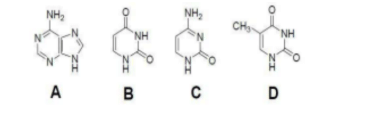
Which of the following bases are present both in DNA and RNA?
1
C, D
2
B, C
3
A, B
4
A, C
Official Solution
Correct Option: (4)
DNA (deoxyribonucleic acid) and RNA (ribonucleic acid) are nucleic acids that carry genetic information. Both DNA and RNA are composed of nucleotides, which consist of a sugar, a phosphate group, and a nitrogenous base. There are five main nitrogenous bases: adenine (A), guanine (G), cytosine (C), thymine (T), and uracil (U). The bases present in DNA are adenine (A), guanine (G), cytosine (C), and thymine (T).
The bases present in RNA are adenine (A), guanine (G), cytosine (C), and uracil (U). Comparing the bases in DNA and RNA, we can see that adenine (A) and cytosine (C) are common to both. Guanine (G) is also common to both, but it is not shown as an option here. Thymine (T) is found only in DNA, and uracil (U) is found only in RNA. Looking at the structures provided:
- Structure A is adenine.
- Structure B is thymine.
- Structure C is cytosine.
- Structure D is uracil. The bases present in both DNA and RNA are adenine (A) and cytosine (C). Therefore, the correct option is A and C.
19
PYQ 2023
medium
chemistryID: ap-eapce
Which of the following is not correctly matched for enzymatic reactions?
1
Proteins → Amino acids : Trypsin
2
Starch → Maltose : Diastase
3
Sucrose → Glucose and Fructose : Zymase
4
Maltose → Glucose : Maltase
Official Solution
Correct Option: (3)
Zymase is a complex of enzymes that catalyzes the fermentation of sugars, not directly responsible for hydrolysis of sucrose. The correct enzyme for sucrose hydrolysis is invertase, not zymase. Hence, the given match is incorrect.
20
PYQ 2023
medium
chemistryID: ap-eapce
Match the following
List – I
List – II
A. Beri Beri
I. Riboflavin
B. Scurvy
II. Thiamine
C. Cheilosis
III. Pyridoxine
D. Rickets
IV. Ascorbic acid
V. Vitamin D
1
A – III, B – IV, C – III, D – V
2
A – II, B – IV, C – I, D – V
3
A – III, B – V, C – I, D – II
4
A – III, B – V, C – IV, D – II
Official Solution
Correct Option: (2)
- Beri Beri is caused by deficiency of Thiamine (Vitamin B1) → A – II - Scurvy is caused by deficiency of Ascorbic acid (Vitamin C) → B – IV - Cheilosis is associated with deficiency of Riboflavin (Vitamin B2) → C – I - Rickets is caused by deficiency of Vitamin D → D – V
21
PYQ 2023
medium
chemistryID: ap-eapce
The source of vitamin, whose deficiency causes scurvy is:
1
Amla
2
Carrot
3
Egg
4
Fish
Official Solution
Correct Option: (1)
Scurvy is caused by a deficiency of Vitamin C (ascorbic acid). Amla (Indian gooseberry) is one of the richest natural sources of Vitamin C and helps prevent scurvy. Carrot provides Vitamin A, and eggs and fish are rich in other nutrients like Vitamin D and proteins but not Vitamin C.
22
PYQ 2023
medium
chemistryID: ap-eapce
Given below are two statements Assertion (A): Hydrolysis of sucrose results in change in the optical rotation from dextro (+) to laevo (–) Reason (R): Both the products from the hydrolysis are leavorotatory
1
Both A and R are correct and R is the correct explanation of A
2
Both A and R are correct but R is not the correct explanation of A
3
A is correct but R is incorrect
4
A is incorrect but R is correct
Official Solution
Correct Option: (3)
Sucrose is dextrorotatory, but on hydrolysis, it yields glucose and fructose. While glucose is dextrorotatory, fructose is leavorotatory and has a higher magnitude of rotation. As a result, the mixture becomes leavorotatory—this is known as "inversion of sugar." However, the Reason given is incorrect because both products are not leavorotatory. Only fructose is leavorotatory, and it dominates due to its greater specific rotation.
23
PYQ 2023
medium
chemistryID: ap-eapce
In amylopectin, branching occurs by which of the glycosidic linkage?
1
C–2 to C–6
2
C–3 to C–6
3
C–2 to C–3
4
C–1 to C–6
Official Solution
Correct Option: (4)
Amylopectin is a branched polysaccharide component of starch. It consists of glucose units connected predominantly by -1,4-glycosidic bonds, with branch points formed by -1,6-glycosidic bonds. The branching specifically occurs when the C–1 carbon of one glucose unit forms a glycosidic bond with the C–6 carbon of another glucose unit.
24
PYQ 2023
medium
chemistryID: ap-eapce
From the list given below, the number of lanthanides which exhibit +4 state in their compounds is:Given lanthanides: Pr, Nd, Pm, Sm, Eu, Gd, Tb, Dy
1
2
2
3
3
4
4
5
Official Solution
Correct Option: (2)
Lanthanides exhibiting +4 state: - Praseodymium (Pr): Exhibits +4 state (4f configuration).
- Terbium (Tb): Shows +4 state (4f half-filled configuration).
- Neodymium (Nd): Can achieve +4 state (4f configuration). Lanthanides not showing +4 state: - Promethium (Pm), Samarium (Sm), Europium (Eu), Gadolinium (Gd), Dysprosium (Dy). Thus, 3 lanthanides (Pr, Nd, Tb) exhibit +4 oxidation state, making option (2) correct.
25
PYQ 2023
medium
chemistryID: ap-eapce
Identify the correct statement with respect to high-density polythene
1
TiCl and Et Al used as catalyst for preparation
2
Obtained by polymerization at 350–570 K
3
Has highly branched structure
4
Chemically active
Official Solution
Correct Option: (1)
High-Density Polyethylene (HDPE) is formed by polymerization of ethene using a Ziegler–Natta catalyst system. Let’s evaluate each option:
Option (1): TiCl (titanium tetrachloride) and Et Al (triethylaluminum) are components of the Ziegler–Natta catalyst system. This is correct.
Option (2): Polymerization at 350–570 K corresponds to low-density polyethylene (LDPE), which is prepared using free-radical polymerization. HDPE is prepared at lower temperatures, around 333–343 K. Incorrect.
Option (3): HDPE has a linear structure with minimal branching, contributing to its high density. Incorrect.
Option (4): HDPE is chemically inert and widely used for containers, piping, etc. Incorrect.
Hence, option (1) is correct.
26
PYQ 2025
medium
chemistryID: ap-eapce
Match the following:
1
A-II, B-III, C-IV, D-I
2
A-IV, B-I, C-II, D-III
3
A-IV, B-III, C-II, D-I
4
A-IV, B-I, C-III, D-II % Based on image, option 4 has same initial parts as 2
Official Solution
Correct Option: (3)
Let's match each hormone in List-I with its primary function from List-II. A) Glucocorticoids (e. g. , cortisol): These are steroid hormones produced by the adrenal cortex. They have widespread effects on metabolism. - They stimulate gluconeogenesis (synthesis of glucose from non-carbohydrate sources). - They increase blood glucose levels. - They promote protein breakdown and fat mobilization. - They have anti-inflammatory and immunosuppressive effects. Function IV) "Control the carbohydrate metabolism" is a key function. So, A matches with IV. B) Mineralocorticoids (e. g. , aldosterone): These are steroid hormones produced by the adrenal cortex. Their primary role is to regulate salt and water balance. - Aldosterone acts on the kidneys to increase reabsorption of sodium (Na ) and water, and increase excretion of potassium (K ). Function III) "Control the level of excretion of water and salt by the kidneys" is a key function. So, B matches with III. C) Progesterone: This is a steroid hormone primarily produced by the corpus luteum in the ovary after ovulation and by the placenta during pregnancy. - It plays a crucial role in preparing the endometrium (uterine lining) for implantation of a fertilized egg. - It maintains pregnancy. - It inhibits uterine contractions during pregnancy. Function II) "Prepares the uterus for implantation of fertilised egg" is a key function. So, C matches with II. D) Estradiol: This is the primary estrogen, a steroid hormone produced mainly by the ovaries in females. - It is responsible for the development of female secondary sexual characteristics. - It plays a key role in regulating the menstrual cycle (along with progesterone and other hormones like FSH and LH). - It is involved in bone health, cardiovascular health, etc. Function I) "In the control of menstrual cycle" is a key function. So, D matches with I. Matching sequence:
A - IV
B - III
C - II
D - I This corresponds to option (3).
27
PYQ 2025
medium
chemistryID: ap-eapce
Activation energy for the hydrolysis of sucrose by acid is X kJ mol and by sucrase is Y kJ mol . X and Y respectively are
1
6.22, 2.15
2
2.15, 6.22
3
6.22, 6.22
4
2.15, 2.15
Official Solution
Correct Option: (1)
Hydrolysis of sucrose by acid is a non-enzymatic reaction and thus has a higher activation energy (X = 6.22 kJ/mol).
When catalyzed by enzyme sucrase, the activation energy is significantly reduced (Y = 2.15 kJ/mol).
This demonstrates the catalytic efficiency of enzymes.
28
PYQ 2025
medium
chemistryID: ap-eapce
Consider the following statements:Statement-I: Primary structure of protein represents its constitution. Statement-II: -Helix and -pleated sheet structure of protein represent tertiary structure of it. The correct answer is:
1
Both statement-I and statement-II are correct
2
Both statement-I and statement-II are not correct
3
Statement-I is correct, but statement-II is not correct
4
Statement-I is not correct, but statement-II is correct
Official Solution
Correct Option: (3)
Step 1: Understanding Protein Structures Proteins have four levels of structure: 1. Primary structure: The sequence of amino acids in a polypeptide chain, determining the protein’s fundamental constitution. 2. Secondary structure: Includes -helix and -pleated sheet, formed by hydrogen bonding between backbone atoms. 3. Tertiary structure: The three-dimensional folding due to interactions between side chains (hydrophobic interactions, ionic bonds, disulfide bridges). 4. Quaternary structure: Association of multiple polypeptide chains to form a functional protein. Step 2: Evaluating Statements - Statement-I is correct: Primary structure indeed represents a protein’s constitution. - Statement-II is incorrect: -helix and -pleated sheet belong to secondary structure, not tertiary. Conclusion Thus, the correct answer is:
29
PYQ 2025
medium
chemistryID: ap-eapce
The incorrect statement about amylose is:
1
It is water soluble
2
In this, -D-(+)-glucose units are held by C-1 to C-4 glycosidic linkages
3
It is a highly branched polymer of -D-(+)-glucose units
4
It is present in starch to an extent of 15–20%
Official Solution
Correct Option: (3)
Amylose is a linear polymer of -D-glucose with C1–C4 glycosidic linkages. It is slightly water soluble and forms the unbranched component of starch. The branched component is amylopectin, not amylose.
30
PYQ 2025
medium
chemistryID: ap-eapce
Identify the correct statements regarding the enzymes I) Almost all enzymes are proteins II) Enzymes are not specific in nature III) Enzymes work effectively in the pH range of 5–7 IV) Enzymes work effectively between 310 K and 330 K temperature
1
I& II only
2
II& III only
3
I& III only
4
II& IV only
Official Solution
Correct Option: (3)
Statement I: True — Enzymes are mostly globular proteins. Statement II: False — Enzymes are highly specific in their action. Statement III: True — Most enzymes function effectively in a narrow pH range of 5–7. Statement IV: False — The effective temperature range is usually around 298–310 K; 330 K is often too high for many enzymes.
31
PYQ 2025
medium
chemistryID: ap-eapce
Match the following: List-I (Glycosidic linkage) A. -1,4 B. -1,4 C. -1,4, -1,6 List-II (Polysaccharide) I. Amylose II. Amylopectin III. Cellulose
1
A-II, B-I, C-III
2
A-III, B-I, C-II
3
A-I, B-II, C-III
4
A-I, B-III, C-II
Official Solution
Correct Option: (4)
Amylose: A linear polymer of glucose with -1,4-glycosidic linkages. Cellulose: A linear polymer of glucose with -1,4-glycosidic linkages. Amylopectin: A branched polymer of glucose with -1,4-glycosidic linkages and -1,6-glycosidic linkages at the branch points.
32
PYQ 2025
medium
chemistryID: ap-eapce
Sucrose when boiled with dilute HCl gives two functional isomers X and Y. X gives monocarboxylic acid with bromine water but not Y. The number of --OH groups in cyclic structure of X is
1
6
2
4
3
5
4
3
Official Solution
Correct Option: (3)
Sucrose hydrolyzes to glucose and fructose. Glucose, being an aldose, reacts with bromine water. In its cyclic structure (pyranose form), glucose contains five hydroxyl (--OH) groups.
33
PYQ 2025
medium
chemistryID: ap-eapce
The improper functioning of 'X' results in Addison's disease. Hormone 'Y' is responsible for the development of secondary female characteristics. 'X' and 'Y' are respectively:
1
Adrenal Cortex, estradiol
2
Adrenal Cortex, progesterone
3
Thyroid, progesterone
4
Thyroid, estradiol
Official Solution
Correct Option: (1)
Addison's disease is caused due to the malfunctioning of the adrenal cortex. Estradiol, a form of estrogen, is responsible for secondary sexual characteristics in females.
34
PYQ 2025
medium
chemistryID: ap-eapce
The structure of the product 'Z' in the reaction sequence is: \[
1
Chlorobenzene
2
1,2-Dichlorobenzene
3
Hexachlorobenzene
4
1,2,3,4,5,6-Hexachlorocyclohexane (Gamma-Hexachlorocyclohexane or Lindane)
Official Solution
Correct Option: (3)
Step 1: Identifying the Initial Compound The given compound (CHOH CH OH) represents glucose or sorbitol, which undergoes reduction with HI and heat to form cyclohexane (X). Step 2: Oxidation to Benzene Cyclohexane (X) undergoes dehydrogenation with at high temperatures (773 K), resulting in benzene (Y). Step 3: Chlorination Benzene (Y) reacts with chlorine ( ) under high pressure (10-20 atm) and UV light, leading to the formation of hexachlorobenzene (Z). Conclusion Thus, the correct answer is:
35
PYQ 2025
medium
chemistryID: ap-eapce
Which of the following reagents will oxidise glucose to gluconic acid? Br /H O HNO
[Ag(NH ) ]^+ / OH
1
I, II only
2
I, III only
3
II, III only
4
I, II, III
Official Solution
Correct Option: (2)
\begin{itemize} \item /H O\) and Tollen's reagent ) ]^+\) oxidize the aldehyde group of glucose to gluconic acid. \item HNO is a strong oxidizing agent; it oxidizes both -CHO and -CH OH to dicarboxylic acids, not just gluconic acid.
\end{itemize}
36
PYQ 2025
easy
chemistryID: ap-eapce
Identify the set containing purine and pyrimidine base of DNA respectively.
Official Solution
Correct Option: (1)
37
PYQ 2025
medium
chemistryID: ap-eapce
Which of the following statements is not correct for glucose?
1
Glucose does not give Schiff's test.
2
Glucose exists in two crystalline forms - and -.
3
The pentaacetate of glucose does not react with .
4
Glucose forms addition product with .
Official Solution
Correct Option: (3)
Step 1: Glucose contains an aldehyde group in its open-chain form and can react with hydroxylamine ( ) to form an oxime. Step 2: The pentaacetate of glucose does not have a free –CHO group, but it still retains the carbonyl nature and can react with hydroxylamine. Step 3: Hence, the statement that pentaacetate of glucose does not react with is incorrect.
38
PYQ 2025
medium
chemistryID: ap-eapce
Consider the following Statement-I: Cane sugar is a disaccharide of -D-glucose and -D-fructose Statement-II: Milk sugar is a disaccharide of -D-glucose and -D-galactose
1
Both statement-I and statement-II are correct
2
Both statement-I and statement-II are not correct
3
Statement-I is correct, but statement-II is not correct
4
Statement-I is not correct, but statement-II is correct
Official Solution
Correct Option: (3)
Let's analyze each statement to determine its correctness. | Statement-I: Cane sugar is a disaccharide of -D-glucose and -D-fructose. Cane sugar is the common name for sucrose. Sucrose is indeed a disaccharide composed of one unit of -D-glucose and one unit of -D-fructose, linked by an -1,2-glycosidic bond. Therefore, Statement-I is correct. Statement-II: Milk sugar is a disaccharide of -D-glucose and -D-galactose. Milk sugar is the common name for lactose. Lactose is a disaccharide composed of one unit of -D-galactose and one unit of -D-glucose. The linkage is a -1,4-glycosidic bond between the galactose unit and the glucose unit. The statement incorrectly identifies the glucose unit as -D-glucose; in lactose, it is specifically a -D-glucose unit. Therefore, Statement-II is incorrect. Conclusion: Statement-I is correct. Statement-II is incorrect.
39
PYQ 2025
medium
chemistryID: ap-eapce
Match the following:
List-I (Hormones)
List-II (Functions)
A) Glucocorticoids
I) Control the carbohydrate metabolism
B) Mineralocorticoids
III) Control the level of excretion of water and salt by the kidneys
C) Progesterone
II) Prepares the uterus for implantation of fertilised egg
D) Estradiol
IV) In the control of menstrual cycle
1
A-II, B-III, C-IV, D-I
2
A-IV, B-I, C-II, D-III
3
A-IV, B-III, C-II, D-I
4
A-IV, B-I, C-III, D-II % Based on image, option 4 has same initial parts as 2
Official Solution
Correct Option: (3)
Let's match each hormone in List-I with its primary function from List-II. A) Glucocorticoids (e. g. , cortisol): These are steroid hormones produced by the adrenal cortex. They have widespread effects on metabolism. - They stimulate gluconeogenesis (synthesis of glucose from non-carbohydrate sources). - They increase blood glucose levels. - They promote protein breakdown and fat mobilization. - They have anti-inflammatory and immunosuppressive effects. Function IV) "Control the carbohydrate metabolism" is a key function. So, A matches with IV. B) Mineralocorticoids (e. g. , aldosterone): These are steroid hormones produced by the adrenal cortex. Their primary role is to regulate salt and water balance. - Aldosterone acts on the kidneys to increase reabsorption of sodium (Na ) and water, and increase excretion of potassium (K ). Function III) "Control the level of excretion of water and salt by the kidneys" is a key function. So, B matches with III. C) Progesterone: This is a steroid hormone primarily produced by the corpus luteum in the ovary after ovulation and by the placenta during pregnancy. - It plays a crucial role in preparing the endometrium (uterine lining) for implantation of a fertilized egg. - It maintains pregnancy. - It inhibits uterine contractions during pregnancy. Function II) "Prepares the uterus for implantation of fertilised egg" is a key function. So, C matches with II. D) Estradiol: This is the primary estrogen, a steroid hormone produced mainly by the ovaries in females. - It is responsible for the development of female secondary sexual characteristics. - It plays a key role in regulating the menstrual cycle (along with progesterone and other hormones like FSH and LH). - It is involved in bone health, cardiovascular health, etc. Function I) "In the control of menstrual cycle" is a key function. So, D matches with I. Matching sequence:
A - IV
B - III
C - II
D - I This corresponds to option (3).
40
PYQ 2025
medium
chemistryID: ap-eapce
The synthetic detergent used in toothpaste is of type X. Animal starch is Y.
X and Y respectively are
1
Anionic, amylose
2
Non-ionic, cellulose
3
Anionic, glycogen
4
Cationic, amylopectin
Official Solution
Correct Option: (3)
Step 1: Toothpaste contains anionic synthetic detergents which help in cleaning by emulsifying oily substances and suspending dirt. Step 2: Animal starch is glycogen, a branched polymer of glucose similar to amylopectin but more extensively branched. Step 3: Therefore, the correct pair is Anionic (for detergent) and Glycogen (for animal starch).
41
PYQ 2025
medium
chemistryID: ap-eapce
Consider the following
Statement-I : Lactose is composed of -D-glucose and -D-glucose.
Statement-II : Lactose is a reducing sugar.
The correct answer is
1
Both statement-I and statement-II are not correct
2
Both statement-I and statement-II are correct
3
Statement-I is correct, but statement-II is not correct
4
Statement-I is not correct, but statement-II is correct
Official Solution
Correct Option: (4)
Statement-I: Lactose is composed of -D-glucose and -D-glucose.
Lactose is a disaccharide composed of one molecule of D-galactose and one molecule of D-glucose. Specifically, it is formed by a -1,4 glycosidic linkage between -D-galactose and D-glucose (which can be or anomer form at its anomeric carbon if free). The glucose unit is typically -D-glucose in the most stable form of lactose, but the key components are galactose and glucose, not two glucose units.
Therefore, Statement-I is not correct. Statement-II: Lactose is a reducing sugar.
A reducing sugar is a carbohydrate that is capable of acting as a reducing agent because it has a free aldehyde group or a free ketone group, or can tautomerize in solution to form one. This usually means it has a free hemiacetal or hemiketal group.
In lactose ( -D-galactopyranosyl-(1 4)-D-glucopyranose), the anomeric carbon (C1) of the galactose unit is involved in the glycosidic bond. However, the anomeric carbon (C1) of the glucose unit is free (it has a hemiacetal group). This free hemiacetal group can open up to form an aldehyde group, making lactose a reducing sugar.
Lactose gives positive tests with Benedict's reagent and Tollens' reagent.
Therefore, Statement-II is correct. Conclusion: Statement-I is not correct, but Statement-II is correct.
This matches option (4).
42
PYQ 2025
medium
chemistryID: ap-eapce
Identify the sets in which enzyme, its source and enzyme reaction are correctly matched:
I) maltase, yeast; proteins peptides
II) diastase, malt; starch maltose
III) zymase, yeast; glucose C H OH + CO
1
I, II, III
2
II only
3
I, III only
4
II, III only
Official Solution
Correct Option: (4)
Maltase converts maltose to glucose, not proteins to peptides — hence I is incorrect. Diastase from malt breaks starch to maltose, and zymase from yeast converts glucose to ethanol and CO .
43
PYQ 2025
medium
chemistryID: ap-eapce
The pyrimidine bases found in RNA are
1
Thymine& Uracil
2
Thymine& Cytosine
3
Adenine& Guanine
4
Uracil& Cytosine
Official Solution
Correct Option: (4)
Step 1: Recall the Types of Nitrogenous Bases in Nucleic Acids
Nucleic acids (DNA and RNA) are composed of nucleotides, which consist of a nitrogenous base, a pentose sugar, and a phosphate group. The nitrogenous bases are classified into two main categories:
\begin{itemize} \item Purines: These are larger bases with a double-ring structure. The purines found in both DNA and RNA are Adenine (A) and Guanine (G). \item Pyrimidines: These are smaller bases with a single-ring structure. The pyrimidines differ between DNA and RNA.
\end{itemize} Step 2: Identify Pyrimidine Bases in DNA
In DNA (Deoxyribonucleic Acid), the pyrimidine bases are:
\begin{itemize} \item Cytosine (C) \item Thymine (T)
\end{itemize} Step 3: Identify Pyrimidine Bases in RNA
In RNA (Ribonucleic Acid), the pyrimidine bases are:
\begin{itemize} \item Cytosine (C) \item Uracil (U)
\end{itemize}
Note that Uracil replaces Thymine in RNA. Step 4: Answer the Question Based on RNA Pyrimidines
The question asks for the pyrimidine bases found in RNA. Based on Step 3, these are Uracil and Cytosine. Step 5: Analyze Options
\begin{itemize} \item Option (1): Thymine& Uracil. Incorrect. Thymine is in DNA, Uracil is in RNA. They are not simultaneously found as the primary pyrimidines in a single type of nucleic acid (unless discussing precursors/metabolism). This option lists one from DNA and one from RNA. \item Option (2): Thymine& Cytosine. Incorrect. These are the pyrimidine bases found in DNA, not RNA. \item Option (3): Adenine& Guanine. Incorrect. These are purine bases, not pyrimidine bases. \item Option (4): Uracil& Cytosine. Correct, as these are the two pyrimidine bases characteristic of RNA.
\end{itemize}
44
PYQ 2025
medium
chemistryID: ap-eapce
Which of the following contain -D-glucose units?
a) cane sugar b) milk sugar c) cellulose d) amylose
1
a, d
2
a, b
3
b, c
4
c, d
Official Solution
Correct Option: (1)
Step 1: Understand the structure of each compound. - Cane sugar (sucrose) is composed of glucose and fructose, and includes an -D-glucose unit. - Amylose is a component of starch formed by -D-glucose units. - Milk sugar (lactose) contains -D-glucose, not . - Cellulose is made of -D-glucose units. Step 2: Identify correct options. Only cane sugar (a) and amylose (d) contain -D-glucose units.
45
PYQ 2025
medium
chemistryID: ap-eapce
The list given below contains essential amino acids that are basic (X) and also non-essential amino acids that are neutral (Y). X and Y, respectively are
a) Lysine
b) Alanine
c) Serine
d) Arginine e) Tyrosine
1
X = b, c, e; Y = a, d
2
X = a, d; Y = b, c, e
3
X = a, c; Y = b, d, e
4
X = a, b, c; Y = d, e
Official Solution
Correct Option: (2)
Essential amino acids: Cannot be synthesized by the body and must be obtained from the diet. Non-essential amino acids: Can be synthesized by the body. Basic amino acids: Have a net positive charge at physiological pH due to an extra amino group. Neutral amino acids: Have no net charge at physiological pH. Lysine (a) and Arginine (d): Essential and basic amino acids. Alanine (b), Serine (c), and Tyrosine (e): Alanine and Serine are non-essential and neutral. Tyrosine is non-essential and conditionally essential (meaning it can be synthesized by the body only if enough phenylalanine is present). Tyrosine is generally classified as neutral, though it has a slightly polar side chain.
46
PYQ 2025
medium
chemistryID: ap-eapce
The structure of the product 'Z' in the reaction sequence is: \[
1
Chlorobenzene
2
1,2-Dichlorobenzene
3
Hexachlorobenzene
4
1,2,3,4,5,6-Hexachlorocyclohexane (Gamma-Hexachlorocyclohexane or Lindane)
Official Solution
Correct Option: (3)
Step 1: Identifying the Initial Compound The given compound (CHOH CH OH) represents glucose or sorbitol, which undergoes reduction with HI and heat to form cyclohexane (X). Step 2: Oxidation to Benzene Cyclohexane (X) undergoes dehydrogenation with at high temperatures (773 K), resulting in benzene (Y). Step 3: Chlorination Benzene (Y) reacts with chlorine ( ) under high pressure (10-20 atm) and UV light, leading to the formation of hexachlorobenzene (Z). Conclusion Thus, the correct answer is:
47
PYQ 2025
medium
chemistryID: ap-eapce
Consider the following statements:Statement-I: Primary structure of protein represents its constitution. Statement-II: -Helix and -pleated sheet structure of protein represent tertiary structure of it. The correct answer is:
1
Both statement-I and statement-II are correct
2
Both statement-I and statement-II are not correct
3
Statement-I is correct, but statement-II is not correct
4
Statement-I is not correct, but statement-II is correct
Official Solution
Correct Option: (3)
Step 1: Understanding Protein Structures Proteins have four levels of structure: 1. Primary structure: The sequence of amino acids in a polypeptide chain, determining the protein’s fundamental constitution. 2. Secondary structure: Includes -helix and -pleated sheet, formed by hydrogen bonding between backbone atoms. 3. Tertiary structure: The three-dimensional folding due to interactions between side chains (hydrophobic interactions, ionic bonds, disulfide bridges). 4. Quaternary structure: Association of multiple polypeptide chains to form a functional protein. Step 2: Evaluating Statements - Statement-I is correct: Primary structure indeed represents a protein’s constitution. - Statement-II is incorrect: -helix and -pleated sheet belong to secondary structure, not tertiary. Conclusion Thus, the correct answer is:
48
PYQ 2025
medium
chemistryID: ap-eapce
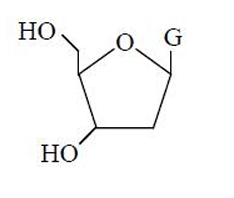
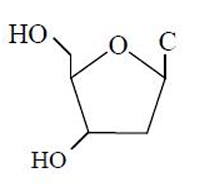
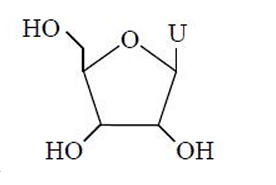
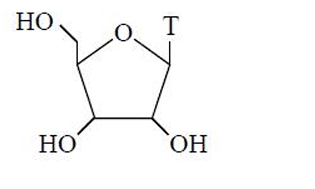
Which of the following represents nucleoside of RNA?
1
2
3
4
Official Solution
Correct Option: (4)
The fourth image represents the correct nucleoside of RNA, which contains ribose and uracil as the base.
49
PYQ 2025
medium
chemistryID: ap-eapce
Identify the essential amino acids from the following: A) Leucine B) Tyrosine C) Cysteine D) Histidine
1
A & B only
2
B & C only
3
B & D only
4
A & D only
Official Solution
Correct Option: (4)
Leucine and histidine are essential amino acids, while tyrosine and cysteine are non-essential amino acids. Therefore, option (4) is correct.
50
PYQ 2025
medium
chemistryID: ap-eapce
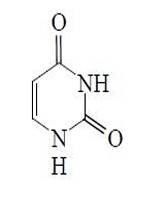
The structure of the nitrogen-containing heterocyclic base shown below represents:
1
Adenine
2
Thymine
3
Uracil
4
Cytosine
Official Solution
Correct Option: (3)
The given structure has a pyrimidine ring with two keto groups (at positions 2 and 4) and one NH group — this is the characteristic structure of Uracil.
Thymine is similar but has a methyl group at position 5.