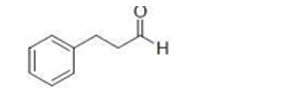
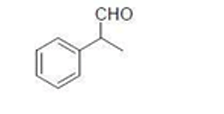
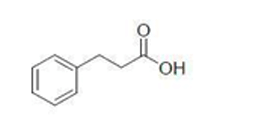
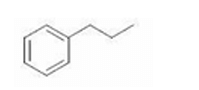
In the presence of peroxide, styrene reacts with HBr to give X. When X is treated with magnesium in dry ether followed by CO and hydrolysis, Y is formed. Treatment of Y with PCl , then with H /Pd-BaSO gives Z. What is Z?
1
2
3
4
Official Solution
Correct Option:
(1)
Step 1: Peroxide effect — anti-Markovnikov addition of HBr → phenyl propyl bromide.
Step 2: Reaction with Mg forms Grignard reagent → addition of CO → carboxylic acid.
Step 3: Treatment with PCl forms acid chloride.
Step 4: Rosenmund reduction (H /Pd-BaSO ) converts acid chloride to aldehyde.
Final product = phenyl propanal.
02
PYQ 2022
medium
chemistryID: ap-eapce
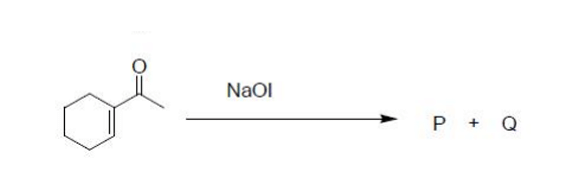
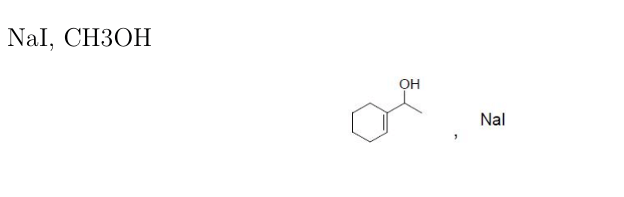
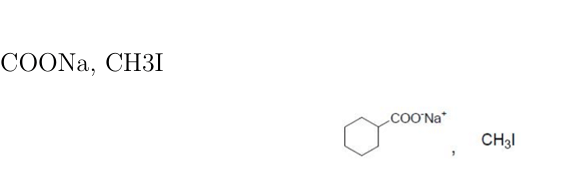
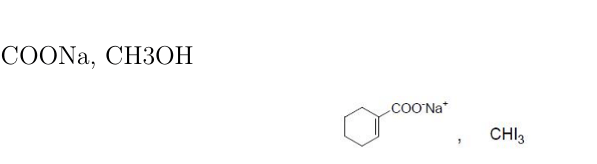
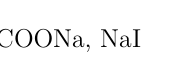
Identify P and Q respectively of the following reaction:
1
2
3
4
Official Solution
Correct Option:
(4)
In the given reaction:
- The reaction involves a substitution of a benzylic OH group in the presence of NaI.
- This leads to formation of sodium carboxylate salt (P) – \ch{COONa}.
- The byproduct from this reaction is NaI (Q). Hence, the correct products are:
03
PYQ 2022
medium
chemistryID: ap-eapce
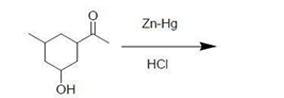
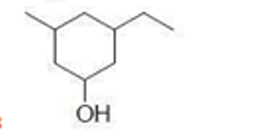
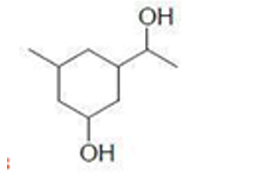
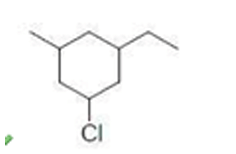
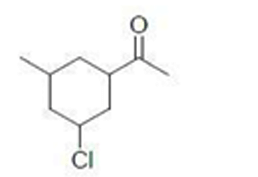
Identify the major product of the following reaction (Zn-Hg/HCl reduction).
1
2
3
4
Official Solution
Correct Option:
(3)
Clemmensen reduction (Zn-Hg/HCl) reduces carbonyl compounds to hydrocarbons.
Here, a ketone gets reduced and OH is replaced. The end product retains Cl substituent on saturated cyclohexane ring.
About Reaction Mechanism - AP-EAPCET
Reaction Mechanism is a vital chapter for AP-EAPCET aspirants. Mastering the concepts covered in this chapter is essential for securing a top rank.
By rigorously practicing the previous year questions associated with this chapter, you can identify high-yield topics, understand the examiner's perspective, and boost your confidence during the actual exam.
Frequently Asked Questions
Why focus on Reaction Mechanism PYQs?
Analyzing PYQs for this specific chapter reveals the most frequently tested concepts and the typical complexity of questions, allowing you to tailor your study plan efficiently.
How to best use this analysis?
Review the topic breakdown to see which sub-topics within Reaction Mechanism carry the most weight. Then, tackle the questions iteratively to solidify your understanding.