Inorganic Chemistry
79 previous year questions.
High-Yield Trend
Chapter Questions 79 MCQs
The formula of Calgon is
(II) Exhausted permutit is regenerated by aqueous KCl solution.
(III) Calcium stearate is soluble in water.
(IV) In ice crystals, each oxygen is surrounded by four oxygen atoms.
i. Melting points and boiling points of group 15 elements are much higher than those of corresponding group 14 elements
ii. SiO only exists at high temperatures
iii. PbI does not exist
iv. Buckminster fullerene contain twelve 6-membered carbon rings and twenty 5 - membered carbon rings.
CO, NO, Na O, N O, Cl O , Al O , As O
I. LiH, BeH and MgH are saline hydrides with significant covalent character
II. Saline hydrides are volatile
III. Electron - precise hydrides are Lewis bases
IV. The formula for chromium hydride is CrH The correct option is
| Molecule | Hybridization | Geometry |
|---|---|---|
| I. BrF5 | sp3d2 | square pyramidal |
| II. XeF6 | sp3d3 | Distorted octahedral |
| III. SF4 | dsp2 | square planar |
| IV. PbCl2 | sp | linear |
I) Complete hydrolysis of
II) Complete hydrolysis of
III) Complete hydrolysis of
Which of the following statements are correct regarding lithium and magnesium?
I) They react slowly with water
II) Their bicarbonates are solids
III) Their chlorides are not soluble in ethanol
IV) Their nitrates decompose easily on heating
II & III only
I & III only
I & IV only
III & IV only
At T(K), value for is 16. In a closed 1 L flask, one mole each of , , , and are taken and heated to T(K). What is the concentration (in mol L ) of at equilibrium?
Options:
- Salicylic acid
- Salicylaldehyde
- Quinol
- Catechol
| List-I (Molecule) | List-II (Dipole moment in D) |
|---|---|
| A) | I) |
| B) | II) |
| C) | III) |
| D) | IV) |
| List-I (Pollutant Concentration Limit in Water) | List-II (Effect) |
|---|---|
| Pollutant 1 | Effect 1 |
| Pollutant 2 | Effect 2 |
| Pollutant 3 | Effect 3 |
| Pollutant 4 | Effect 4 |
A)
Aluminium liberates gas with dil. but not with aqueous .
B)
Formula of sodium metaborate is
C)
Boric acid is a weak monobasic acid
D)
For thallium, +1 state is more stable than +3 state.
[I.] Staggered ethane>eclipsed ethane \dotfill torsional strain
[II.] 2,2-Dimethylbutane>2-methylpentane \dotfill boiling point
[III.] cis-But-2-ene>trans-But-2-ene \dotfill dipole moment
( -axis = compressibility factor ; -axis = pressure )
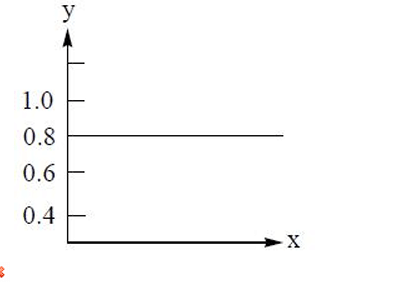
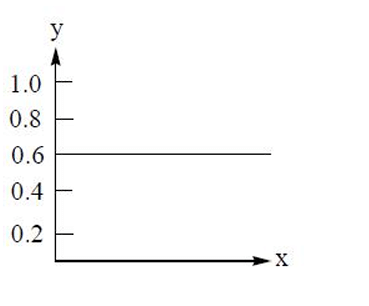
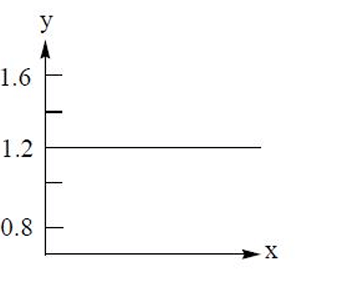
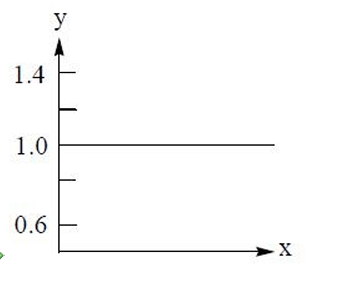
I)
II)
III)
IV)
Match the following:
| List-I (Atomic number, Z) | List-II (Block) |
|---|---|
| A) 112 | I) |
| B) 116 | II) |
| C) 88 | III) |
| D) 100 | IV) |
A) Among alkali metal ions, Li⁺ has the highest hydration enthalpy.
B) Boiling point of alkali metals increases from Li to Cs.
C) Density of K is less than that of Na and Rb.
D) Li has strong tendency to form superoxide.
| Molecule | Number of lone pairs of electrons on central atom | Hybridization |
|---|---|---|
| I) | 1 | |
| II) | 2 | |
| III) | 2 | |
| IV) | 2 |
Assertion (A): CO is poisonous to living beings
Reason (R): CO binds to hemoglobin forming carboxyhaemoglobin, which is less stable than oxygen-hemoglobin complex.
(A) 1s22s22p63s1
(B) 1s22s22p63s23p1
(C) 1s22s22p63s2
(D) 1s22s22p63s23p2
Ce, Pr, Nd, Pm, Sm, Eu, Gd, Tb, Dy
Aluminium dissolves in conc. HNO and liberates H gas
At 25 C, the percentage of ionization of 'x' M acetic acid is 4.242. What is the value of x?
I) NaO _2 < RbO _2 _2 < Ca(OH) _2 _3 < CaCO _3$ — thermal stability
1.778
0.222
1.5
0.5
Match the following:
| List - I (Metal) | List - II (Flame colour) | ||
|---|---|---|---|
| A) | Li | I) | Crimson red |
| B) | Na | II) | Yellow |
| C) | Ca | III) | Brick red |
| D) | Ba | IV) | Apple green |
About Inorganic Chemistry - AP-EAPCET
Inorganic Chemistry is a vital chapter for AP-EAPCET aspirants. Mastering the concepts covered in this chapter is essential for securing a top rank.
By rigorously practicing the previous year questions associated with this chapter, you can identify high-yield topics, understand the examiner's perspective, and boost your confidence during the actual exam.
Frequently Asked Questions
Why focus on Inorganic Chemistry PYQs?
Analyzing PYQs for this specific chapter reveals the most frequently tested concepts and the typical complexity of questions, allowing you to tailor your study plan efficiently.
How to best use this analysis?
Review the topic breakdown to see which sub-topics within Inorganic Chemistry carry the most weight. Then, tackle the questions iteratively to solidify your understanding.