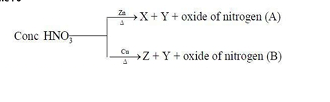
When metals like Zn and Cu react with concentrated nitric acid, nitrogen oxides are produced as by-products. The nature of the oxide depends on the metal's reactivity. Zinc (Zn), being more reactive, reacts with concentrated HNO to form nitrogen dioxide (NO ), a brown toxic gas. Copper (Cu), though less reactive, also forms NO with concentrated nitric acid. In both cases, NO is the nitrogen oxide formed due to the strong oxidizing nature of concentrated HNO . Thus, in both reactions, the nitrogen oxide evolved is NO .
About Metals And Non Metals - AP-EAPCET
Metals And Non Metals is a vital chapter for AP-EAPCET aspirants. Mastering the concepts covered in this chapter is essential for securing a top rank.
By rigorously practicing the previous year questions associated with this chapter, you can identify high-yield topics, understand the examiner's perspective, and boost your confidence during the actual exam.
Frequently Asked Questions
Why focus on Metals And Non Metals PYQs?
Analyzing PYQs for this specific chapter reveals the most frequently tested concepts and the typical complexity of questions, allowing you to tailor your study plan efficiently.
How to best use this analysis?
Review the topic breakdown to see which sub-topics within Metals And Non Metals carry the most weight. Then, tackle the questions iteratively to solidify your understanding.