x% (w/v) solution of urea is isotonic with 4% (w/v) solution of non-volatile solute of molar mass 120 g mol-1. The value of x is
1
2
2
4
3
3
4
5
Official Solution
Correct Option:
(1)
(urea molar mass = 60, given solute = 120)
02
PYQ 2022
medium
chemistryID: ap-eapce
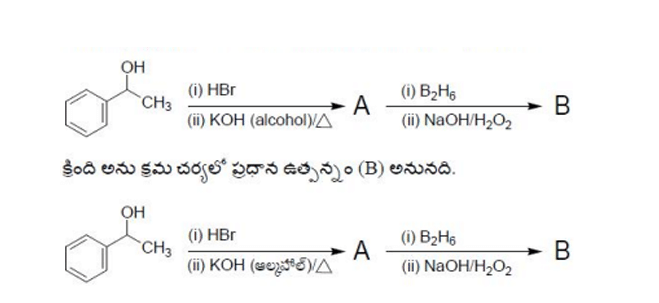
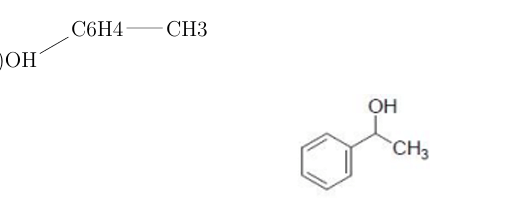
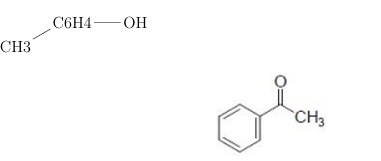
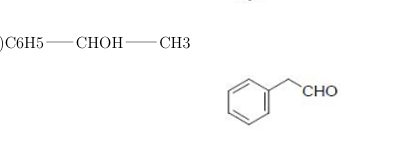
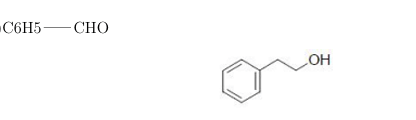
The major product ‘B’ of the following reaction sequence is
1
2
3
4
Official Solution
Correct Option:
(4)
Reaction Steps: % Option
(A) Treatment of benzyl alcohol with HBr forms benzyl bromide.
% Option
(B) Reaction with alcoholic KOH leads to elimination, forming styrene.
% Option
(C) Hydroboration–oxidation adds OH group anti-Markovnikov giving phenylethanol.
% Option
(D) Final step with NaOH/H O oxidizes alcohol to aldehyde. Thus, major product is benzaldehyde (C H CHO).
03
PYQ 2022
medium
chemistryID: ap-eapce
Assertion (A): Blood cells collapse when suspended in saline water Reason (R): Cell membrane dissolves in saline water
1
Both (A) and (R) are correct and R is the correct explanation of A
2
Both (A) and (R) are correct, but R is not the correct explanation of A
3
(A) is correct but (R) is not correct
4
(A) is incorrect but (R) is correct
Official Solution
Correct Option:
(3)
Blood cells collapse in saline due to osmosis. Hypertonic saline causes water to leave the cells, shrinking them. However, the reason given that the membrane dissolves is incorrect. The membrane remains intact but loses water content.
About Osmosis - AP-EAPCET
Osmosis is a vital chapter for AP-EAPCET aspirants. Mastering the concepts covered in this chapter is essential for securing a top rank.
By rigorously practicing the previous year questions associated with this chapter, you can identify high-yield topics, understand the examiner's perspective, and boost your confidence during the actual exam.
Frequently Asked Questions
Why focus on Osmosis PYQs?
Analyzing PYQs for this specific chapter reveals the most frequently tested concepts and the typical complexity of questions, allowing you to tailor your study plan efficiently.
How to best use this analysis?
Review the topic breakdown to see which sub-topics within Osmosis carry the most weight. Then, tackle the questions iteratively to solidify your understanding.