De Broglie Hypothesis
14 previous year questions.
High-Yield Trend
Chapter Questions 14 MCQs
An electron (mass m) with an initial velocity
is moving in an electric field
where E0 is constant. If at t = 0 de Broglie wavelength is
, then its de Broglie wavelength after time t is given by
Electron beam used in an electron microscope, when accelerated by a voltage of , has a de-Broglie wavelength of . If the voltage is increased to , then the de-Broglie wavelength associated with the electron beam would be:
Given: , , and
The de-Broglie wavelength of an electron is the same as that of a photon. If the velocity of the electron is 25% of the velocity of light, then the ratio of the K.E. of the electron to the K.E. of the photon will be:
The de Broglie wavelengths of a proton and an α particle are and respectively. The ratio of the velocities of proton and α particle will be:
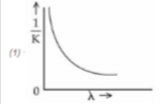
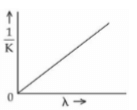
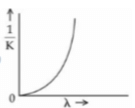
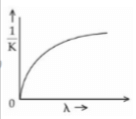
If and are de Broglie wavelength and kinetic energy, respectively, of a particle with constant mass. The correct graphical representation for the particle will be:
About De Broglie Hypothesis - JEE-MAIN
De Broglie Hypothesis is a vital chapter for JEE-MAIN aspirants. Mastering the concepts covered in this chapter is essential for securing a top rank.
By rigorously practicing the previous year questions associated with this chapter, you can identify high-yield topics, understand the examiner's perspective, and boost your confidence during the actual exam.
Frequently Asked Questions
Why focus on De Broglie Hypothesis PYQs?
Analyzing PYQs for this specific chapter reveals the most frequently tested concepts and the typical complexity of questions, allowing you to tailor your study plan efficiently.
How to best use this analysis?
Review the topic breakdown to see which sub-topics within De Broglie Hypothesis carry the most weight. Then, tackle the questions iteratively to solidify your understanding.