Kinetic Energy
40 previous year questions.
High-Yield Trend
Chapter Questions 40 MCQs
Statement I: The average momentum of a molecule in a sample of an ideal gas depends on temperature.
Statement II: The rms speed of oxygen molecules in a gas is If the temperature is doubled and the oxygen molecules dissociate into oxygen atoms, the rms speed will become In the light of the above statements, choose the correct answer from the options given below:
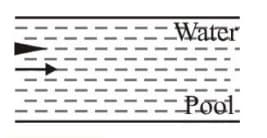
A body of mass is moving with an initial speed of The body stops after due to friction between body and the floor The value of the coefficient of friction is: (Take acceleration due to gravity )
The kinetic energy of a particle is 10000 joule with the mass 2kg. Find the momentum for the particle?
200 kg m/s
400 kg m/s
800 kg m/s
600 kg m/s
(1) The average kinetic energy of a gas molecule decreases when the temperature is reduced
(2) The average kinetic energy of a gas molecule increases with increase in pressure at constant temperature
(3) The average kinetic energy of a gas molecule decreases with increases in volume
(4) Pressure of a gas increases with increase in temperature at constant pressure
(5) The volume of gas decreases with increase in temperature
Choose the correct answer from the options given below :
Statement I: A truck and a car moving with same kinetic energy are brought to rest by applying brakes which provide equal retarding forces. Both come to rest in equal distance.
Statement II : A car moving towards east takes a turn and moves towards north, the speed remains unchanged. The acceleration of the car is zero.
In the light of given statements, choose the most appropriate answer from the options given below.
Statement I: A truck and a car moving with same kinetic energy are brought to rest by applying brakes which provide equal retarding forces. Both come to rest in equal distance.
Statement II : A car moving towards east takes a turn and moves towards north, the speed remains unchanged. The acceleration of the car is zero.
In the light of given statements, choose the most appropriate answer from the options given below.
3:5
5:4
4:5
[Use universal gas constant (R)= 8.31 J/mole K]
The velocity-time graph of an object moving along a straight line is shown in the figure. What is the distance covered by the object between to ? 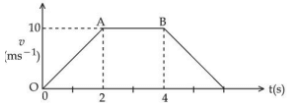
(Mass of earth = kg, Radius of earth = m, Gravitational constant = Nm kg )
A bob of mass is suspended at a point by a light string of length and left to perform vertical motion (circular) as shown in the figure. Initially, by applying horizontal velocity at the point ‘A’, the string becomes slack when the bob reaches at the point ‘D’. The ratio of the kinetic energy of the bob at the points B and C is: 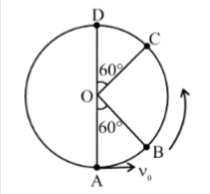
About Kinetic Energy - JEE-MAIN
Kinetic Energy is a vital chapter for JEE-MAIN aspirants. Mastering the concepts covered in this chapter is essential for securing a top rank.
By rigorously practicing the previous year questions associated with this chapter, you can identify high-yield topics, understand the examiner's perspective, and boost your confidence during the actual exam.
Frequently Asked Questions
Why focus on Kinetic Energy PYQs?
Analyzing PYQs for this specific chapter reveals the most frequently tested concepts and the typical complexity of questions, allowing you to tailor your study plan efficiently.
How to best use this analysis?
Review the topic breakdown to see which sub-topics within Kinetic Energy carry the most weight. Then, tackle the questions iteratively to solidify your understanding.