Surface Tension
33 previous year questions.
High-Yield Trend
Chapter Questions 33 MCQs
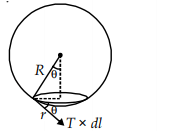
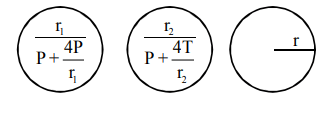
A spherical soap bubble of radius 3 cm is formed inside another spherical soap bubble of radius 6 cm. If the internal pressure of the smaller bubble of radius 3 cm in the above system is equal to the internal pressure of the another single soap bubble of radius r cm. The value of r is ___
Assertion (A) : Clothes containing oil or grease stains cannot be cleaned by water wash.
Reason (R) : Because the angle of contact between the oil/grease and water is obtuse.
In the light of the above statements, choose the correct answer from the option given below.
The intensity of the light from a bulb incident on a surface is 0.22 W/m2. The amplitude of the magnetic field in this light-wave is ___ × 10–9 T.
(Given : Permittivity of vacuum ε0 = 8.85 × 10⁻¹²C2N–1–m–2, speed of light in vacuum c = 3 × 10⁸ ms–1)
[If, g = 10 ms–2 and radius of earth = 6400 km]
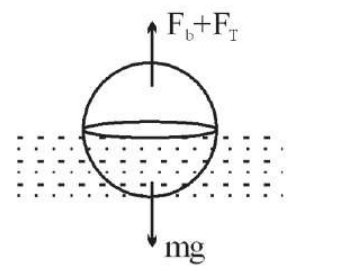
A drop of liquid of density ρ is floating half immersed in a liquid of density σ and surface tension 7.5×10⁻⁴ Ncm−1. The radius of drop in cm will be : ( Take : g=10 m/s2)
A. The surface energy per nucleon
B. The Coulomb contribution to the binding energy
C. The volume energy bv=a3A
D. Decrease in the binding energy is proportional to surface area.
E. While estimating the surface energy, it is assumed that each nucleon interacts with 12 nucleons. ( a1,a2 and a3 are constants)
Choose the most appropriate answer from the options given below:
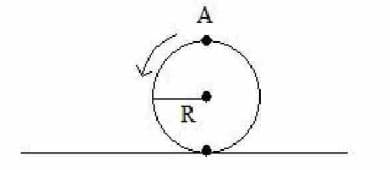
A disc is rolling without slipping on a surface. The radius of the disc is R. At t = 0, the top most point on the disc is A as shown in figure. When the disc completes half of its rotation, the displacement of point A from its initial position is
Two soap bubbles of radius 2 cm and 4 cm, respectively, are in contact with each other. The radius of curvature of the common surface, in cm, is _______________.
Two liquids A and B have and as contact angles in a capillary tube. If , then identify the correct statement:
About Surface Tension - JEE-MAIN
Surface Tension is a vital chapter for JEE-MAIN aspirants. Mastering the concepts covered in this chapter is essential for securing a top rank.
By rigorously practicing the previous year questions associated with this chapter, you can identify high-yield topics, understand the examiner's perspective, and boost your confidence during the actual exam.
Frequently Asked Questions
Why focus on Surface Tension PYQs?
Analyzing PYQs for this specific chapter reveals the most frequently tested concepts and the typical complexity of questions, allowing you to tailor your study plan efficiently.
How to best use this analysis?
Review the topic breakdown to see which sub-topics within Surface Tension carry the most weight. Then, tackle the questions iteratively to solidify your understanding.