Amines
87 previous year questions.
High-Yield Trend
Chapter Questions 87 MCQs
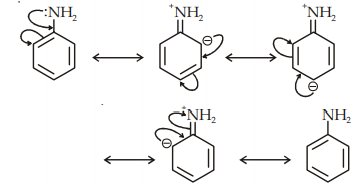

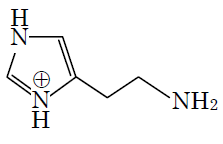
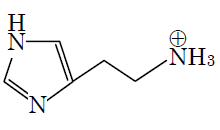
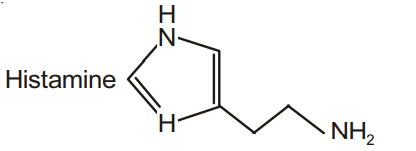
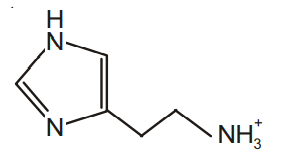
The total number of reagents from those given below, that can convert nitrobenzene into aniline is ___________. (Integer answer)
I.
II.
III.
IV.
V.
VI. }
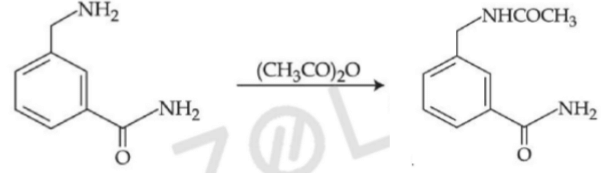
The Major Product in the above reaction is : 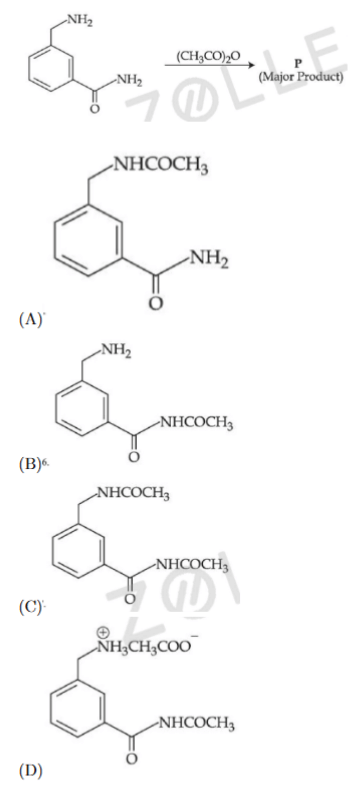
Consider the given reaction, percentage yield of : 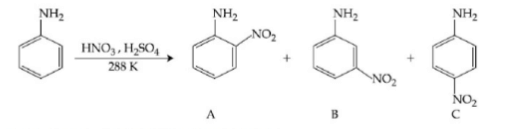
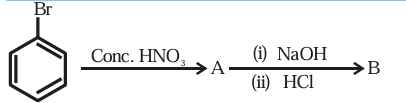
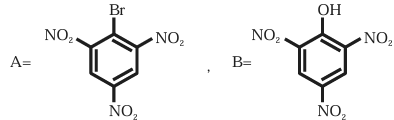
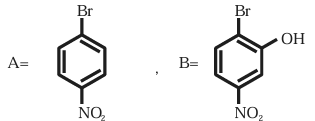
The major products A and B formed in the following reaction sequence are :
A
B
C
D
Identify correct A, B and C in the reaction sequence given below :
A
B
C
D
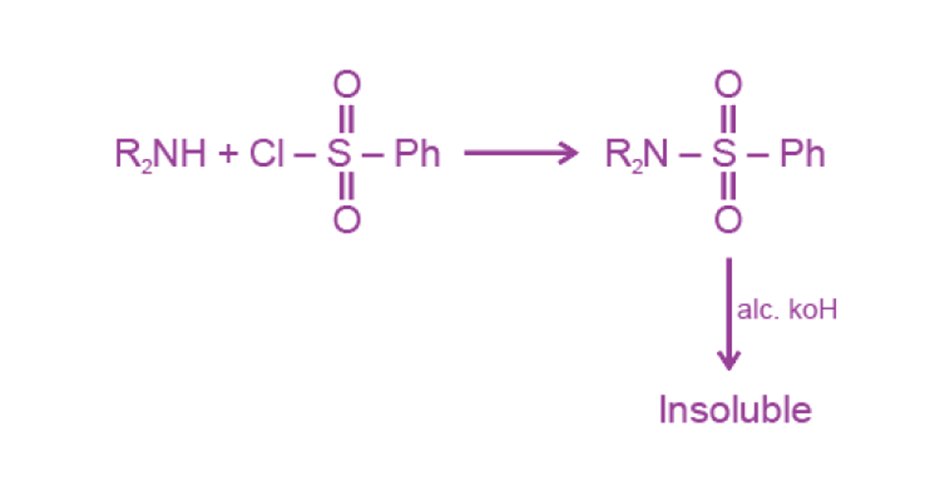
Which one of the products of the following reactions does not react with Hinsberg reagent to form sulphonamide? 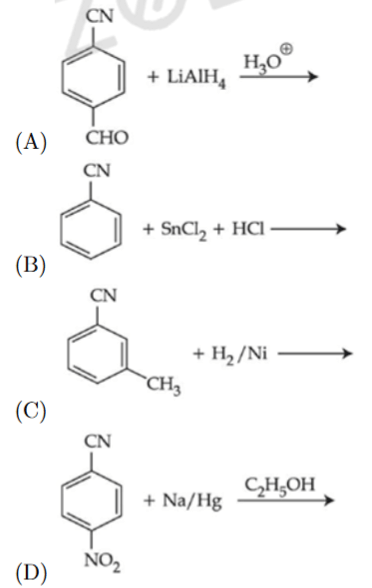
Assertion (A) : Gabriel phthalimide synthesis cannot be used to prepare aromatic primary amines.
Reason (R) : Aryl halides do not undergo nucleophilic substitution reaction.
In the light of the above statements, choose the correct answer from the options given below :
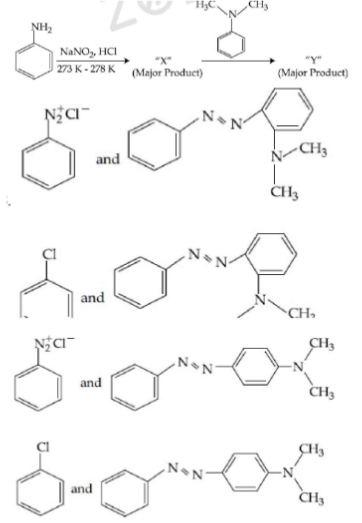
Considering the reaction of Aniline with at C to give X, which is then reacted with , identify X and Y :
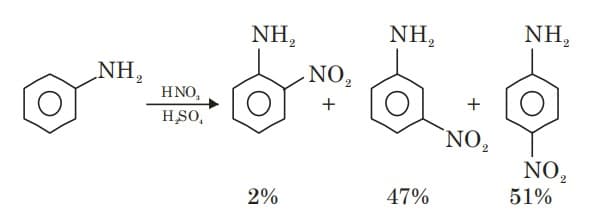
In the following reaction the reason why meta-nitro product also formed is : 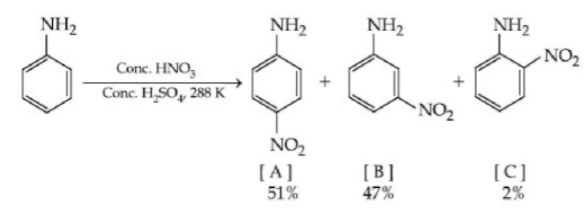
'A' and 'B' in the following reactions ( ) are : 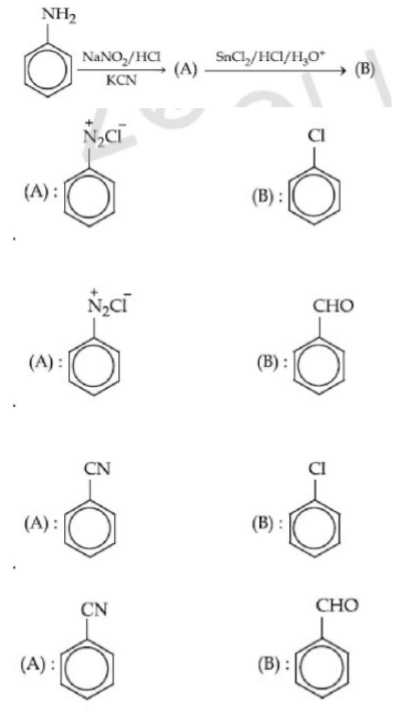
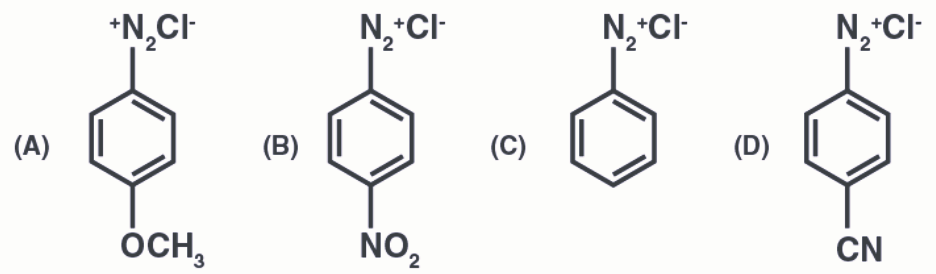
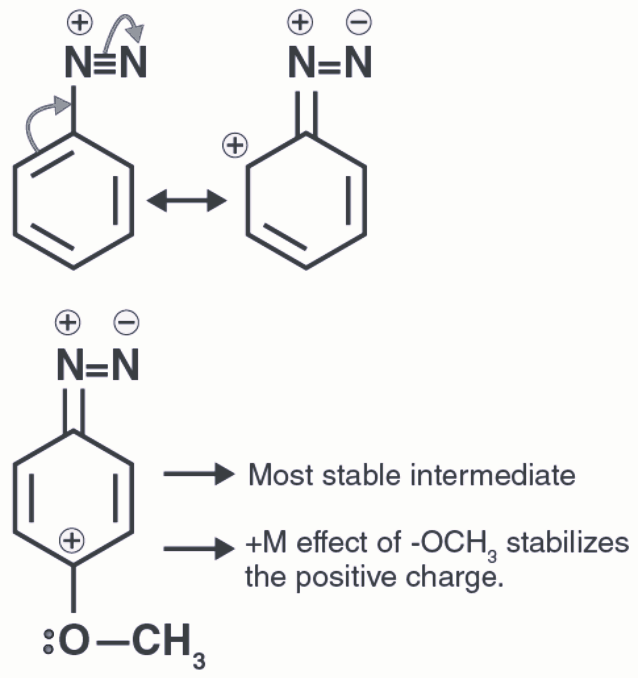
The diazonium salt of which of the following compounds will form a coloured dye on reaction with β-Naphthol in NaOH ? 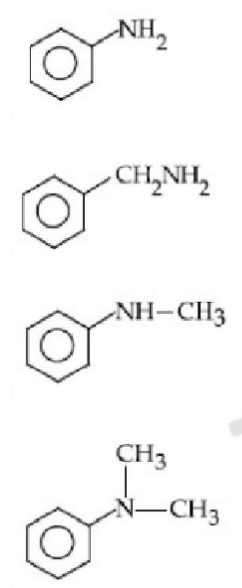
Which of the following reaction/s will not give p-aminoazobenzene ? 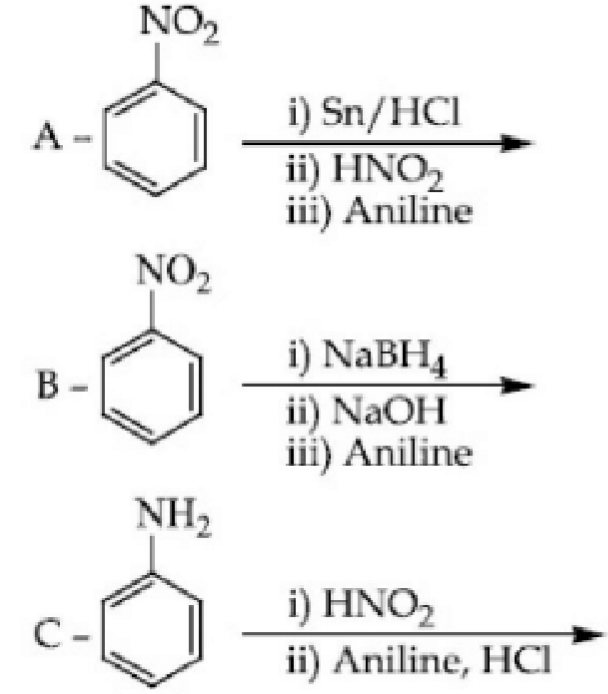
Correct statement about the given chemical reaction is : 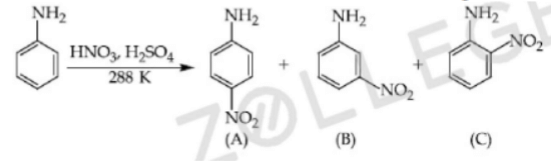
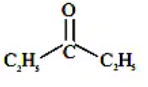
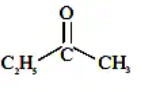
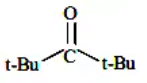
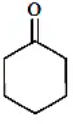
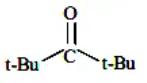
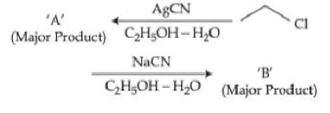
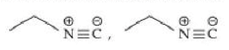
Considering the above reactions, the compound ‘A’ and compound ‘B’ respectively are :
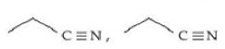
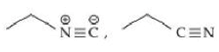

With respect to the following reaction, consider the given statements:
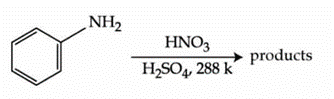
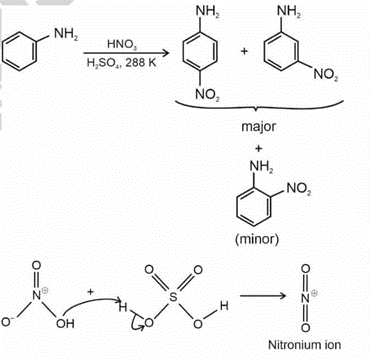
(A) o-Nitroaniline and p-nitroaniline are the predominant products.
(B) p-Nitroaniline and m-nitroaniline are the predominant products.
(C) HNO3 acts as an acid.
(D) H2SO4 acts as an acid.
Choose the correct option.
Among the following structures, which will show the most stable enamine formation?
(Where Me is –CH3)
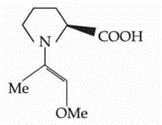
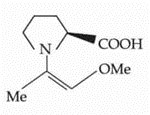
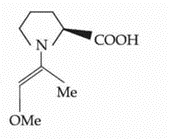
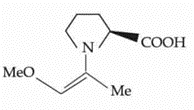
Consider the following reaction sequence: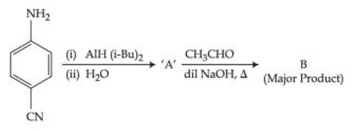
The product ‘B’ is:
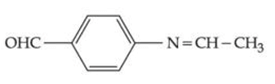
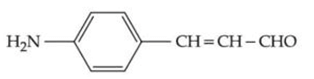
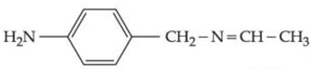
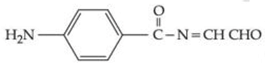
Consider the above reaction, the compound ‘A’ is :
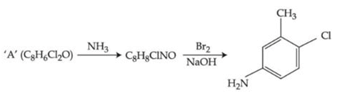
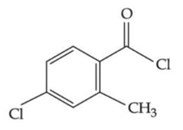
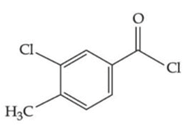
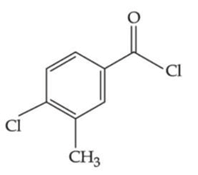
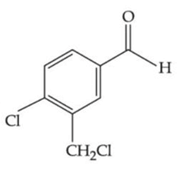
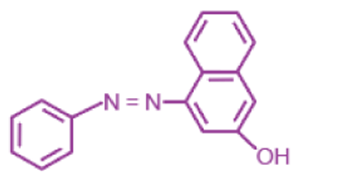
The final product ‘C’ in the following series of reactions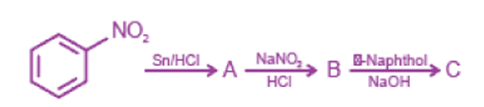
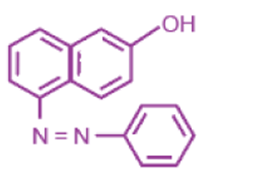
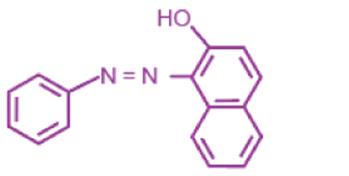
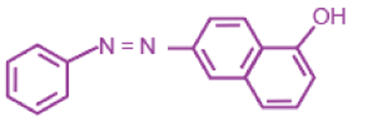
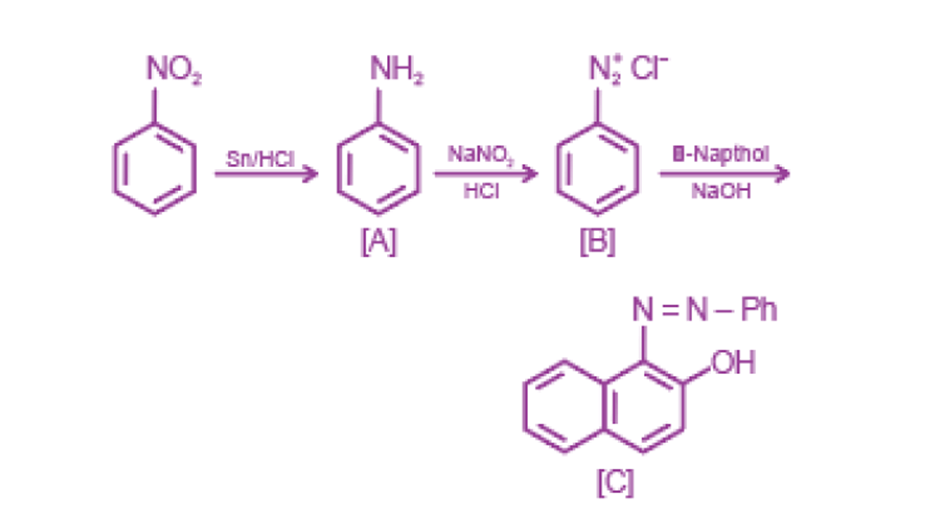
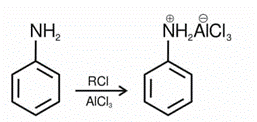
Assertion (A): Experimental reaction of with aniline and anhydrous does not give o and p-methylaniline.
Reason (R): The group of aniline becomes deactivating because of salt formation with anhydrous and hence yields m-methyl aniline as the product.
In the light of the above statements, choose the most appropriate answer from the options given below :
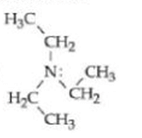
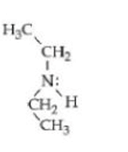
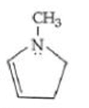
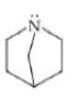
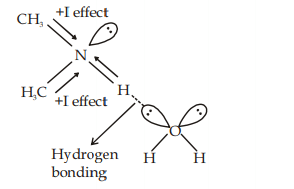
 is the strongest base among the given compounds due to the maximum +I effect and the lone pair of N is not in dynamic state so it can be donated easily.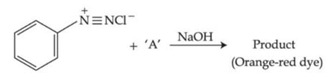
Which among the following represents reagent ‘A’?
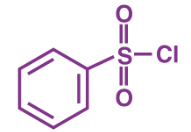
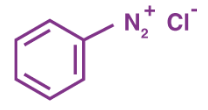
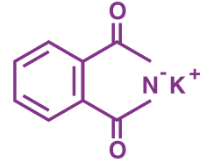
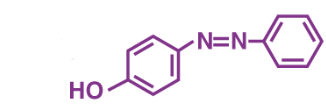
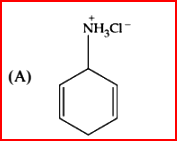
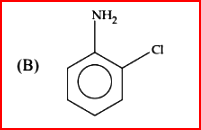
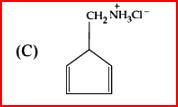
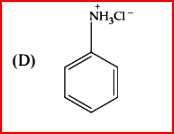
Match the following with the correct name of reaction
| Reaction | Name of reaction | ||
| (I) | 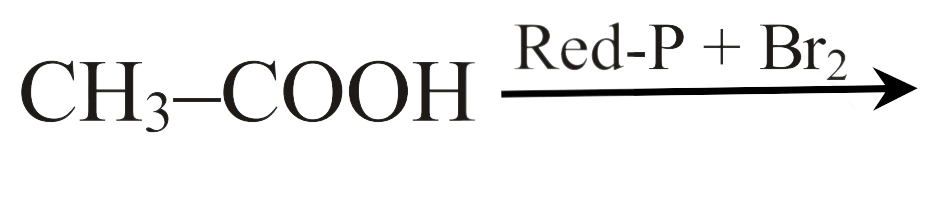 | (P) | Gattermann Koch reaction |
| (II) | 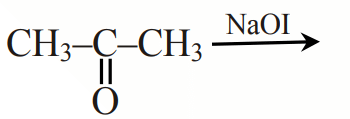 | (Q) | Hell Volhard Zelinsky |
| (III) | 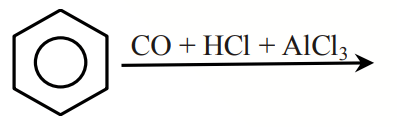 | (R) | Iodoform reaction |
(I) (Q), (II) (R), (III) (P)
(I) (R), (II) (Q), (III) (P)
(I) (Q), (II) (P), (III) (R)
(I) (P), (II) (Q), (III) (R)
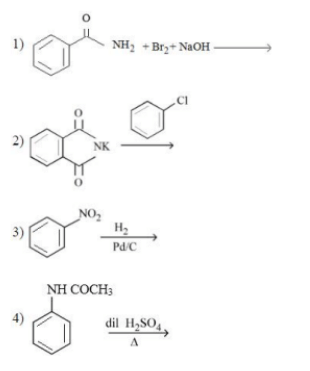
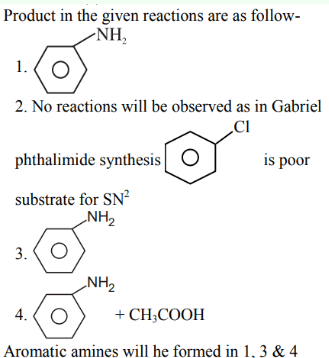
How many of the transformations given below would result in aromatic amines?
Tl2O3
Tl2O2
Cr2O3
B2O3
Statement-2: Benzenoid form of methyl orange is deeply coloured than quinonoid form
Check out which of the above statement is true?
| Amino Acid | Letter Code | ||
| (A). | Alanine | (P). | N |
| (B). | Asparagine | (Q). | A |
| (C). | Aspartic acid | (R). | R |
| (D). | Arginine | (S). | D |
Given below are two statements:
Statement I : Pure Aniline and other arylamines are usually colourless.
Statement II : Arylamines get coloured on storage due to atmospheric reduction.
Choose the correct answer
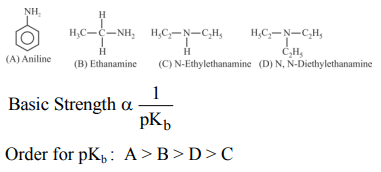
| LIST I (Amines) | LIST II (pKb) | ||
| A | Aniline | I | 3.25 |
| B | Ethanamine | II | 3.00 |
| C | N-Ethylethanamine | III | 9.38 |
| D | N, N-Diethylethanamine | IV | 3.29 |
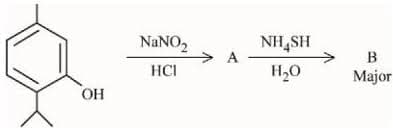
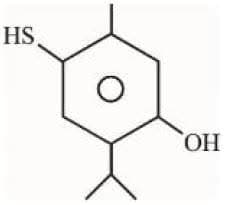
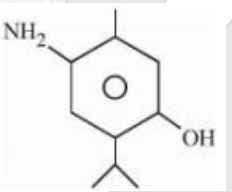
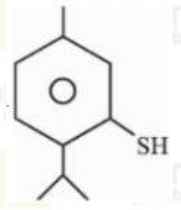
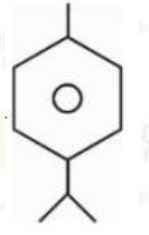
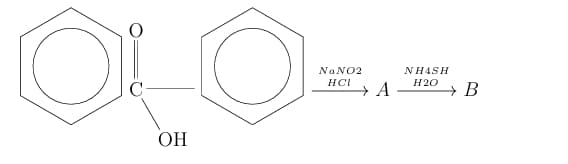
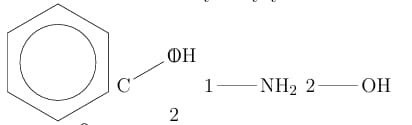
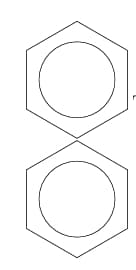 Then the diazonium salt is formed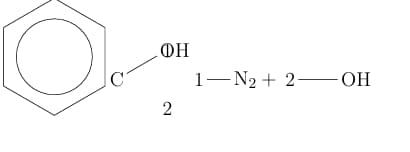
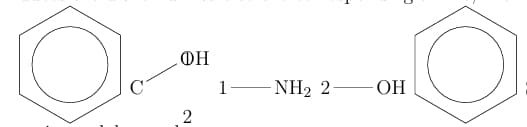 So the final product B is 2-aminocyclohexanol.
Statement I: Aniline reacts with con. followed by heating at 453–473 K gives p-aminobenzene sulphonic acid, which gives blood red colour in the 'Lassaigne's test'.
Statement II: In Friedel-Craft's alkylation and acylation reactions, aniline forms salt with the catalyst. Due to this, nitrogen of aniline acquires a positive charge and acts as a deactivating group.
In the light of the above statements, choose the correct answer from the options given below:
Statement-II : Aniline forms a salt with anhydrus in Friedel Craft’s reaction.
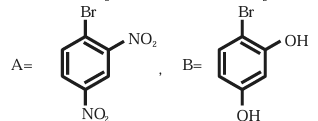
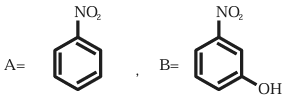
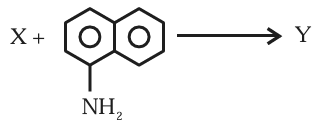

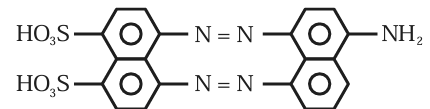
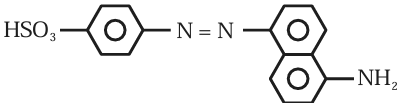
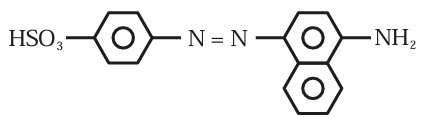
Statement (I) : All the following compounds react with p-toluenesulfonyl chloride.
Statement (II) : Their products in the above reaction are soluble in aqueous NaOH.
In the light of the above statements, choose the correct answer from the options given below.
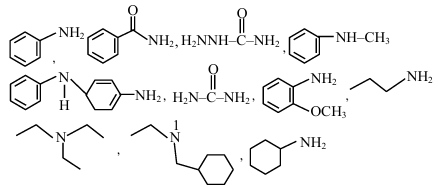
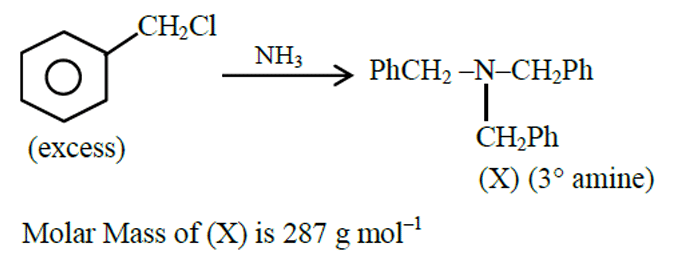
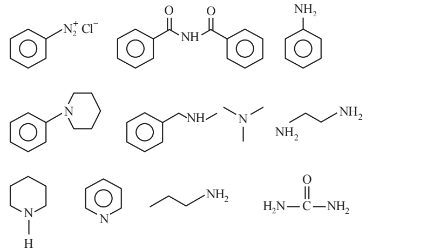
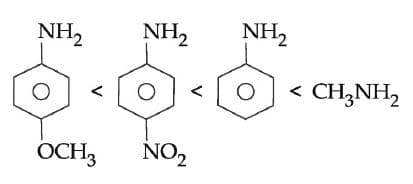
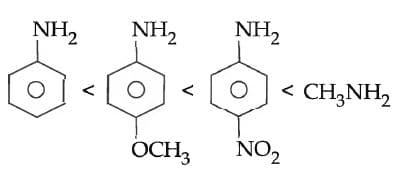
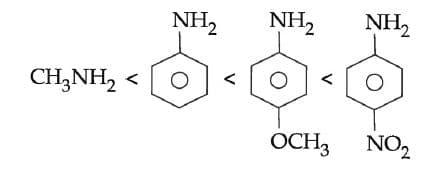
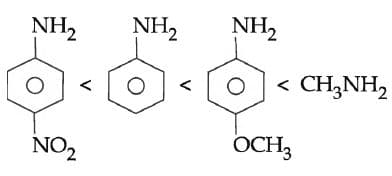
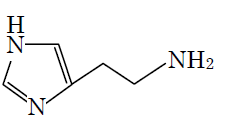
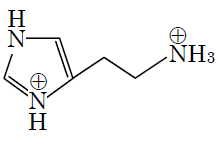
The correct order of basicity for the following molecules is: 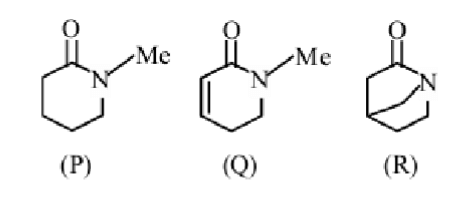
Identify the inorganic sulphides that are yellow in colour:
(A)
(B)
(C)
(D)
(E)
Choose the correct answer from the options given below:
Identify correct statements:
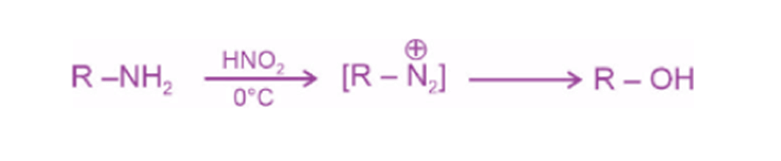
(A) Primary amines do not give diazonium salts when treated with in acidic condition.
(B) Aliphatic and aromatic primary amines on heating with and ethanolic form carbylamines.
(C) Secondary and tertiary amines also give carbylamine test.
(D) Benzenesulfonyl chloride is known as Hinsberg’s reagent.
(E) Tertiary amines react with benzenesulfonyl chloride very easily.
Choose the correct answer from the options given below:
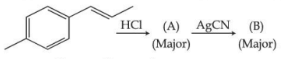
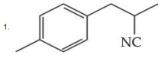
Identify product [A], [B], and [C] in the following reaction sequence.




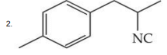
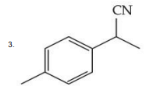
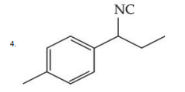
Which of the following amine(s) show(s) positive carbamylamine test? 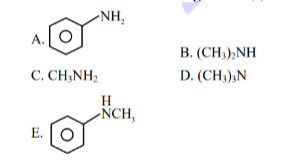
The major product of the following reaction is: 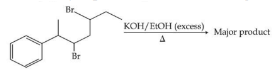
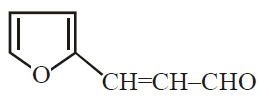
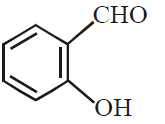
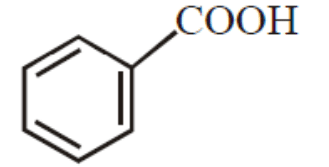
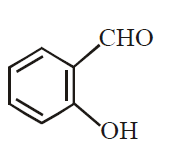
The total number of compounds from below when treated with hot KMnO4 giving benzoic acid is: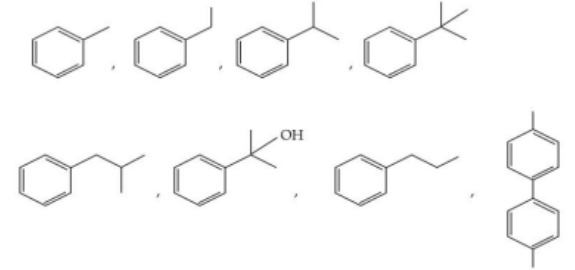
(B) Aliphatic and aromatic primary amines on heating with and ethanolic form carbylamines.
(C) Secondary and tertiary amines also give carbylamine test.
(D) Benzenesulfonyl chloride is known as Hinsberg’s reagent.
(E) Tertiary amines react with benzenesulfonyl chloride very easily.
Choose the correct answer from the options given below:
(A)
(B)
(C)
(D)
The descending order of basicity of following amines is :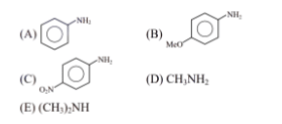
Choose the correct answer from the options given below :
Total number of molecules/species from the following which will be paramagnetic is ……….
(Given molar mass in : H:1, C:12, O:16)
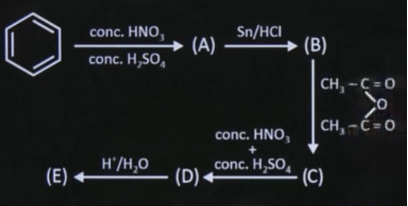
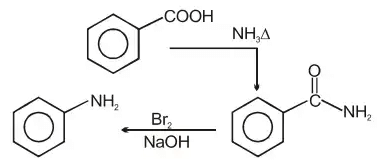
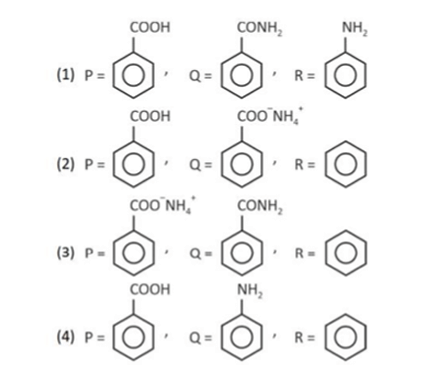
\text{(P) }\xrightarrow{\text{NH}_3, \Delta} \text{(Q)} \xrightarrow{\text{Br}_2, \text{KOH}} \text{(R)}
Which of the following is the correct structure for P, Q, and R?
Statement-II : .
About Amines - JEE-MAIN
Amines is a vital chapter for JEE-MAIN aspirants. Mastering the concepts covered in this chapter is essential for securing a top rank.
By rigorously practicing the previous year questions associated with this chapter, you can identify high-yield topics, understand the examiner's perspective, and boost your confidence during the actual exam.
Frequently Asked Questions
Why focus on Amines PYQs?
Analyzing PYQs for this specific chapter reveals the most frequently tested concepts and the typical complexity of questions, allowing you to tailor your study plan efficiently.
How to best use this analysis?
Review the topic breakdown to see which sub-topics within Amines carry the most weight. Then, tackle the questions iteratively to solidify your understanding.