Nucleophilic And Electrophilic Substitution Reactions Both Aromatic And Aliphatic
11 previous year questions.
Volume: 11 Ques
Yield: Medium
High-Yield Trend
1
2026
5
2025
5
2024
Chapter Questions
11 MCQs
01
PYQ 2024
medium
chemistryID: jee-main
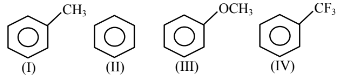
The correct arrangement for decreasing order of electrophilic substitution for above compounds

1
(IV) (I) (II) (III)
2
(III) (I) (II) (IV)
3
(II) (IV) (III) (I)
4
(III) (IV) (II) (I)
Official Solution
Correct Option: (2)
The problem asks to arrange the given substituted benzene compounds in the decreasing order of their reactivity towards electrophilic substitution.
Concept Used:
The reactivity of a benzene derivative towards electrophilic aromatic substitution (EAS) depends on the electron density of the aromatic ring. The rate of the reaction is influenced by the nature of the substituent already present on the ring.
Activating Groups: Electron-donating groups (EDGs) increase the electron density in the benzene ring, making it more nucleophilic and thus more reactive towards electrophiles. These groups are called activating groups. They exhibit positive resonance ( ), hyperconjugation, or positive inductive ( ) effects.
Deactivating Groups: Electron-withdrawing groups (EWGs) decrease the electron density in the ring, making it less nucleophilic and less reactive towards electrophiles. These groups are called deactivating groups. They exhibit negative resonance ( ) or negative inductive ( ) effects.
The general order of reactivity is: Benzene with a strong activating group > Benzene with a weak activating group > Benzene > Benzene with a weak deactivating group > Benzene with a strong deactivating group.
Step-by-Step Solution:
Step 1: Analyze the electronic effect of each substituent.
Compound (I) - Toluene: The substituent is a methyl group ( ).
The group is an alkyl group. It donates electron density to the ring through two effects:
Hyperconjugation: Delocalization of C-H -electrons, which is a significant electron-donating effect.
Inductive Effect: A weak electron-donating effect ( ).
Compound (II) - Benzene: This is the reference compound with no substituent effects.
Compound (III) - Anisole: The substituent is a methoxy group ( ).
The group has an oxygen atom with lone pairs of electrons directly attached to the ring. It exhibits two opposing effects:
Resonance Effect: A strong electron-donating effect ( ) due to the delocalization of oxygen's lone pair into the ring.
Inductive Effect: An electron-withdrawing effect ( ) due to the high electronegativity of oxygen.
Compound (IV) - Trifluoromethylbenzene: The substituent is a trifluoromethyl group ( ).
The group has a carbon atom attached to three highly electronegative fluorine atoms. It strongly withdraws electron density from the ring through:
Inductive Effect: A very strong electron-withdrawing effect ( ) due to the fluorine atoms.
Reverse Hyperconjugation: An electron-withdrawing resonance-like effect.
Step 2: Compare the activating and deactivating strengths.
We compare the electron-donating and withdrawing abilities of the substituents to establish the order of reactivity.
Comparing Activating Groups: We compare (in III) and (in I). The effect of is significantly stronger than the hyperconjugation and effect of . Therefore, anisole (III) is much more reactive than toluene (I).
Order: (III) > (I)
Comparing with Benzene: Both and are activating groups, so both anisole (III) and toluene (I) are more reactive than benzene (II).
Order: (III) > (I) > (II)
Including the Deactivating Group: The group in compound (IV) is strongly deactivating, making the ring much less electron-rich than benzene. Therefore, trifluoromethylbenzene (IV) is the least reactive compound.
Step 3: Establish the final decreasing order of reactivity.
Combining the analyses, the decreasing order of reactivity towards electrophilic substitution is:
This corresponds to the sequence (III) > (I) > (II) > (IV).
The correct arrangement is given in option (2).
02
PYQ 2024
medium
chemistryID: jee-main
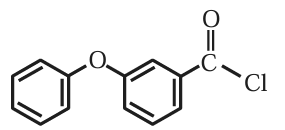
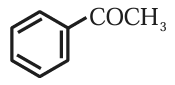
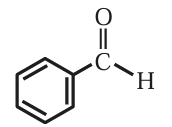
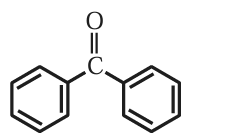
Identify major product ‘P’ formed in the following reaction.
1
2
3
4
Official Solution
Correct Option: (4)
This reaction is an example of the Friedel-Crafts acylation reaction, which involves the introduction of an acyl group into an aromatic ring using an acyl chloride in the presence of a Lewis acid catalyst such as anhydrous AlCl3.
In this reaction, benzene reacts with benzoyl chloride (C6H5COCl) in the presence of AlCl3 to form benzophenone as the major product.
The catalyst AlCl3 facilitates the formation of an acylium ion (C6H5CO+) from benzoyl chloride by forming an ionic complex.
The acylium ion, a powerful electrophile, attacks the π-electron-rich benzene ring.
This leads to the formation of a resonance-stabilized carbocation intermediate.
The aromaticity of the benzene ring is restored by the loss of a proton, resulting in the formation of benzophenone (C6H5COC6H5).
Thus, the major product P is benzophenone.
Hence, the correct answer is: Option 4.
03
PYQ 2024
medium
chemistryID: jee-main
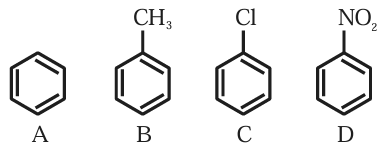
The correct order of reactivity in electrophilic substitution reaction of the following compounds is :
1
2
3
4
Official Solution
Correct Option: (4)
In electrophilic substitution reactions, the reactivity of aromatic compounds is influenced by the substituents attached to the benzene ring. These substituents can be either activating or deactivating, and they can direct the incoming electrophile to specific positions on the ring.
Let's examine the given compounds:
Compound A: Benzene
Compound B: Toluene (methylbenzene)
Compound C: Chlorobenzene
Compound D: Nitrobenzene
Analysis:
Toluene (B): The methyl group is an electron-donating group, which activates the benzene ring towards electrophilic substitution. This makes toluene more reactive than benzene.
Chlorobenzene (C): The chlorine atom is an electron-withdrawing group due to its electronegativity, but it also has lone pairs that can participate in resonance. This makes chlorobenzene less reactive than benzene but not as deactivating as nitrobenzene.
Nitrobenzene (D): The nitro group is a strong electron-withdrawing group, severely deactivating the benzene ring towards electrophilic substitution.
Therefore, the reactivity order in electrophilic substitution is:
B > A > C > D
This means Toluene is the most reactive, followed by Benzene, then Chlorobenzene, and Nitrobenzene being the least reactive.
04
PYQ 2024
medium
chemistryID: jee-main
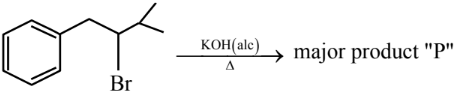
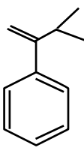
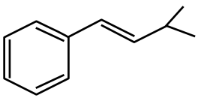
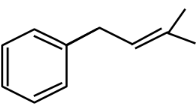
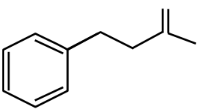
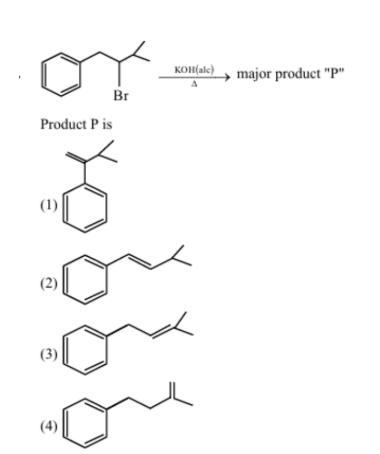
Product P is
1
2
3
4
Official Solution
Correct Option: (2)
The given reaction is an elimination reaction using alcoholic KOH as the base. Under such conditions, the reaction favors the formation of an alkene via the E2 mechanism. The elimination occurs by the removal of the ff-hydrogen, leading to the formation of the most stable (more substituted) alkene as the major product. In this case, the product formed is a highly substituted alkene, making option (2) the correct answer.
05
PYQ 2024
medium
chemistryID: jee-main
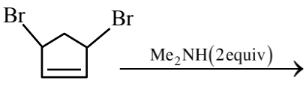
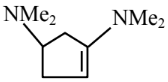
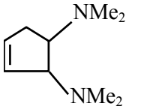
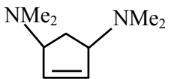
Find out the major product formed from the following reaction.
1
2
3
4
Official Solution
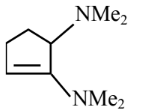
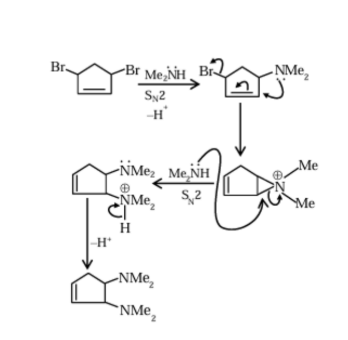
Correct Option: (2)
Step 1: Nucleophilic substitution ( ) with dimethylamine ( ): The bromine atom at one of the carbons is replaced by the nucleophile ( ) via an mechanism. This forms an intermediate with a quaternary amine at the adjacent carbon. Step 2: Deprotonation: The positively charged intermediate loses a proton ( ) to stabilize the structure, forming an alkene. Step 3: Second reaction: The second equivalent of dimethylamine attacks the adjacent carbon-bromine bond, substituting the bromine atom with another group. The final product contains two groups attached to the cyclopentane ring at adjacent positions. The above mechanism is valid for both cis and trans isomers. Hence, the products are the same for both.
06
PYQ 2025
medium
chemistryID: jee-main
Given below are two statements: Statement (I): Alcohols are formed when alkyl chlorides are treated with aqueous potassium hydroxide by elimination reaction. Statement (II): In alcoholic potassium hydroxide, alkyl chlorides form alkenes by abstracting the hydrogen from the -carbon. In the light of the above statements, choose the most appropriate answer from the options given below:
1
Both Statement I and Statement II are incorrect
2
Statement I is incorrect but Statement II is correct
3
Statement I is correct but Statement II is incorrect
4
Both Statement I and Statement II are correct
Official Solution
Correct Option: (2)
To solve this question, we need to analyze the given statements regarding the reactions of alkyl chlorides with potassium hydroxide solutions.
Understanding Statement I:
It states that alcohols are formed by treating alkyl chlorides with aqueous potassium hydroxide through an elimination reaction.
This statement is incorrect. Alcohols are indeed formed from alkyl chlorides by the action of aqueous potassium hydroxide, but this happens via a substitution reaction, not an elimination reaction. The hydroxide ion ( ) replaces the chloride ion ( ) to form alcohols.
The reaction follows:
Understanding Statement II:
It suggests that alkyl chlorides form alkenes in the presence of alcoholic potassium hydroxide by abstracting hydrogen from the -carbon.
This statement is correct. When alkyl chlorides are treated with alcoholic KOH, elimination occurs forming alkenes. The reaction is known as a dehydrohalogenation reaction, where the hydrogen from the β-carbon is abstracted, and a double bond is formed.
The reaction follows:
Based on the above explanations:
Statement I is incorrect because it confuses elimination with substitution in the formation of alcohols.
Statement II is correct as it properly describes the elimination process forming alkenes.
Thus, the most appropriate option is: Statement I is incorrect but Statement II is correct.
07
PYQ 2025
medium
chemistryID: jee-main
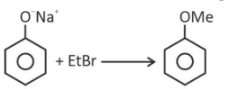
In which of the following reactions, major product is matched correctly?
1
2
3
4
Official Solution
Correct Option: (3)
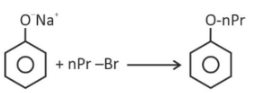
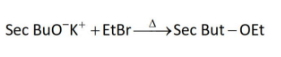
In this question, we are considering nucleophilic substitution reactions. Let's analyze each option to determine which correctly matches the major product.
1. Option 1: This reaction is incorrect because the nucleophile does not react with to form . The product should be , not , which is inconsistent with the reaction conditions.
2. Option 2: This reaction is incorrect because the nucleophile (tert-butoxide) reacts with to form , which is correct in terms of nucleophilic substitution, but not the major product expected for this type of reaction.
3. Option 3: This is the correct answer. Here, the nucleophile reacts with (n-propyl bromide) in a nucleophilic substitution, displacing the bromide ion and forming the product , which is the expected major product.
4. Option 4: This is incorrect.
The expected product is , but the formation of this product is unlikely given the reagents and expected reaction type. Thus, the correct match is Option 3.
08
PYQ 2025
hard
chemistryID: jee-main
Total number of nucleophiles from the following is:
1
5
2
6
3
4
4
7
Official Solution
Correct Option: (1)
To determine the total number of nucleophiles among the given species, we need to understand what a nucleophile is. A nucleophile is a chemical species that donates an electron pair to form a chemical bond in relation to a reaction. Nucleophiles are typically negatively charged or neutral with lone pairs of electrons.
Let's evaluate each species:
(Ammonia): Ammonia is a classic nucleophile due to its lone pair of electrons on the nitrogen atom. Therefore, it is a nucleophile.
(Thiophenol): The sulfur atom in thiophenol contains a lone pair of electrons, making it a good nucleophile.
(Diethyl sulfide): This molecule has sulfur with lone pairs, making it a nucleophile.
(Ethene): Ethene is an alkene, which can act as a nucleophile in certain reactions, such as epoxidation, due to the electron density in the bond.
(Hydroxide ion): Being negatively charged with lone pair electrons, it is a strong nucleophile.
(Hydronium ion): This species is not a nucleophile; it is an electrophile, as it is electron-deficient.
(Acetone): Acetone is not a nucleophile in typical reactions. It is usually involved as a solvent or an electrophile due to the presence of the carbonyl group.
(Methyl isocyanide): Generally considered a nucleophile due to lone pairs on nitrogen, but less common.
Counting the nucleophiles: NH , PhSH, (H C S) , H C = CH , and OH are nucleophiles. Thus, there are 5 nucleophiles.
Answer: 5
09
PYQ 2025
medium
chemistryID: jee-main
In the following substitution reaction:
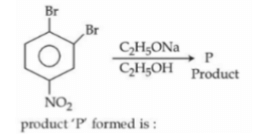
1
2
3
4
Official Solution
Correct Option: (1)
Explanation of the Substitution Reaction:
The given problem involves a substitution reaction, where an atom or group in a molecule is replaced by another atom or group. To solve the problem, we need to identify the reaction mechanism and the reagents involved to determine the correct product.
In substitution reactions, particularly in organic chemistry, two common types are:
SN1 Reactions: Unimolecular nucleophilic substitution, where a carbocation intermediate forms. These reactions are typically seen with tertiary substrates.
SN2 Reactions: Bimolecular nucleophilic substitution, where a direct displacement occurs without intermediates. These reactions occur with primary and secondary substrates.
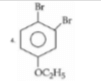
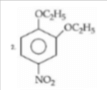
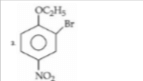
A benzene ring with two bromine atoms and a nitro group ( ). Sodium ethoxide ( ) in ethanol ( ) is a strong nucleophile and a base. The nitro group is an electron-withdrawing group, which activates the benzene ring towards nucleophilic aromatic substitution, particularly at the positions ortho and para to it.
In this case, one of the bromine atoms will be replaced by the ethoxide group ( ). The bromine atom that is more activated by the nitro group will be substituted preferentially. Since both bromine atoms are ortho to the nitro group, they are equally activated. Therefore, the product will be the substitution of one of the bromine atoms with the ethoxide group.
The product 'P' formed is:
10
PYQ 2025
easy
chemistryID: jee-main
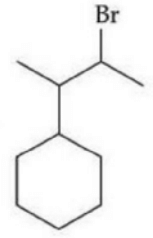
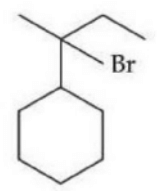
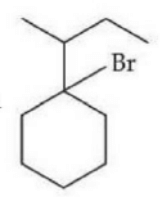
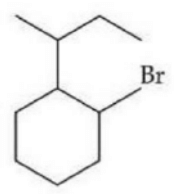
When sec-butylcyclohexane reacts with bromine in the presence of sunlight, the major product is:
1
2
3
4
Official Solution
Correct Option: (2)
To determine the major product when sec-butylcyclohexane reacts with bromine in the presence of sunlight, we need to understand the mechanism of the reaction.
Type of Reaction: The reaction between sec-butylcyclohexane and bromine in the presence of sunlight is a free radical halogenation. Sunlight initiates the formation of free radicals, leading to the substitution of hydrogen atoms in the aliphatic chain with bromine atoms.
Stability of Radicals: During free radical halogenation, the bromine radicals will preferentially abstract the hydrogen from the position that forms the most stable radical. For cyclohexane derivatives, tertiary radicals are more stable than secondary, which in turn are more stable than primary radicals:
Application to Sec-Butylcyclohexane: In sec-butylcyclohexane, the tertiary carbon of the sec-butyl group is most likely to form a radical because it is more stable than other possible radicals. The abstraction of a hydrogen atom from the tertiary carbon of the sec-butyl group gives the most stable radical intermediate.
Formation of Major Product: Once the most stable radical is formed, a bromine atom can attach to it, leading to the formation of the major product. This substitution occurs at the tertiary carbon of the sec-butyl group.
Conclusion: Thus, the major product of the reaction is the one where bromine is substituted at the tertiary carbon of the sec-butyl group.
This matches the image provided in the options, confirming it as the major product.
11
PYQ 2026
hard
chemistryID: jee-main
The correct order of reactivity of CH Br in methanol with the following nucleophiles is
1
2
3
4
Official Solution
Correct Option: (3)
CH Br is a primary alkyl halide, and methanol is a polar protic solvent. Hence, the reaction proceeds via the SN2 mechanism. Step 1: Effect of solvent on nucleophilicity. In polar protic solvents, nucleophilicity of anions decreases down the group due to solvation:
Thus, among halide ions:
Step 2: Compare alkoxide and phenoxide ions. - is a strong base but heavily solvated in methanol.
- is resonance stabilized, reducing its nucleophilicity. Hence:
Step 3: Final order. Combining all factors:
Final Answer: