Chemical Reactions Of Aldehydes Ketones And Carboxylic Acids
29 previous year questions.
High-Yield Trend
Chapter Questions 29 MCQs
Given below are two statements:
Statement I: The esterification of carboxylic acid with an alcohol is a nucleophilic acyl substitution.
Statement II: Electron withdrawing groups in the carboxylic acid will increase the rate of esterification reaction.
Choose the most appropriate option
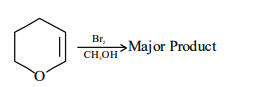
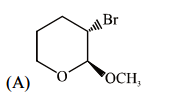
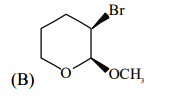
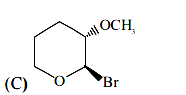
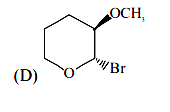
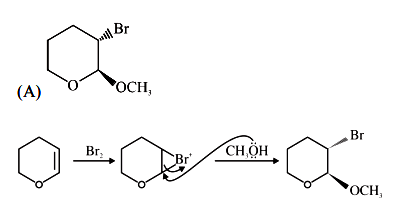
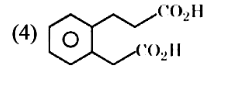
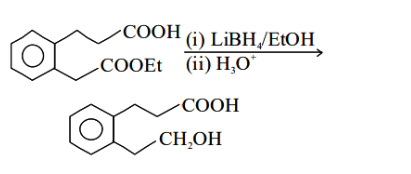
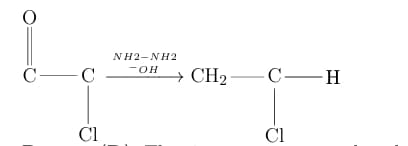
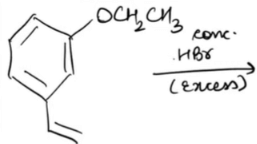
Amongst the following, the major product of the given chemical reaction is
Assertion A: Boric acid is a weak acid
Reason R: Boric acid is not able to release ion on its own. It receives ion from water and releases ion.
In the light of the above statements, choose the most appropriate answer from the options given below.
The number of paramagnetic species among the following is ____B2,Li2,C2,C-2, O22--,O2+ and He2+
Ka for butyric acid (C3H7COOH) is 2 × 10⁻⁵. The pH of 0.2 M solution of butyric acid is ______× 10–1. (Nearest integer) (Given log2 = 0.30)
For the given first order reaction A → B, the half-life of the reaction is 0.3010 min. The ratio of the initial concentration of reactant to the concentration of reactant at time 2.0 min will be equal to ______. (Nearest integer)

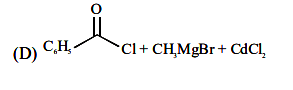
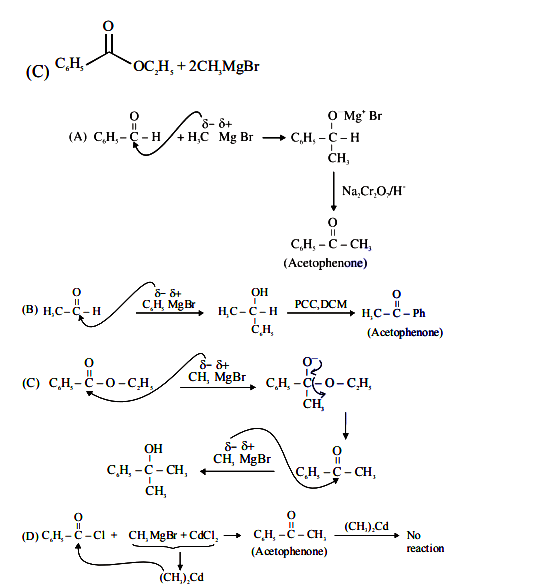
Given below are two statements one is labelled as Assertion A and the other is labelled as Reason R:
Assertion A: The amphoteric nature of water is explained by using Lewis acid/base concept
Reason R: Water acts as an acid with NH3 and as a base with H2S.
In the light of the above statements choose the correct answer from the options given below:
In the given reaction
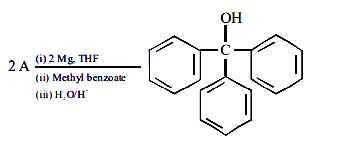
‘A’ can be
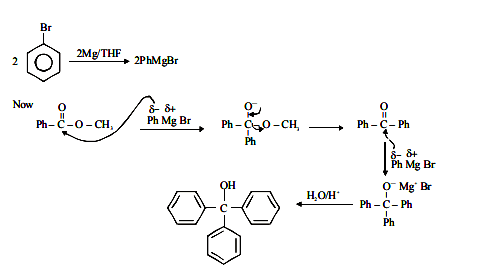
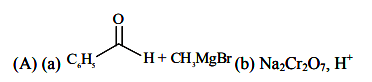
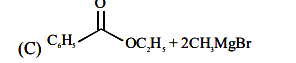
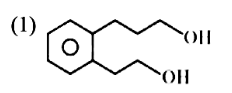
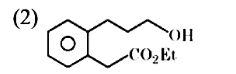
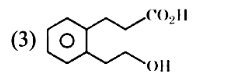
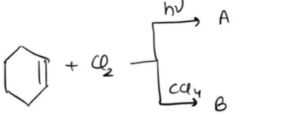
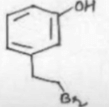
The major product formed in the following reaction, is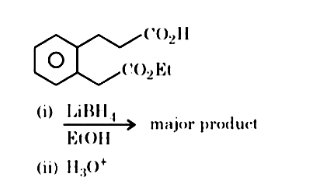
Assertion A: Phenolphthalein is a pH dependent indicator, remains colourless in acidic solution and gives pink colour in basic medium.
Reason R: Phenolphthalein is a weak acid. It doesn’t dissociate in basic medium.
In the light of the above statements, choose the most appropriate answer from the options given below.
Given below are two statements.
Statement I : Phenols are weakly acidic.
Statement II : Therefore they are freely soluble in NaOH solution and are weaker acids than alcohols and water.
Choose the most appropriate option.
[Given: Density of acetic acid is 1.02 g mL–1..
Molar mass of acetic acid is 60 g mol–1
Kf(H2O) = 1.85 K kg mol–1].
The activation energy of one of the reactions in a biochemical process is 532611 J mol–1. When the temperature falls from 310 K to 300 K, the change in rate constant observed is k300 = x × 10–3 k310. The value of x is ______.
[Given: ln10 = 2.3, R = 8.3 JK–1 mol–1]
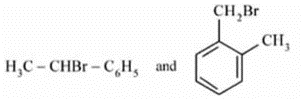
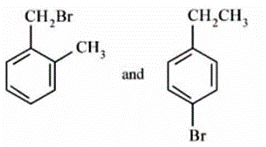
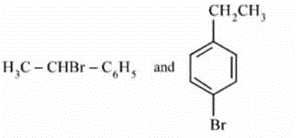
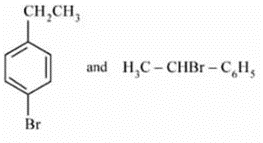
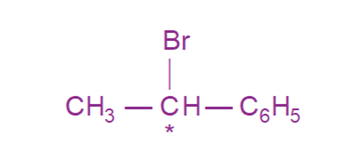
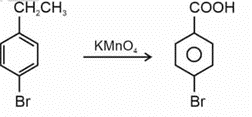
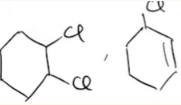
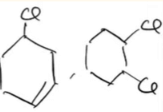
The number of molecules which gives haloform test among the following molecules is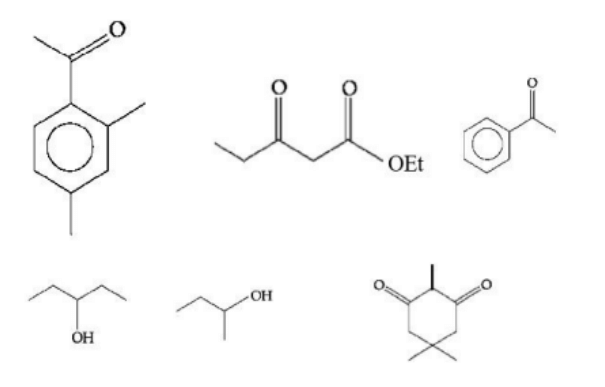
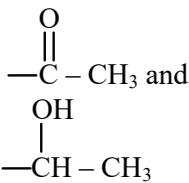
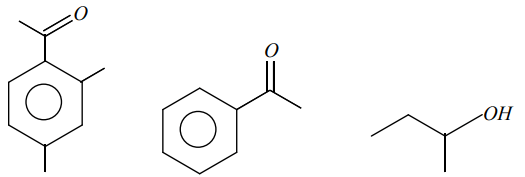
(i) do not dissolve in
(ii) do not dissolve in
(iii) do not give orange precipitate with 2,4-DNP
(iv) on hydrogenation give identical compound with molecular formula is _________
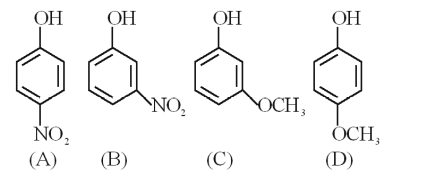
Arrange the following in decreasing acidicstrength
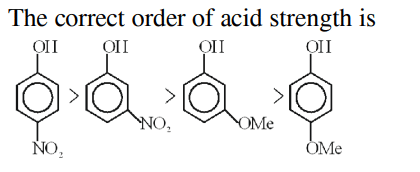
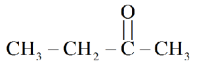
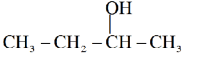
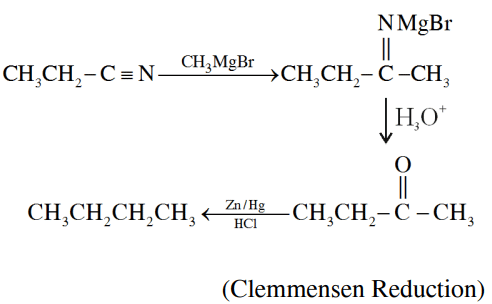
In a reaction,
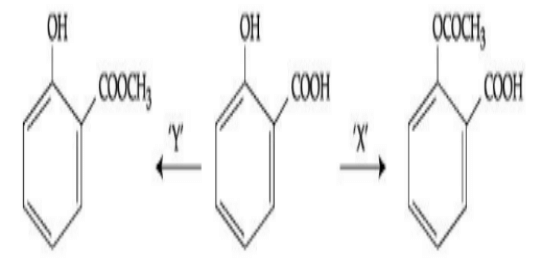
reagents ' X ' and ' Y ' respectively are :
Assertion A:
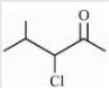 can be subjected to Wolff-Kishner reduction to give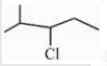
Reason R: Wolff-Kishner reduction is used to convert
 into
into 
In the light of the above statements, choose the correct answer from the options given below:
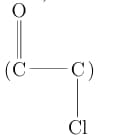 .
.

About Chemical Reactions Of Aldehydes Ketones And Carboxylic Acids - JEE-MAIN
Chemical Reactions Of Aldehydes Ketones And Carboxylic Acids is a vital chapter for JEE-MAIN aspirants. Mastering the concepts covered in this chapter is essential for securing a top rank.
By rigorously practicing the previous year questions associated with this chapter, you can identify high-yield topics, understand the examiner's perspective, and boost your confidence during the actual exam.
Frequently Asked Questions
Why focus on Chemical Reactions Of Aldehydes Ketones And Carboxylic Acids PYQs?
Analyzing PYQs for this specific chapter reveals the most frequently tested concepts and the typical complexity of questions, allowing you to tailor your study plan efficiently.
How to best use this analysis?
Review the topic breakdown to see which sub-topics within Chemical Reactions Of Aldehydes Ketones And Carboxylic Acids carry the most weight. Then, tackle the questions iteratively to solidify your understanding.