JEE-MAIN SERIES
Chemistry

Reaction Mechanism

20 previous year questions.

Volume: 20 Ques
Yield: Medium

High-Yield Trend

3
2026
3
2024
8
2023
5
2022
1
2019

Chapter Questions
20 MCQs

01
PYQ 2019
medium
chemistry ID: jee-main
The increasing order of nucleophilicity of the following nucleophiles is : (a) (b) (c) (d)
1
2
3
4
02
PYQ 2022
hard
chemistry ID: jee-main
20 mL of 0.1 M NH4OH is mixed with 40 mL of 0.05 M HCl.The pH of the mixture is nearest to(Given :Kb(NH4OH) = 1×10⁻⁵,log2 = 0.30,log3 = 0.48, log5 = 0.69,log7 = 0.84,log11 = 1.04)
1
3.2
2
4.2
3
5.2
4
6.2
03
PYQ 2022
easy
chemistry ID: jee-main
The oxidation state of manganese in the product obtained in a reaction of potassium permanganate and hydrogen peroxide in basic medium is____.
04
PYQ 2022
medium
chemistry ID: jee-main

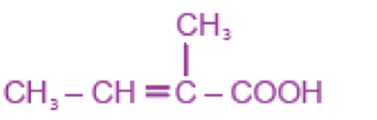
The reagent, from the following, which converts benzoic acid to benzaldehyde in one step is

1

2

3

4

05
PYQ 2022
medium
chemistry ID: jee-main
For the reaction H2F2(g) → H2(g) + F2(g), ΔU = –59.6 kJ mol–1 at 27°C. The enthalpy change for the above reaction is (–) _______ kJ mol–1 [nearest integer] Given: R = 8.314 J K–1 mol–1.
06
PYQ 2022
medium
chemistry ID: jee-main

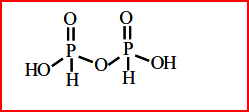
The number of non-ionisable protons present in the product B obtained from the following reactions is__.
C2H5OH+PCl3→C2H5Cl+A
A+PCl3→B
07
PYQ 2023
medium
chemistry ID: jee-main
The reaction representing the Mond process for metal refining is _________.
1

2

3

4

08
PYQ 2023
medium
chemistry ID: jee-main
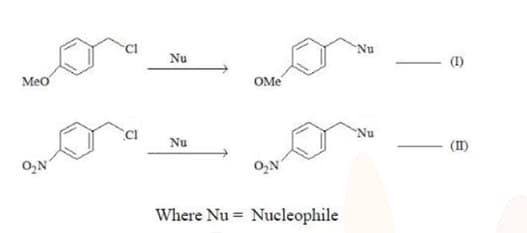
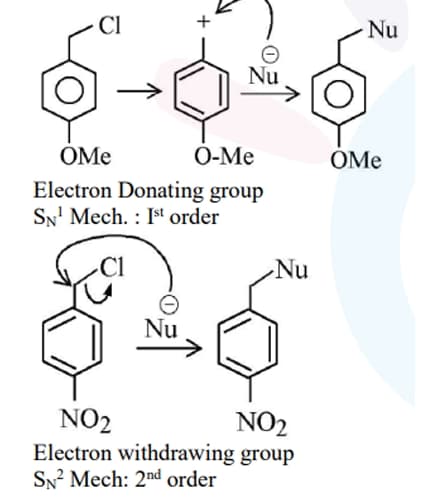
Find out the correct statement from the options given below for the above 2 reactions.
nucleophile
1

Reaction (I) is of 1st order and reaction (II) is of 2nd order

2

Reaction (I) and (II) both are 2nd order

3

Reaction (I) is of 1st order and reaction (II) is of 1st order
4

Reaction (I) is of 2nd order and reaction (II) is of 1st order
09
PYQ 2023
medium
chemistry ID: jee-main
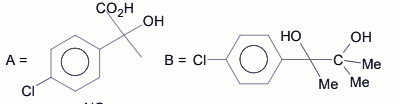
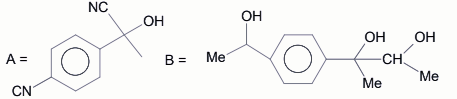
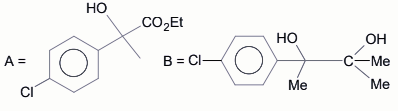
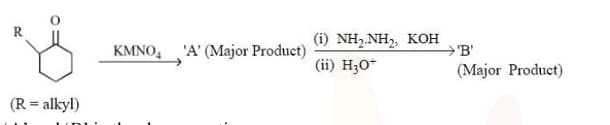
In the above reaction 'A' and 'B' are:
A’ and ‘B’ in the above reactions are
1
A’ and ‘B’ in the above reactions are
2
A’ and ‘B’ in the above reactions are
3
A’ and ‘B’ in the above reactions are
4
A’ and ‘B’ in the above reactions are
10
PYQ 2023
medium
chemistry ID: jee-main
The number of hyperconjugation structures involved to stabilize carbocation formed in the below reaction is _______
hyperconjugation structures
11
PYQ 2023
medium
chemistry ID: jee-main
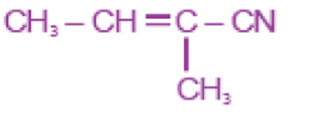
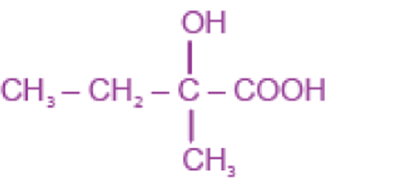
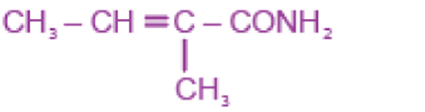
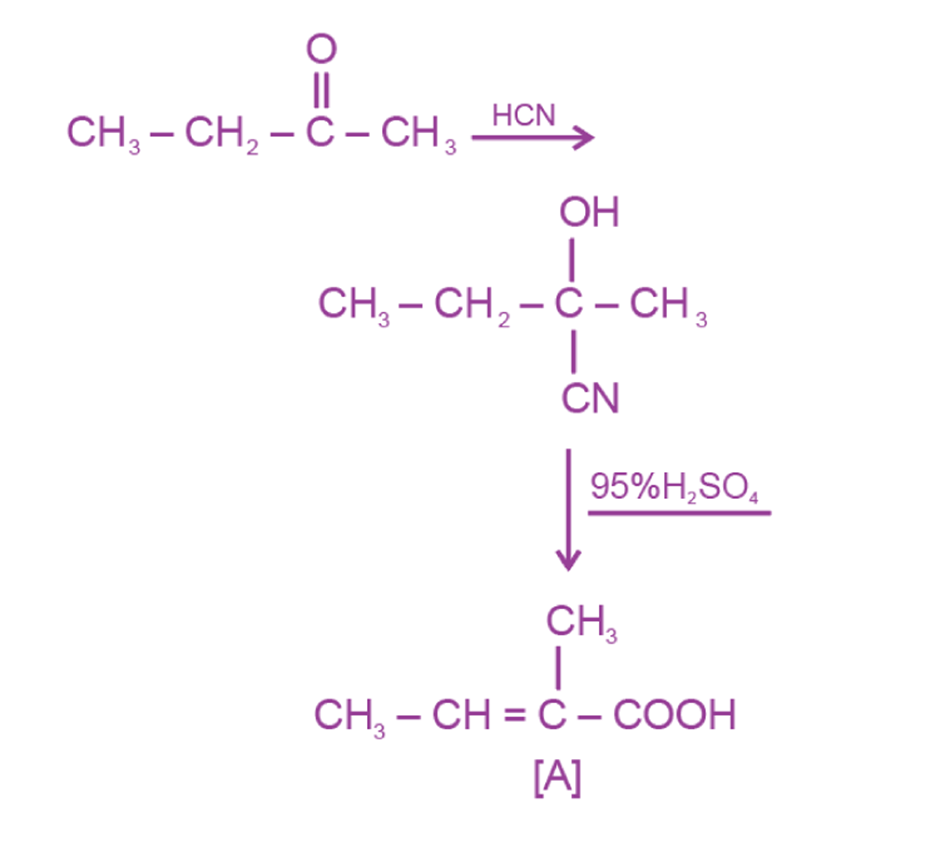
Find out the major products from the following reaction sequence.
Find out the major products from the following reaction sequence
1

Find out the major products from the following reaction sequence

2

Find out the major products from the following reaction sequence

3

Find out the major products from the following reaction sequence

4

Find out the major products from the following reaction sequence

12
PYQ 2023
medium
chemistry ID: jee-main

“A” obtained by Ostwald’s method involving air oxidation of , upon further air oxidation produces “B”. “B” on hydration forms an oxoacid of Nitrogen along with evolution of “A”. The oxoacid also produces “A” and gives positive brown ring test.

1

2

3

4

13
PYQ 2023
medium
chemistry ID: jee-main
For certain chemical reaction X 🡢 Y, the rate of formation of product is plotted against the time as shown in the figure. The number of correct statement/s from the following is______.
(A) Over all order of this reaction is one
(B) Order of this reaction can't be determined
(C) In region I and III, the reaction is of first and zero order respectively
(D) In region-II, the reaction is of first order
(E) In region-II, the order of reaction is in the range of 0.1 to 0.9.
14
PYQ 2023
medium
chemistry ID: jee-main

Following chromatogram was developed by adsorption of compound 'A' on a 6 cm TLC glass plate. Retardation factor of the compound 'A' is_____ .
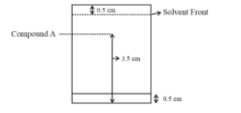
Chromatogram

15
PYQ 2024
hard
chemistry ID: jee-main
Which reagent gives bright red ppt. With in basic medium?
1
2
3
4
16
PYQ 2024
medium
chemistry ID: jee-main
Best reducing agent among the given ions are:
1
2
3
4
17
PYQ 2024
medium
chemistry ID: jee-main
Match the following:
LIST I LIST II
ALymanINear IR
BBalmerIIFar IR
CPaschenIIIVisible
Dp-fundIVUV
1
A -> (iv), B -> (iii), C-> (i), D-> (ii)
2
A -> (iv), B-> (i), C-> (iii), D-> (ii)
3
A -> (i). B -> (iii). C. -> (ii). D -> (iv)
4
A -> (i). B-> (ii). C-> (iii). D-> (iv)
18
PYQ 2026
hard
chemistry ID: jee-main
Given below are two statements:
Statement I: Phenol on treatment with under refluxing condition, followed by acidification produces p-hydroxy benzaldehyde as the major product and o-hydroxy benzaldehyde as the minor product.
Statement II: The mixture of p-hydroxybenzaldehyde and o-hydroxybenzaldehyde can be easily separated through steam distillation.
In the light of the above statements, choose the correct answer from the options given below
1
Statement I is false but Statement II is true
2
Both Statement I and Statement II are true
3
Statement I is true but Statement II is false
4
Both Statement I and Statement II are false
19
PYQ 2026
hard
chemistry ID: jee-main
Given below are two statements:
Statement I: The dipole moment of R–CN is greater than R–NC and R–NC can undergo hydrolysis under acidic medium to produce R–COOH.
Statement II: R–CN hydrolyses under acidic medium to produce a compound which on treatment with SOCl , followed by the addition of NH gives another compound (X). This compound (X) on treatment with NaOCl/NaOH gives a product, that on treatment with CHCl /KOH/ produces R–NC.
In the light of the above statements, choose the correct answer from the options given below.
1
Both Statement I and Statement II are true
2
Both Statement I and Statement II are false
3
Statement I is true but Statement II is false
4
Statement I is false but Statement II is true
20
PYQ 2026
medium
chemistry ID: jee-main

The correct order of the rate of reaction of the following reactants with nucleophile by mechanism is: 
(Given: Structures I and II are rigid) 
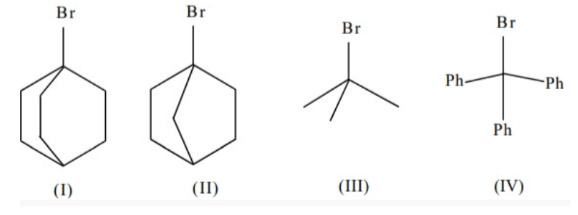
1

2

3

4

About Reaction Mechanism - JEE-MAIN

Reaction Mechanism is a vital chapter for JEE-MAIN aspirants. Mastering the concepts covered in this chapter is essential for securing a top rank.

By rigorously practicing the previous year questions associated with this chapter, you can identify high-yield topics, understand the examiner's perspective, and boost your confidence during the actual exam.

Frequently Asked Questions

Why focus on Reaction Mechanism PYQs?

Analyzing PYQs for this specific chapter reveals the most frequently tested concepts and the typical complexity of questions, allowing you to tailor your study plan efficiently.

How to best use this analysis?

Review the topic breakdown to see which sub-topics within Reaction Mechanism carry the most weight. Then, tackle the questions iteratively to solidify your understanding.