Hybridization
8 previous year questions.
High-Yield Trend
Chapter Questions 8 MCQs
| List-I (Hybridization) | List-II (Orientation in Space) |
|---|---|
| (A) sp3 | (I) Trigonal bipyramidal |
| (B) dsp2 | (II) Octahedral |
| (C) sp3d | (III) Tetrahedral |
| (D) sp3d2 | (IV) Square planar |
Match list-I with list-II and choose the correct option.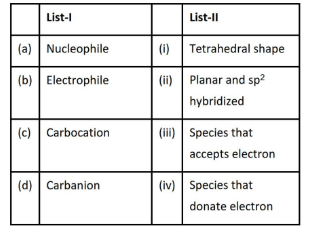
Given below are two statements: 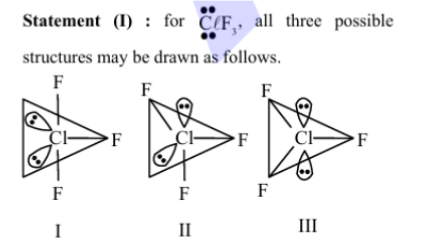
Statement (II): Structure III is most stable, as the orbitals having the lone pairs are axial, where the repulsion is minimum. In light of the above statements, choose the most appropriate answer from the options given below:
Among SO₃, NF₃, NH₃, XeF₂, CIF , and SF₆, the hybridization of the molecule with non-zero dipole moment and one or more lone-pairs of electrons on the central atom is:
Number of species having hybridized central atom is ____.
About Hybridization - JEE-MAIN
Hybridization is a vital chapter for JEE-MAIN aspirants. Mastering the concepts covered in this chapter is essential for securing a top rank.
By rigorously practicing the previous year questions associated with this chapter, you can identify high-yield topics, understand the examiner's perspective, and boost your confidence during the actual exam.
Frequently Asked Questions
Why focus on Hybridization PYQs?
Analyzing PYQs for this specific chapter reveals the most frequently tested concepts and the typical complexity of questions, allowing you to tailor your study plan efficiently.
How to best use this analysis?
Review the topic breakdown to see which sub-topics within Hybridization carry the most weight. Then, tackle the questions iteratively to solidify your understanding.