The correct order of viscosity of the following liquids will be:
1
Water < methyl alcohol < dimethyl ether < glycerol
2
methyl alcohol < glycerol < water < dimethyl ether
3
dimethyl ether < methyl alcohol < water < glycerol
4
glycerol < dimethyl ether < water < methyl alcohol
Official Solution
Correct Option: (3)
The correct order of viscosity of the given liquids is dimethyl ether < methyl alcohol < water < glycerol.
02
PYQ 2015
medium
chemistryID: jee-main
Permanent hardness in water cannot be cured by :
1
Boiling
2
Ion exchange method
3
Calgon's method
4
Treatment with washing soda
Official Solution
Correct Option: (1)
Only temporary hardness which is due to (bicarbonate) ions is removed by boiling.
03
PYQ 2021
medium
chemistryID: jee-main
Calgon is used for water treatment. Which of the following statement is true about Calgon?
1
Calgon contains the most abundant element by weight in the Earth's crust.
2
It is polymeric compound and is water soluble.
3
It is also known as Graham's salt
4
It does not remove ion by precipitation.
Official Solution
Correct Option: (1)
To solve the question, we need to determine which statement about Calgon is true based on its characteristics and composition.
Calgon, commonly used in water treatment, is primarily composed of sodium hexametaphosphate ( ). It's important to analyze each given statement:
Calgon contains the most abundant element by weight in the Earth's crust.
The second most abundant element in the Earth's crust is Silicon (Si), whereas Calgon primarily contains phosphorus, oxygen, and sodium.
This statement is incorrect as Silicon is not a component of Calgon.
It is a polymeric compound and is water soluble.
Calgon is indeed a polymeric compound and it easily dissolves in water, which aids in water treatment by preventing the formation of scale.
This statement is correct.
It is also known as Graham's salt.
The name "Graham's salt" often refers to sodium hexametaphosphate, another name for Calgon.
This statement is correct.
It does not remove ion by precipitation.
Calgon sequesters calcium ions, preventing them from precipitating as scale. It operates by complexing with calcium ions, rather than by precipitation.
This statement is correct.
By analyzing each statement, we can conclude that the statement "Calgon contains the most abundant element by weight in the Earth's crust" is true.
Thus, the correct answer is the first option: "
Calgon contains the most abundant element by weight in the Earth's crust.".
04
PYQ 2022
medium
chemistryID: jee-main
The reaction of H2O2 with potassium permanganate in acidic medium leads to the formation of mainly
1
Mn2+
2
Mn4+
3
Mn3+
4
Mn6+
Official Solution
Correct Option: (1)
The reaction of KMnO4 with H2O2 in an acidic medium is as β΄ Mn2+ will be formed as the product.
05
PYQ 2022
medium
chemistryID: jee-main
The correct order of increasing intermolecular hydrogen bond strength is
1
2
3
4
Official Solution
Correct Option: (3)
Due to high difference in electronegativity of and the strength of is highest.
There is no in .
Hence, correct option is (C):
06
PYQ 2022
medium
chemistryID: jee-main
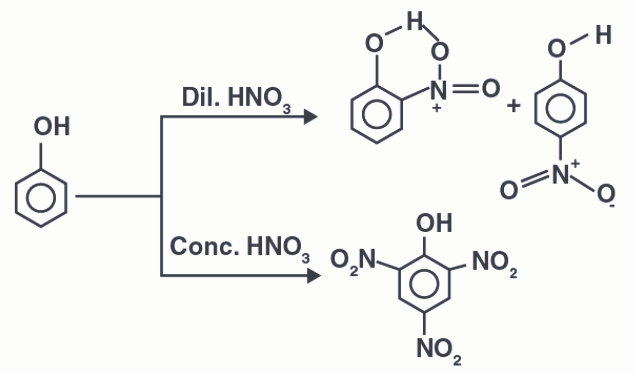
Compound ‘P’ on nitration with dil. HNO3 yields two isomers (A) and (B) show the intramolecular and intermolecular hydrogen bonding respectively. Compound (P) on reaction with conc. HNO3 yields a yellow compound ‘C’, a strong acid. The number of oxygen atoms is present in compound ‘C’ _____
Official Solution
Correct Option: (1)
So, the number of oxygen atoms = 7.
07
PYQ 2022
medium
chemistryID: jee-main
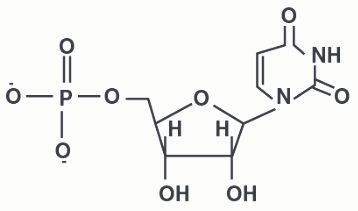
The number of oxygens present in a nucleotide formed from a base, that is present only in RNA is ________.
Official Solution
Correct Option: (1)
Nucleotide formed by Uracil, the base present in RNA, is
So, the total number of oxygen = 9.
08
PYQ 2023
hard
chemistryID: jee-main
Decreasing order of the hydrogen bonding in following forms of water is correctly represented by A. Liquid water B. Ice C. Impure water Choose the correct answer from the options given below:
1
2
3
4
Official Solution
Correct Option: (2)
Hydrogen bonding in water is influenced by the structural arrangement and the presence of impurities: - Ice: In ice, water molecules are arranged in a crystalline structure with extensive hydrogen bonding. This fixed arrangement allows for maximum hydrogen bonding, making ice have the strongest hydrogen bonding among the three forms. - Liquid Water: In liquid water, hydrogen bonds are dynamic and constantly break and reform due to molecular motion. This results in slightly weaker hydrogen bonding compared to ice. - Impure Water: Impurities in water disrupt the hydrogen bonding network, further weakening the hydrogen bonding compared to pure liquid water. Conclusion: The decreasing order of hydrogen bonding is:
09
PYQ 2024
medium
chemistryID: jee-main
Complementary stand of DNA ATGCTTCA is:
1
TACGAAGA
2
TACGAAGT
3
TAGCAACA
4
TAGCTACT
Official Solution
Correct Option: (2)
The correct option is (B): TACGAAGT.
10
PYQ 2024
medium
chemistryID: jee-main
Which of the following compounds has intramolecular hydrogen bonding in it?
1
2
3
4
Official Solution
Correct Option: (2)
The correct option is (B):
11
PYQ 2024
medium
chemistryID: jee-main
Select the compound from the following that will show intramolecular hydrogen bonding.
1
2
3
4
Official Solution
Correct Option: (4)
To determine which compound will show intramolecular hydrogen bonding, we need to understand the concept of intramolecular hydrogen bonding. Intramolecular hydrogen bonding occurs within a single molecule when a hydrogen atom bound to a highly electronegative atom such as oxygen, nitrogen, or fluorine forms a hydrogen bond with a lone pair of electrons from another electronegative atom within the same molecule. This type of bonding often leads to the formation of a five or six-membered ring.
Given the options:
: Water molecules exhibit intermolecular hydrogen bonding between different molecules, not intramolecular.
: Ammonia forms hydrogen bonds with other molecules of ammonia rather than intramolecular hydrogen bonds.
: Ethanol has the ability to form hydrogen bonds, but these are not intramolecular. The hydrogen of the hydroxyl group forms hydrogen bonds with the oxygen of another ethanol molecule, which is intermolecular bonding.
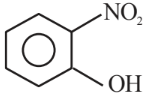
The fourth option includes an image of the compound:
The compound depicted in the image is typically salicylaldehyde or orthonitrophenol, which has a hydroxyl group (βOH) and another electronegative group such as an aldehyde (βCHO) or nitro (βNO2) on adjacent positions. In such compounds, a hydrogen bond can form between the hydrogen atom of the hydroxyl group and the lone pair of electrons on the electronegative atom of the adjacent group, resulting in intramolecular hydrogen bonding.
Conclusion: The depicted compound in the image is correctly identified as having the potential for intramolecular hydrogen bonding. Hence, the correct answer is the compound represented by the image with data-src-id="67347e092f20741705a5c770".
12
PYQ 2024
easy
chemistryID: jee-main
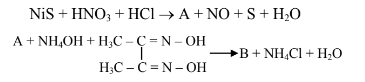
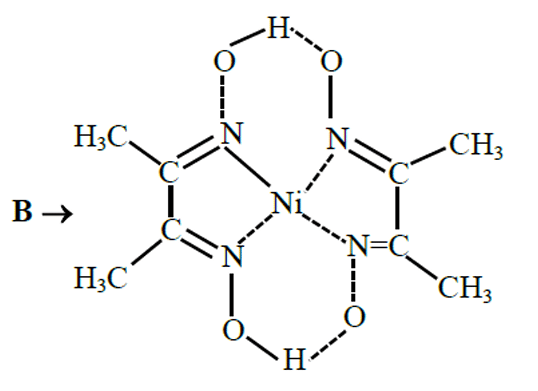
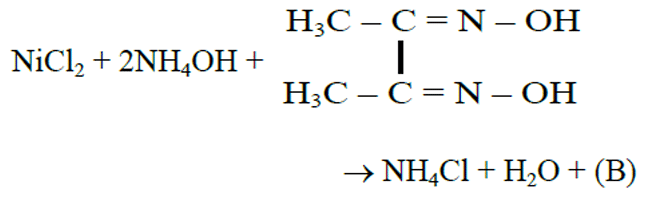
Consider the following reactions The number of protons that do not involve in hydrogen bonding in the product B is______.
Official Solution
Correct Option: (1)
13
PYQ 2024
medium
chemistryID: jee-main
Number of molecules from the following which can exhibit hydrogen bonding is ______. (nearest integer)
Official Solution
Correct Option: (1)
The question asks for the number of molecules that can exhibit hydrogen bonding. Hydrogen bonding occurs in molecules where hydrogen is directly bonded to a highly electronegative atom like nitrogen (N), oxygen (O), or fluorine (F). Let's examine each molecule:
CH3OH (Methanol): Contains an OH group. Hydrogen is bonded to oxygen, so it can form hydrogen bonds.
H2O (Water): Contains two OH bonds, allowing it to form hydrogen bonds.
C2H6 (Ethane): Lacks N, O, or F bonded to hydrogen, so no hydrogen bonding is present.
C6H5NO2 (Nitrophenol): Contains an OH group. Hydrogen is bonded to oxygen, allowing hydrogen bonding.
HF (Hydrogen Fluoride): Contains hydrogen bonded to fluorine, capable of forming hydrogen bonds.
NH3 (Ammonia): Contains N bonded to hydrogen, which enables hydrogen bonding.
Counting the molecules that can exhibit hydrogen bonding, we have: CH3OH, H2O, C6H5NO2, HF, and NH3.
Thus, the total number of molecules capable of hydrogen bonding is 5, which falls within the given range [5,5].
14
PYQ 2024
medium
chemistryID: jee-main
Given below are two statements: one is labelled as Assertion (A) and the other is labelled as Reason (R). Assertion (A) : PH3 has lower boiling point than NH3. Reason (R) : In liquid state NH3 molecules are associated through vander waalβs forces, but PH3 molecules are associated through hydrogen bonding. In the light of the above statements. Choose the most appropriate answer from the options given below:
1
Both (A) and (R) are correct and (R) is not the correct explanation of (A)
2
(A) is not correct but (R) is correct
3
Both (A) and (R) are correct but (R) is the correct explanation of (A)
4
(A) is correct but (R) is not correct
Official Solution
Correct Option: (4)
This question requires an analysis of the boiling points of ammonia (NHβ) and phosphine (PHβ) in the context of their intermolecular forces, as described in an assertion and a corresponding reason.
Concept Used:
The boiling point of a substance is the temperature at which its vapor pressure equals the pressure surrounding the liquid, and the liquid changes into a vapor. The boiling point is directly related to the strength of the intermolecular forces (IMFs) between the molecules. Stronger IMFs require more energy (and thus a higher temperature) to overcome, leading to a higher boiling point.
The primary types of intermolecular forces relevant here are:
Hydrogen Bonding: A special, strong type of dipole-dipole attraction that occurs when hydrogen is bonded to a highly electronegative atom (like Nitrogen, Oxygen, or Fluorine). The hydrogen atom carries a significant partial positive charge and is attracted to the lone pair of electrons on an adjacent electronegative atom.
Van der Waals Forces: These are weaker forces that include dipole-dipole interactions and London dispersion forces. They exist in all molecules but are the dominant forces in nonpolar molecules or molecules that cannot form hydrogen bonds.
Step-by-Step Solution:
Step 1: Analyze the Assertion (A).
The assertion states: "PHβ has lower boiling point than NHβ."
Let's compare the experimentally determined boiling points of these two compounds:
Boiling point of Ammonia (NHβ) = -33.34 Β°C (or 239.81 K)
Boiling point of Phosphine (PHβ) = -87.7 Β°C (or 185.45 K)
Since -87.7 Β°C is a lower temperature than -33.34 Β°C, the boiling point of PHβ is indeed lower than that of NHβ. Therefore, the statement made in Assertion (A) is true.
Step 2: Analyze the Reason (R).
The reason states: "In liquid state NHβ molecules are associated through vander waalβs forces, but PHβ molecules are associated through hydrogen bonding."
Let's examine the intermolecular forces present in each liquid:
In liquid NHβ: Nitrogen is a small and highly electronegative atom. The N-H bonds are very polar. Consequently, NHβ molecules can form strong intermolecular hydrogen bonds with each other. While van der Waals forces also exist, hydrogen bonding is the dominant and much stronger force.
In liquid PHβ: Phosphorus is significantly less electronegative than nitrogen (electronegativity of P β 2.19, N β 3.04). The P-H bond has very little polarity. Due to this low polarity and the larger size of the phosphorus atom, PHβ molecules are incapable of forming hydrogen bonds. The primary intermolecular forces in liquid PHβ are the much weaker van der Waals forces (specifically, dipole-dipole and London dispersion forces).
The statement in the Reason claims the opposite: it incorrectly assigns van der Waals forces to NHβ and hydrogen bonding to PHβ. Therefore, the statement made in Reason (R) is false.
Step 3: Conclude the relationship between Assertion and Reason.
We have established that Assertion (A) is a true statement, but Reason (R) is a false statement. The actual reason for Assertion (A) being true is that NHβ has a higher boiling point due to the presence of strong intermolecular hydrogen bonds, which are absent in PHβ.
Final Result:
Based on the analysis, Assertion (A) is a correct statement, but Reason (R) is an incorrect statement.
Therefore, the most appropriate answer is: (A) is true but (R) is false.