Electrochemistry
110 previous year questions.
High-Yield Trend
Chapter Questions 110 MCQs
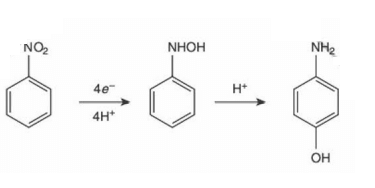
(A) Sublimation enthalpy
(B) Ionisation enthalpy
(C) Hydration enthalpy
(D) Electron gain enthalpy
The total number of above properties that affect the reduction potential is _________. (Integer answer)
The value of is at . If , the standard entropy change in J K is . (Nearest integer)
[Given : Faraday constant = ]
Zn(s) + Cu (0.02 M) Zn (0.04 M) + Cu(s),
E = __________ 10 V. (Nearest integer)
[Use : E = -0.34 V, E = +0.76 V, ]
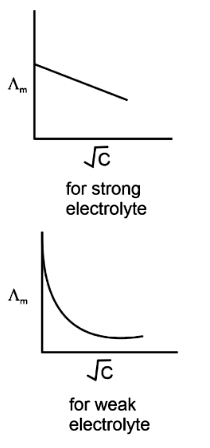
Statement I : The limiting molar conductivity of KCl (strong electrolyte) is higher compared to that of (weak electrolyte).
Statement II : Molar conductivity decreases with decrease in concentration of electrolyte.
In the light of the above statements, choose the most appropriate answer from the options given below :
Choose the most appropriate answer from the options given below :
For the cell Cu(s)|Cu (aq) (0.01 M)||Ag (aq) (0.001 M)|Ag(s) the cell potential = ________ V. (Round off to the Nearest Integer).
[Use : ]
[Given, E =0.34 V, E =0.96 V, E =0.79 V and at 298 K, (2.303)=0.059]
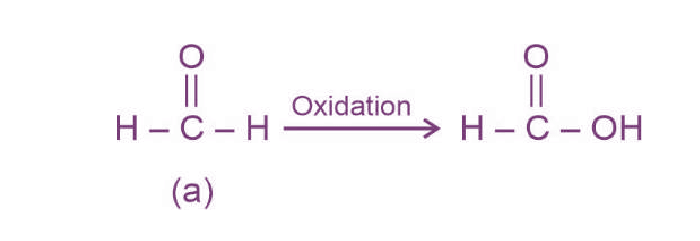
A compound’A’ on reaction with ‘X’ and ‘Y’ produces the same major product but differentby product’a’ and ‘b’. Oxidation of’a’ gives a substance produced by ants.
KMnO4/H+ and dil. KMnO4, 273 K
KMnO4(dilute), 273 Kand KMnO4/H+
KMnO4/H+ and O3, H2O/Zn
O3, H2O/Zn and KMnO4/H+
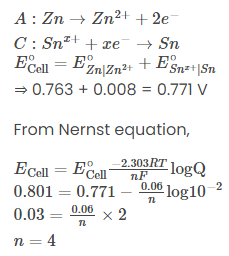
For the given reactions
Sn2+ + 2e– → Sn
Sn4+ + 4e– → Sn
the electrode potentials are;
and
The magnitude of standard electrode potential for i.e.
is _________ × 10–2 V. (Nearest integer)
For the reaction taking place in the cell:
Pt(s) | H2(g) | H+ (q) || Ag+(aq) | Ag(s),
Eocell = + 0.5332 V.
The value of ΔfGo is _____kJ mol–1 [in nearest integer]
(Given : = 0.34 V and = 0.06 V)
The resistivity of a solution of an electrolyte is Its molar conductivity is ____
Given: and .
The potential for the half cell reaction is . The value of is ___ .
is added to of saturated solution of The conductivity of this solution at is ___ [Given : ]
For lead storage battery pick the correct statements:
A. During charging of battery, PbSO4 on anode is converted into PbO2
B. During charging of battery, PbSO4 on cathode is converted into PbO2
C. lead storage battery consists of grid of lead packed with PbO2 as anode
D. lead storage battery - 38% solution of sulphuric acid as an electrolyte
choose the correct answer from the options given below:
B, C,only
A, B, D, only
B, C, D only
B, D only
V2+ and Cr2+
V2+ and Mn2+
Cr2+ and Co2+
Mn2+ and Co2+
A. Ecell is an intensive parameter
B. A negative E\theta means that the redox couple is a stronger reducing agent than the H– H2 couple.
C. The amount of electricity required for oxidation or reduction depends on the stoichiometry of the electrode reaction.
D. The amount of chemical reaction which occurs at any electrode during electrolysis by a current is proportional to the quantity of electricity passed through the electrolyte.
Pt | H2(g) | H+ || Fe3+ ; Fe2+ | Pt
( 1 bar ) ( 1 M )
Ecell = .712 V
E°cell = .770 V
if is t
then find
The Ecell for the given cell is 0.1115 V at 298 K when
The value of a is _________
Given:
A. has been used in spaceship
B. has as efficiency of 40% to produce electricity
C. uses aluminium as catalysts
D. is eco-friendly
E. is actually a type of Galvanic cell only
M|M ||X |X
If V and V.
Which of the following is correct?
| LIST-I (Cell) | LIST-II (Use/Property/Reaction) |
|---|---|
| A. Leclanche cell | IV. Reaction at anode Zn → Zn2+ + 2e- |
| B. Ni-Cd cell | III. Rechargeable |
| C. Fuel cell | I. Converts energy of combustion into electrical energy |
| D. Mercury cell | II. Does not involve any ion in solution and is used in hearing aids |
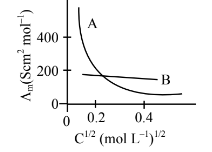
| A | B |
| Weak electrolyte | Weak electrolyte |
| A | B |
| Strong electrolyte | strong electrolyte |
| A | B |
| Weak electrolyte | strong electrolyte |
| A | B |
| Strong electrolyte | Weak electrolyte |
(Atomic mass of zinc = 65.4 amu)
A. Fe
B. Mn
C. Ni
D. Cr
E. Cd
Choose the correct answer from the options given below:
.
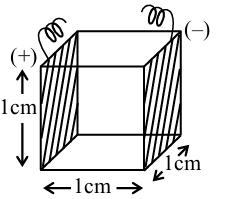
The number of conductors among the materials is ______.
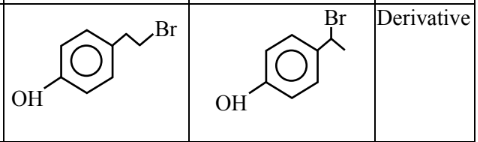
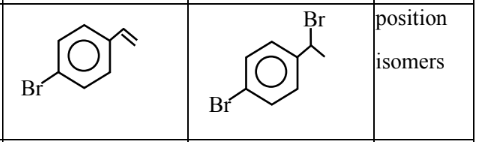
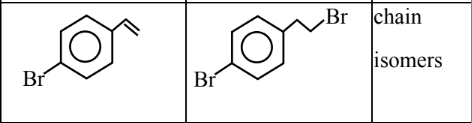
Consider the given electrochemical reactions, the number of metal(s) which will be oxidized by in aqueous solution is ____.
Statement (I): Corrosion is an electrochemical phenomenon in which pure metal acts as an anode and impure metal as a cathode.
Statement (II): The rate of corrosion is more in alkaline medium than in acidic medium.
In the light of the above statements, choose the correct answer from the options given below:
For the given cell: The standard cell potential of the above reaction is given. The standard reduction potentials are given as: The correct answer is:
Consider the following half cell reaction
The reaction was conducted with the ratio of
The pH value at which the EMF of the half cell will become zero is ____ (nearest integer value)
[Given : standard half cell reduction potential
The molar conductance of an infinitely dilute solution of ammonium chloride was found to be 185 S cm mol and the ionic conductance of hydroxyl and chloride ions are 170 and 70 S cm mol , respectively. If molar conductance of 0.02 M solution of ammonium hydroxide is 85.5 S cm mol , its degree of dissociation is given by x 10 . The value of x is ______. (Nearest integer)
1 Faraday electricity was passed through Cu (1.5 M, 1 L)/Cu and 0.1 Faraday was passed through Ag (0.2 M, 1 L) electrolytic cells. After this, the two cells were connected as shown below to make an electrochemical cell. The emf of the cell thus formed at 298 K is: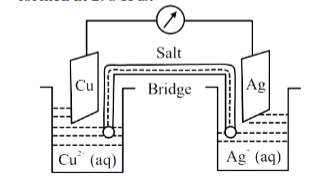
Given:
1 M aqueous solution of each of , , ; are electrolysed using inert electrodes, Given : , , and
Statement (I) : With increasing voltage, the sequence of deposition of metals on the cathode will be Ag, Hg and Cu
Statement (II) : Magnesium will not be deposited at cathode instead oxygen gas will be evolved at the cathode.
In the light of the above statements, choose the most appropriate answer from the options given below :
On charging the lead storage battery, the oxidation state of lead changes from to at the anode and from to at the cathode. The values of are respectively:
Calculate in volts.
A.
B.
C.
D.
Consider the following electrochemical cell at :
If the reaction quotient at a given time is , then the cell EMF ( ) is _________ V (Nearest integer).
Given:
MX is a sparingly soluble salt that follows the given solubility equilibrium at 298 K.
MX(s) ;
If the standard reduction potential for is V, then the value of the standard reduction potential for the metal/metal insoluble salt electrode is ____________ mV. (nearest integer)
[Given : V]
,
,
Select the correct statement.
(1)
(2) is an extensive property
(3) is getting reduced
(4) Net cell reaction:
The pH above which oxygen gas would start to evolve at the anode is ____________ (nearest integer). Given:
(a) n-propyl chloride
(b) iso-propyl chloride
(c) sec-butyl chloride
(d) neo-pentyl chloride
Percentage of carbon in the one which exhibits optical isomerism is :
If the same buffer is used in the following electrochemical cell and the recorded cell potential is 253.5 mV, then the value of x (nearest integer) is ______ mL.
Electrochemical cell:
Sn(s) | Sn(OH)2(s) | HSnO2− (0.05 M) | OH− (0.05 M) || Bi2O3(s) | Bi(s)
Given:
Standard electrode potential of HSnO2− / Sn(OH)2 = −0.90 V
Standard electrode potential of Bi2O3 / Bi = −0.44 V
pKa of H2CO3 = 6.11
2.303 RT / F = 0.059 V
Antilog (1.29) = 19.5
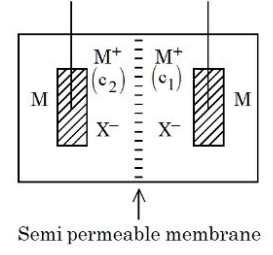
Consider the above electrochemical cell where a metal electrode (M) is undergoing redox reaction by forming ( ). The cation is present in two different concentrations and as shown above. Which of the following statement is correct for generating a positive cell potential?
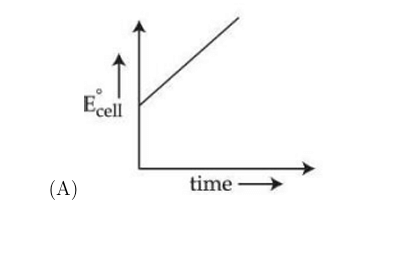
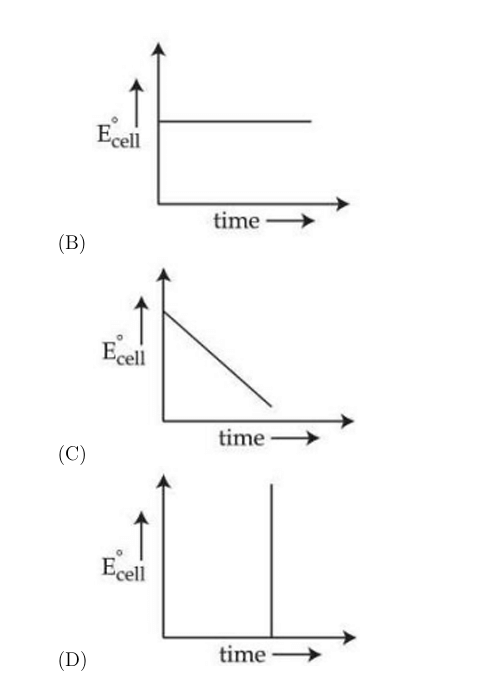
If E of the following reaction is x 10 . Find x
/ Sn(OH) , OH / Bi O / Bi / Pt}\)
]}\)
Given ]}} \) = -0.90 V, O / Bi}} \) = -0.44 V
Which of the following can increase the EMF of the cell?
(i) By increasing concentration of Fe
(ii) By increasing concentration of Fe
(iii) By decreasing concentration of Fe
(iv) By decreasing concentration of Fe
(v) By increasing concentration of Cl
About Electrochemistry - JEE-MAIN
Electrochemistry is a vital chapter for JEE-MAIN aspirants. Mastering the concepts covered in this chapter is essential for securing a top rank.
By rigorously practicing the previous year questions associated with this chapter, you can identify high-yield topics, understand the examiner's perspective, and boost your confidence during the actual exam.
Frequently Asked Questions
Why focus on Electrochemistry PYQs?
Analyzing PYQs for this specific chapter reveals the most frequently tested concepts and the typical complexity of questions, allowing you to tailor your study plan efficiently.
How to best use this analysis?
Review the topic breakdown to see which sub-topics within Electrochemistry carry the most weight. Then, tackle the questions iteratively to solidify your understanding.