Chemical Reactions Of Alcohols Phenols And Ethers
64 previous year questions.
High-Yield Trend
Chapter Questions 64 MCQs
Assertion (A): Synthesis of ethyl phenyl ether may be achieved by Williamson synthesis.
Reason (R): Reaction of bromobenzene with sodium ethoxide yields ethyl phenyl ether.
In the light of the above statements, choose the most appropriate answer from the options given below :
Match List-I with List-II.
| List-I | List-II |
|---|---|
| (A) N2(g) + 3H2(g) → 2NH3(g) | (I) Cu |
| (B) CO(g) + 3H2(g) → CH4(g) + H2O(g) | (II) Cu/ZnO – Cr2O3 |
| (C) CO(g) + H2(g) → HCHO(g) | (III) FexOy + K2O + Al2O3 |
| (D) CO(g) + 2H2(g) → CH3OH(g) | (IV) Ni |
Choose the correct answer from the options given below :
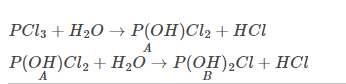
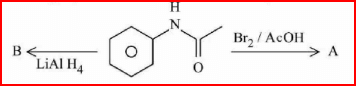
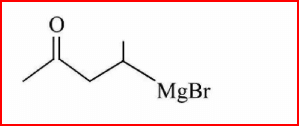
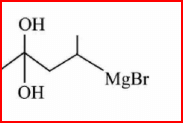
Consider the following reactions.
The number of ionisable protons present in the product B is
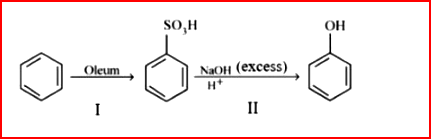
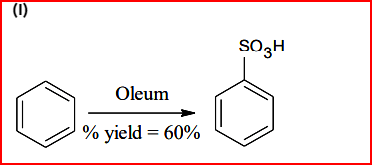
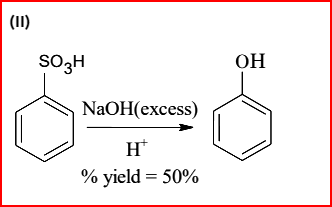
In the following reaction,
the % yield for reaction I is 60% and that of reaction II is 50%. The overall yield of the complete reaction is _______%. [Nearest integer].
The above reaction has been studied at 800 °C. The related data is given in the table below.
The order of the reaction with respect to NO is ___.
Na2O, KO2, NO2, N2O, ClO2, NO, SO2, Cl2O
(Given : R = 8.314 JK-1mol-1).
(Given molar mass : CaF2 = 78 g mol–1).
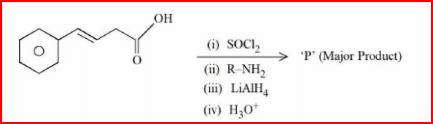
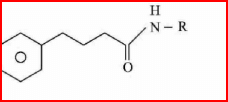
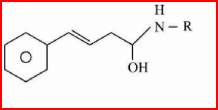
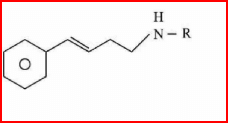
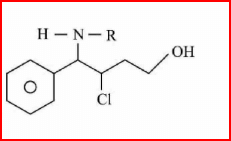
| List I -Type of Hydride | List II-Example | ||
| A | Electron deficient hydride | I | MgH2 |
| B | Electron rich hydride | II | HF |
| C | Electron precise hydride | III | B2H6 |
| D | Saline hydride | IV | CH4 |
Choose the correct answer from the options given below:
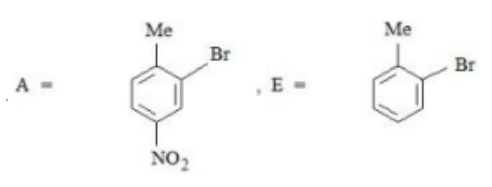
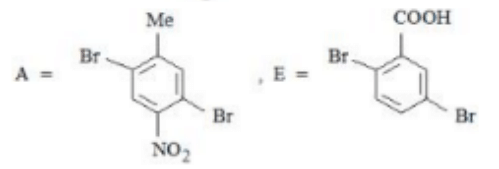
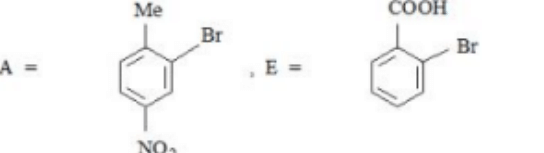
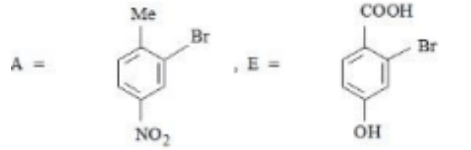
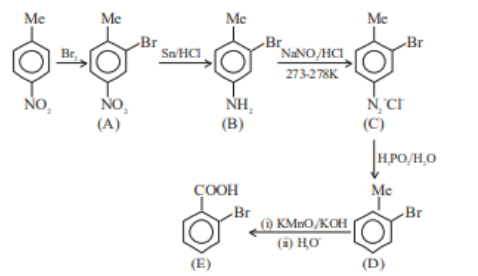
Identify the product formed (A and E)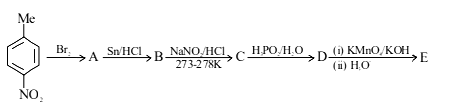
A. Chlorophyll - Co
B. Water hardness - EDTA
C. Photography - [Ag(CN)2]-
D. Wilkinson catalyst - [(Ph3P)3 RhCl]
E. Chelating ligand-D- Penicillamine
Given: Ksp Cu(OH)2 = 1 × 10-20
Take = 0.059V
The reduction potential at pH = 14 for the above couple is (-)x x 10-2 V.
The value of x is_____.
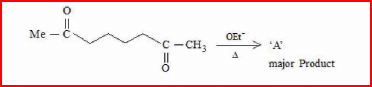
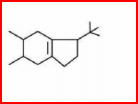
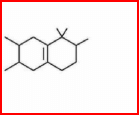
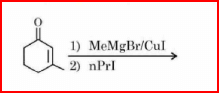
A in the above reaction is:
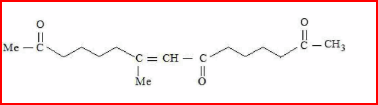
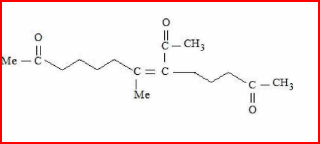
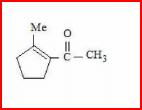
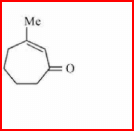
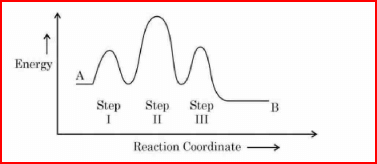
below Choose the correct option:
| Number of intermediates | Number of Activated complexes | Rate determining step |
| 2 | 3 | II |
| Number of intermediates | Number of Activated complexes | Rate determining step |
| 2 | 3 | III |
| Number of intermediates | Number of Activated complexes | Rate determining step |
| 3 | 2 | II |
| Number of intermediates | Number of Activated complexes | Rate determining step |
| 2 | 3 | I |
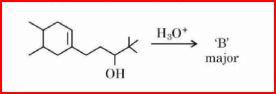
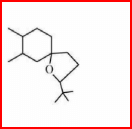
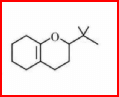
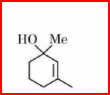
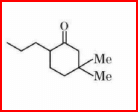
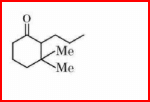
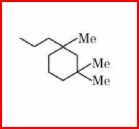
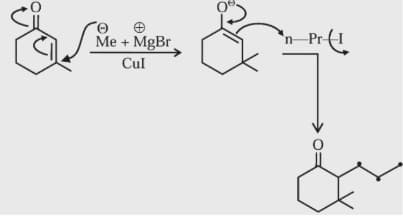
Statement-I: Morphine is a narcotic analgesis. It helps in relieving pain without producing sleep.
Statement-II: Morphine and its derivatives are obtained from opium poppy.
In the light of the above statements, choose the correct answer from the options given below.
;
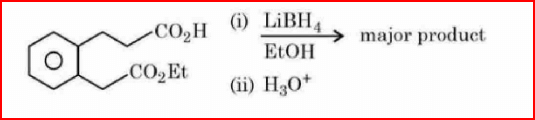
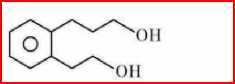
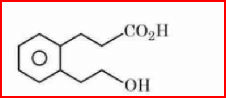
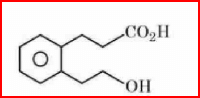
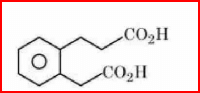
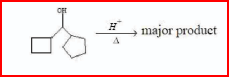
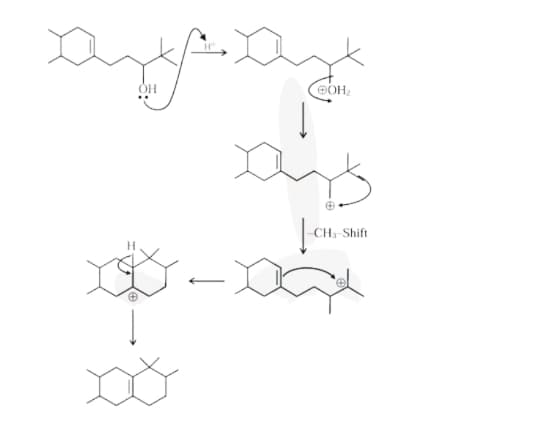
In the above reaction. Left hand side and right hand side rings are named as 'A' and 'B' respectively. They undergo ring expansion. The correct statement for this process is:
| List I | List II | ||
| A | Nitrogen oxides in air | I | Eutrophication |
| B | Nitrogen oxides in air | II | Eutrophication |
| C | Carbon dioxide | III | Global warming |
| D | Phosphate fertilisers in water | IV | Acid rain |
Choose the correct answer from the options given below:
Cubic, tetragonal, orthorhombic, hexagonal, rhombohedral, monoclinic, triclinic.
Heat of combustion of H2(g) = -241.8 kJ mol-1
Heat of combustion of C(s) = -393.5 kJ mol-1
Heat of combustion of C2H5OH(1) = -1234.7 kJ mol-1
The heat of formation of C2H5OH(1) is (-) ____ kJ mol-1 (Nearest integer)
NO − 3 3 − + 4H+ + 3e- → NO(g) +2H2O E0 = 0.97V
E0 = -1.19V
E0 = -0.04V
E0 = 0.80V
E0 = 1.40V
The number of metal(s) which will be oxidized by Oin aqueous solution is______.
(a) 1-Phenylbutan-2-one
(b) 2-Methylbutan-2-ol
(c) 3-Methylbutan-2-ol
(d) 1-Phenylethanol
(e) 3,3-dimethylbutan-2-one
(f) 1-Phenylpropan-2-ol
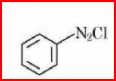
is reached with regents is List-I to from products in List-II.
| List-I (Reagent) | List-II (Products) | ||
| A | 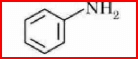 | I | 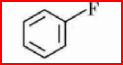 |
| B | HBF4 | II | 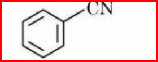 |
| C | Cu, HCI | III | 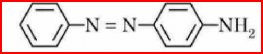 |
| D | CuCN/ KCN | IV | 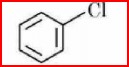 |
| List-I | List-II | ||
| A | Saccharin | I | High potency sweetener |
| B | Aspartame | II | First artificial sweetening agent |
| C | Alitame | III | Stable at cooking temperature |
| D | Sucralose | IV | Unstable at cooking temperature |
Choose the correct answer from the options given below :
CH3 (CH2)4 CH3 major product
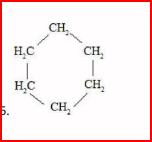
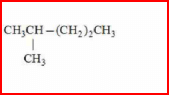
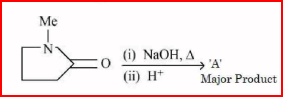
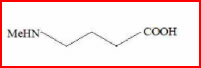
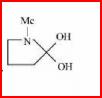
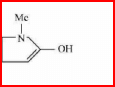
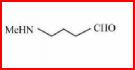
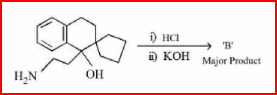
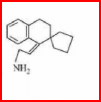

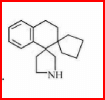


The two products formed in above reaction are
List I Element detected | List II Reagent used/ Product formed | ||
| A | Nitrogen | I | Na2[Fe(CN)5 NO] |
| B | Sulphur | II | AgNO3 |
| C | Phosphorous | III | Fe4[Fe(CN)6]3 |
| D | Halogen | IV | (NH4)2 MoO4 |
Choose the correct answer from the options given below:
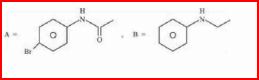
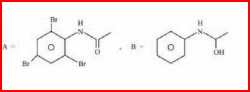
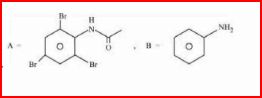
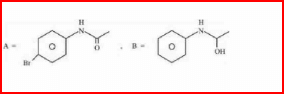
| List-I-Complex | List-II-CFSE | ||
| A | [Cu(NH3)6]2+ | I | -0.6 |
| B | [Ti(H2O)6]3+ | II | -2.0 |
| C | [Fe(CN)6]3− | III | -1.2 |
| D | [NiF6]4- | IV | -0.4 |
Choose the correct answer from the options given below:
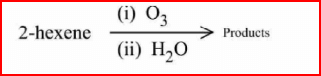
Products The two products formed in above reaction are
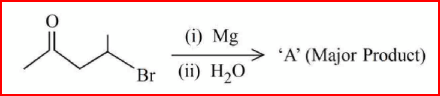
A is
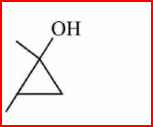
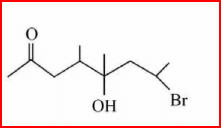
| List I -complex | List II-CFSE | ||
| A | [Cu(NH3)6]2+ | I | -6.0 |
| B | [Ti(H2O)6]3+ | II | -2.0 |
| C | [Fe(CN)6]3- | III | -1.2 |
| D | [NiF6]4- | IV | -0.4 |
Choose the correct answer from the options given below:
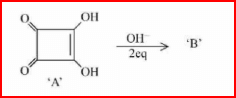
A. Compound 'B' is aromatic
B. The completion of above reaction is very slow
C. 'A' shows tautomerism
D. The bond lengths C-C in compound B are found to be same
Choose the correct answer from the options given below
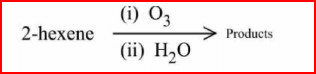
The two products formed in above reaction are
| List I-Examples | List II-Type | ||
| A | 2-Chloro-1, 3-butadiene | I | Nylon 2-nylon 6 |
| B | Nylon 2-nylon 6 | II | Synthetic Rubber |
| C | Polyacrylonitrile | III | Polyester |
| D | Dacron | IV | Addition Polymer |
Choose the correct answer from the options given below:
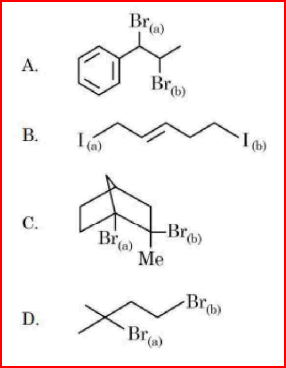
Assertion A: Butan -1- ol has higher boiling point than ethoxyethane.
Reason R: Extensive hydrogen bonding leads to stronger association of molecules.
In the light of the above statements, choose the correct answer from the options given below:
| Column-A | Column-B |
| Nylon 6 | Natural Rubber |
| Vulcanized Rubber | Cross Linked |
| cis-1,4-polyisoprene | Caprolactam |
| Polychloroprene | Neoprene. |
Choose the correct answer from option given below
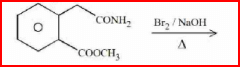
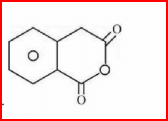
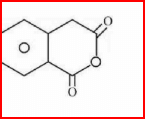
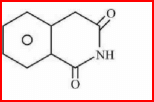
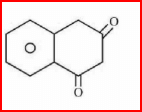
takes places through the mechanism given below :
NO + Br2 ⇔ NOBr2 (fast)
NOBr2 + NO → 2NOBr (slow)
The overall order of the reaction is_____.

About Chemical Reactions Of Alcohols Phenols And Ethers - JEE-MAIN
Chemical Reactions Of Alcohols Phenols And Ethers is a vital chapter for JEE-MAIN aspirants. Mastering the concepts covered in this chapter is essential for securing a top rank.
By rigorously practicing the previous year questions associated with this chapter, you can identify high-yield topics, understand the examiner's perspective, and boost your confidence during the actual exam.
Frequently Asked Questions
Why focus on Chemical Reactions Of Alcohols Phenols And Ethers PYQs?
Analyzing PYQs for this specific chapter reveals the most frequently tested concepts and the typical complexity of questions, allowing you to tailor your study plan efficiently.
How to best use this analysis?
Review the topic breakdown to see which sub-topics within Chemical Reactions Of Alcohols Phenols And Ethers carry the most weight. Then, tackle the questions iteratively to solidify your understanding.