Law Of Chemical Equilibrium And Equilibrium Constant
40 previous year questions.
High-Yield Trend
Chapter Questions 40 MCQs
The above reaction is carried out in a vessel starting with partial pressures P = 250 m bar, P = 750 m bar and P = 0 bar. When the reaction is complete, the total pressure in the reaction vessel is ________ m bar. (Round off to the Nearest Integer).
A(s) M(s) + O (g)
is K =4. At equilibrium, the partial pressure of O is ________ atm. (Round off to the Nearest Integer).
3.0 moles of is introduced in a 1 L closed reaction vessel at 380 K. The number of moles of at equilibrium is _________ . (Round off to the Nearest Integer)
A student needs to prepare a buffer solution of propanoic acid and its sodium salt with pH 4. The ratio of
required to make buffer is _____.
Given : Ka(CH3CH2COOH) = 1.3 × 10⁻⁵
0.03
0.13
0.23
0.33
Consider the above reaction, the limiting reagent of the reaction and number of moles of NH3 formed, respectively are :
H2, 1.42 moles
H2, 0.71 moles
N2, 1.42 moles
N2, 0.71 moles
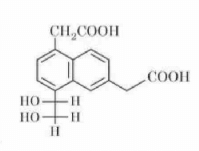
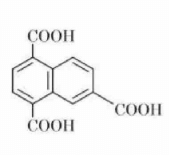
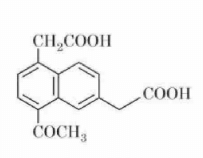
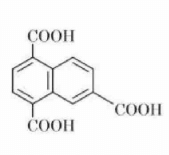
(ii)
If the degree of dissociation and initial concentration of both the reactants and are equal, then the ratio of the total pressure at equilibrium is equal to . The value of is _________ (Nearest integer)
the amount of heat produced as measured in bomb calorimeter is 1406 kJ mol-1 at 300K. The minimum value of needed to reach equilibrium is (-) _____ . kJ.(Nearest integer)
Given: R = 8.3 J K-1 mol-1
Water decomposes at 2300 K:
The percent of water decomposing at 2300 K and 1 bar is — (Nearest integer).
Equilibrium constant for the reaction is at 2300 K.
Consider the following reaction approaching equilibrium at and 1 atm pressure:
The standard Gibbs energy change ( ) at is — kJ mol (Nearest integer).
The temperature and are correctly related as
(A) Equilibrium is possible only in a closed system at a given temperature
(B) Both the opposing processes occur at the same rate.
(C) When equilibrium is attained at a given temperature, the value of all its parameters became equal
(D) For dissolution of solids in liquids, the solubility is constant at a given temperature
. The Value of is __
Using Le Chatelier's principle, predict which one of the following will not disturb the equilibrium.
The equilibrium constant for the reaction
is:
At and 1 atm pressure, a cylinder is filled with an equal number of , , and molecules for the reaction:
The for the process is .
(x = ___________)
Given:
The equilibrium constant for decomposition of (g) is at 2300 K and total pressure at equilibrium is 1 bar. Under this condition, the degree of dissociation ( ) of water is _____ (nearest integer value). [Assume is negligible with respect to 1]
Statement I: A catalyst cannot alter the equilibrium constant ( ) of the reaction, temperature remaining constant.
Statement II: A homogeneous catalyst can change the equilibrium composition of a system, temperature remaining constant.
In the light of the above statements, choose the correct answer from the options given below.
(ii) ,
Then which will be the correct combination of x & y for above set (i) & set (ii) data?
C:
P (g) + Q (g) 2PQ(g)
Initially, 2 moles each of P (g), Q (g) and PQ(g) are present at equilibrium. One mole each of P and Q are added. The number of moles of P , Q and PQ at the new equilibrium respectively are
A(g) <=> B(g)
At temperature T (in K), the equilibrium concentrations of A and B are 0.5 M and 0.375 M respectively.
Then 0.1 moles of A is added into the flask and the system is heated to temperature T again to re-establish equilibrium.
The new equilibrium concentrations (in M) of A and B respectively are:
NH (g) N (g) + H (g)
Total pressure at equilibrium is atm.
Find the value of 7 , where is degree of dissociation of NH (g)
(ii) The frequency of B is .
(iii) Wave number of C is .
The correct order of energies is:
About Law Of Chemical Equilibrium And Equilibrium Constant - JEE-MAIN
Law Of Chemical Equilibrium And Equilibrium Constant is a vital chapter for JEE-MAIN aspirants. Mastering the concepts covered in this chapter is essential for securing a top rank.
By rigorously practicing the previous year questions associated with this chapter, you can identify high-yield topics, understand the examiner's perspective, and boost your confidence during the actual exam.
Frequently Asked Questions
Why focus on Law Of Chemical Equilibrium And Equilibrium Constant PYQs?
Analyzing PYQs for this specific chapter reveals the most frequently tested concepts and the typical complexity of questions, allowing you to tailor your study plan efficiently.
How to best use this analysis?
Review the topic breakdown to see which sub-topics within Law Of Chemical Equilibrium And Equilibrium Constant carry the most weight. Then, tackle the questions iteratively to solidify your understanding.