Chemical Kinetics
133 previous year questions.
High-Yield Trend
Chapter Questions 133 MCQs
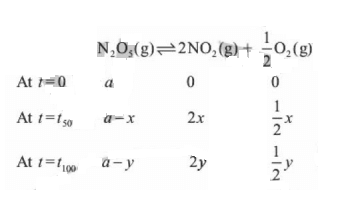
The following data was obtained for chemical reaction given below at 975 K: 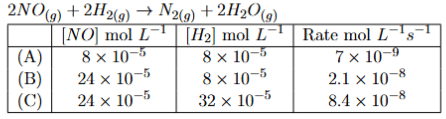
The order of the reaction with respect to NO is _________. (Integer answer)
According to the following figure, the magnitude of the enthalpy change of the reaction in kJ mol is equal to . (Integer answer)
[Given: , , ] 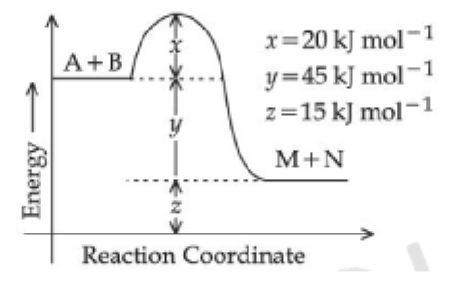
Assertion (A): Heavy water is used for the study of reaction mechanism.
Reason (R): The rate of reaction for the cleavage of O-H bond is slower than that of O-D bond.
The reaction rate for the reaction 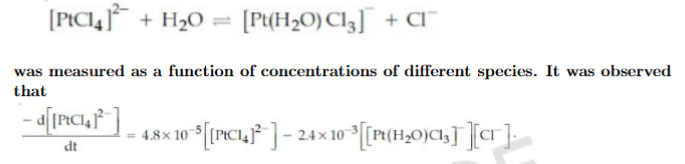
where square brackets are used to denote molar concentrations. The equilibrium constant K = __________ . (Nearest integer)}
If the rate of appearance of is at a particular time, the rate of disappearance of at the same time is _________ . (Nearest integer)
[Given R = 8.31 J K mol ; log 6.36 10 = , 10 =1.62 10 ]
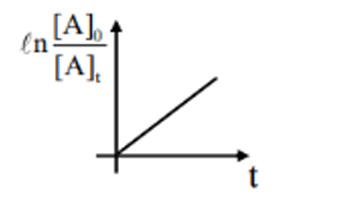
For the following graphs, 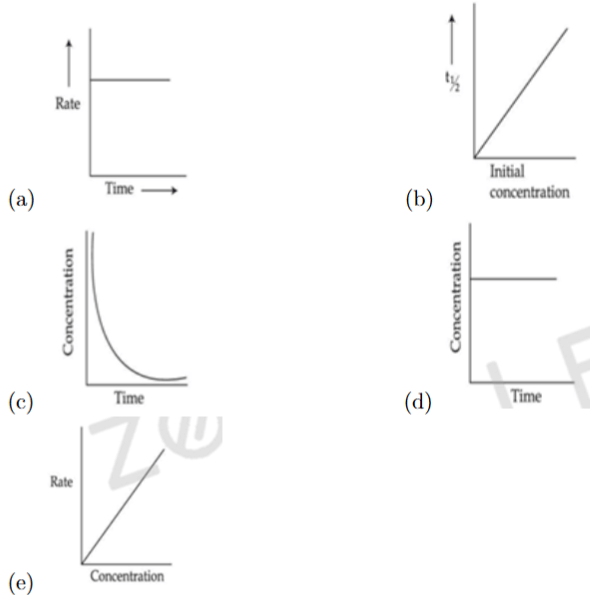
Choose from the options given below, the correct one regarding order of reaction :
For aA + bB cC + dD, the plot of log k vs 1/T is given below :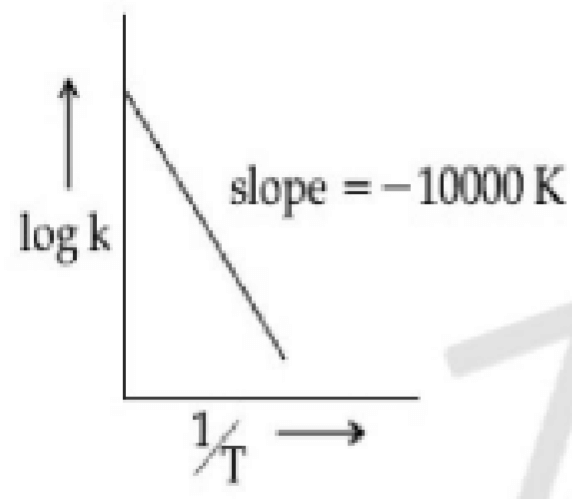
The temperature at which the rate constant is s is __________ K. [Rate constant is s at 500 K.]
(A) Always use freshly prepared starch solution
(B) Always keep the concentration of sodium thiosulphate solution less than that of solution
(C) Record the time immediately after the appearance of blue colour
(D) Record the time immediately before the appearance of blue colour
(E) Always keep the concentration of sodium thiosulphate solution more than that of solution Choose the correct answer from the options given below :
The half-life for the decomposition of gaseous compound A is 240 s when the gaseous pressure was 500 torr initially. When the pressure was 250 torr, the half-life was found to be 4.0 min. The order of the reaction is ______. (Nearest integer)
Reactant Product
If formation of compound [B] follows the first order of kinetics and after 70 minutes the concentration of [A] was found to be half of its initial concentration. Then the rate constant of the reaction is x × 10–6 s–1. The value of x is _________. (Nearest Integer).
For a reaction, given below is the graph of ln k vs 1/T. The activation energy for the reaction is equal to____ . (Nearest integer)
(Given: )
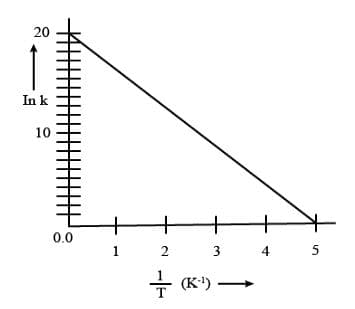
The activation energy for the reaction is given by ______ . (In nearest integer)
(Given : )
(Given : R = 8.314 J K–1 mol–1]
The rate constant for a first order reaction is The time required for the initial concentration of the reactant to reduce to its level is ___ (Nearest integer)
(Given: )
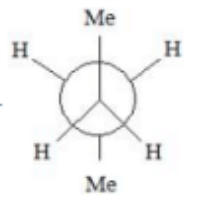
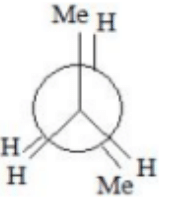
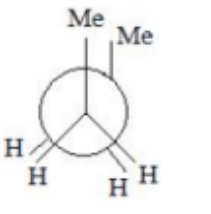
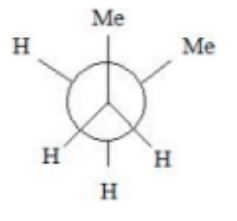
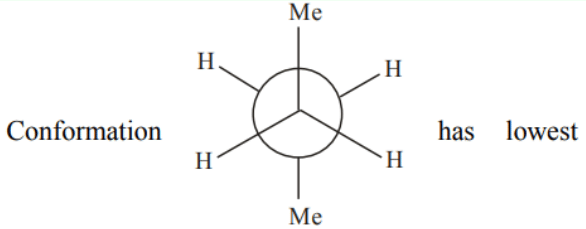
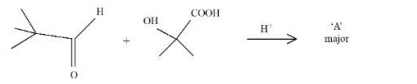
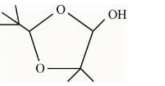
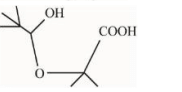
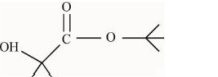
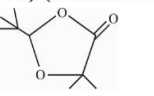
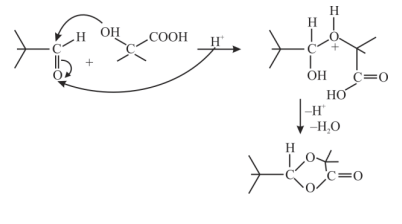
Given:
A. Reaction completes in
B. The reaction has a half-life of
C. The time required for completion is 25 times the time required for completion
D. The degree of dissociation is equal to
E. The rate and the rate constant have the same unit
For the decomposition of azomethane a first order reaction, the variation in partial pressure with time at is given as
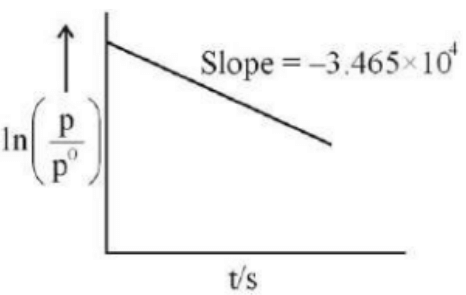
The half life of the reaction is ______ [Nearest integer]
Given below are two statements :
Statement I : Sulphanilic acid gives esterification test for carboxyl group
Statement II : Sulphanilic acid gives red colour in Lassigne's test for extra element detection In the light of the above statements, choose the most appropriate answer from the options given below :
(Given: )
- If there is no relation between rate constant and temperature, then activation energy is negative.
- If the activation energy is zero, rate constant is temperature independent.
- If rate constant increases with increase of temperature, activation energy is positive.
- If rate constant decreases with increase in temperature, activation energy is negative.
A. Larger the activation energy, smaller is the value of the rate constant
B. The higher is the activation energy, higher is the value of the temperature coefficient
C. At lower temperatures, increase in temperature causes more change in the value of than at higher temperature
D. A plot of vs is a straight line with slope equal to
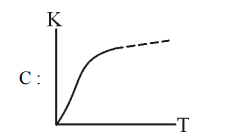
The rate constants of the above reaction at and are and respectively The activation energy for the reaction is __ (Nearest integer) (Given
In a container at a constant temperature , arrange the RMS velocity of the following: Ne, Cl2 , UF6
If compound A reacts with B following first-order kinetics with rate constant , the time taken by A (in seconds) to reduce from 7 g to 2 g will be ------- (Nearest Integer).
Given:
Then AH for,
| p(mmHg) | 50 | 100 | 200 | 400 |
| 4 | 2 | 1 | 0.5 |
A → B The above reaction is of zero order Half life of this reaction is 50 min The time taken for the concentration of A to reduce to one-fourth of its initial value is ____ min (Nearest integer)
| Rate mol L-1S-1 | [A] mol L-1 | [B] mol L-1 |
| 0.10 | 20 | 0.5 |
| 0.40 | x | 0.5 |
| 0.80 | 40 | y |

Consider the following data for the given reaction

The order of the reaction is __________.
| A[M] | B[M] | initial rate of formation of D | |
| I | 0.1 | 0.1 | 6.0 × 10⁻³ |
| II | 0.3 | 0.2 | 7.2 × 10⁻² |
| III | 0.3 | 0.4 | 2.88 × 10⁻¹ |
| IV | 0.4 | 0.1 | 2.40 × 10⁻² |
Based on above data, overall order of the reaction is ..........
Statement I: The rate law for the reaction is rate . When the concentration of both A and B is doubled, the reaction rate is increased ``x'' times.
Statement II:
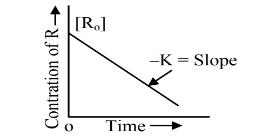
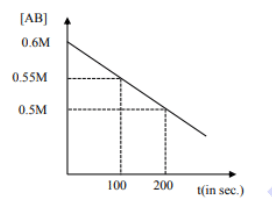
The figure is showing ``the variation in concentration against time plot'' for a ``y'' order reaction. The value of is _________.
The reaction is initiated by taking 1M concentration of A and B each. If the rate constant ( ) is , then the time taken for A to become 0.1 M is ______ sec. (nearest integer)
The initial rate of the reaction is recorded as when the reaction starts with 1.5 atm pressure of A and 0.7 atm pressure of B. After some time, the rate is recorded when the pressure of C becomes 0.5 atm. The ratio is _______ . (Nearest integer)
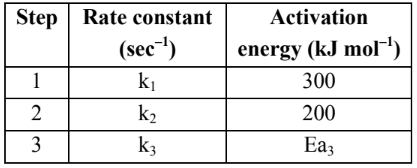
For a reaction taking place in three steps at the same temperature, the overall rate constant . If , , and are 40, 50, and 60 kJ/mol respectively, the overall is ____ kJ/mol.
A. The Arrhenius equation holds true only for an elementary homogeneous reaction.
B. The unit of A is same as that of k in Arrhenius equation.
C. At a given temperature, a low activation energy means a fast reaction.
D. A and Ea as used in Arrhenius equation depend on temperature.
E. When Ea >> RT. A and Ea become interdependent.
Choose the correct answer from the options given below :
Consider the following plots of log of rate constant vs for three different reactions. The correct order of activation energies of these reactions is: 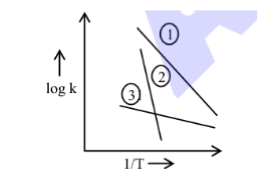
Choose the correct answer from the options given below:
Reaction A(g) → 2B(g) + C(g) is a first-order reaction. It was started with pure A.
The following table shows the pressure of the system at different times: 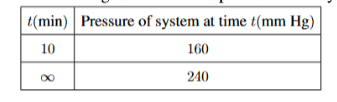
Which of the following options is incorrect?
A(g) B(g) + C(g) is a first order reaction.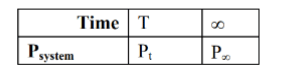
The reaction was started with reactant A only. Which of the following expression is correct for rate constant k ?
Rate law for a reaction between and is given by . If concentration of A is doubled and concentration of B is halved from their initial value, the ratio of new rate of reaction to the initial rate of reaction is
For for forward and backward reaction are 180 and respectively. If catalyst lowers for both reaction by . Which of the following statement is correct?
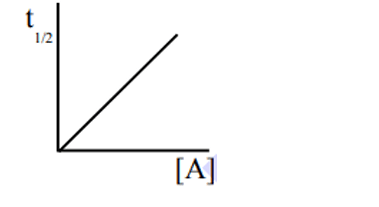
Statement-II: For a first (1st) order reaction , the following graph is valid.
(Given : J K mol , , , )
(Given : )}
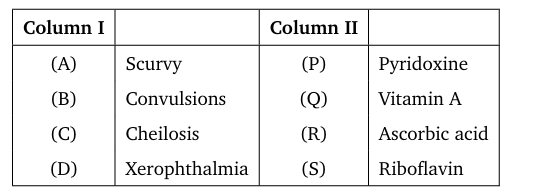
Given above is the concentration vs time plot for a dissociation reaction : . Based on the data of the initial phase of the reaction (initial 10 min), the value of n is ____. 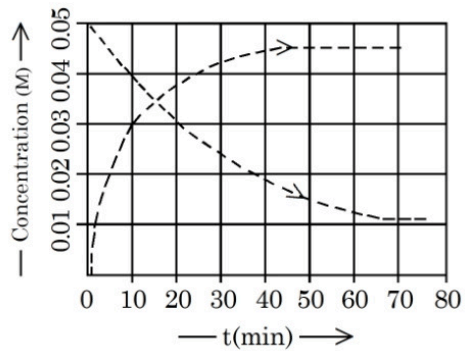
2A(g) → 4B(g) + C(g)
Total pressure at and are 300 torr and 600 torr respectively. Calculate pressure of C(g) at 30 sec (in torr).
(i) If the concentration of A is made 4 times, then the rate of reaction becomes 16 times.
(ii) The decomposition of is an example of this type of reaction.
(iii) The order of the reaction is 2.
(iv) A plot of vs. is a straight line.
(v) The half-life of the reaction is independent of the concentration of the reactant.
Find temperature 't' (in ).
The temperature at which the rate constants of the given below two gaseous reactions become equal is ____________ K (Nearest integer).
Given:
Consider the following compounds. Arrange these compounds in a n increasing order of reactivity with nitrating mixture. The correct order is : 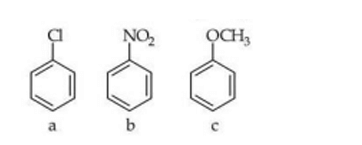
Factor corresponds to fraction of molecules having kinetic energy less than .
At a given temperature, lower the , faster is the reaction.
Increase in temperature by about doubles the rate of reaction.
Plot of vs gives a straight line with slope .
Choose the correct answer from the options given below:
and activation energy of reaction ( ) is th of the reaction ( ), then the value of ( ) is ______________ kJ mol (Nearest Integer).
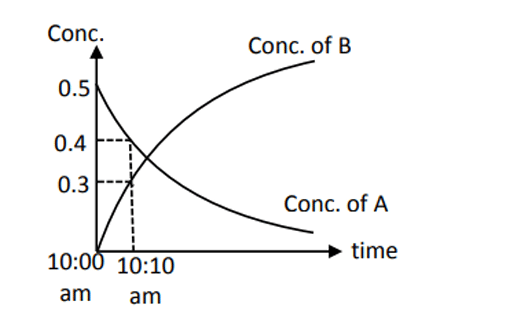
I. products.
II. .
Both the reactions are started at 10.00 am. The rates of these reactions at 10.10 am are same. The value of at 10.10 am is . The concentration of A at 10.10 am is . What is the first order rate constant (in ) of reaction I?}
In a closed 1 L vessel, 1 bar A(g) is allowed to decompose at T(K). After 100 minutes, the total pressure was 1.5 bar. What is the rate constant (in ) of the reaction ? ( )
(Consider that the frequency factor for both the reactions is same)
A. The dipole moment value of is higher than that of .
B. The dipole moment value of is zero.
C. The bond order of and is same.
D. The formal charge on the central oxygen atom of ozone is .
E. In , all the three atoms satisfy the octet rule, hence it is very stable.
Choose the correct answer from the options given below:
A, B, C, D & E
B & C only
B, C & D only
A, C & D only
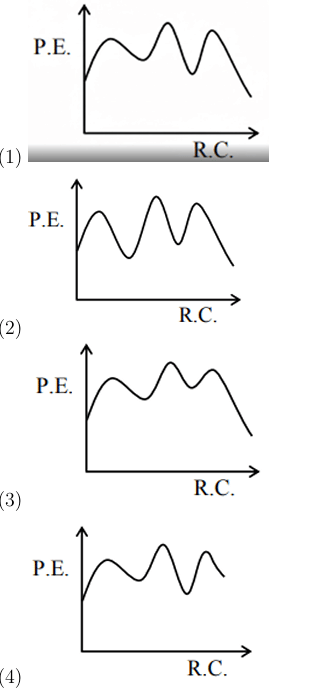
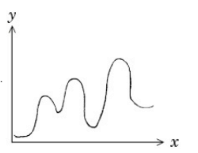
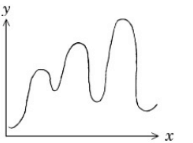
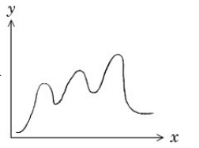
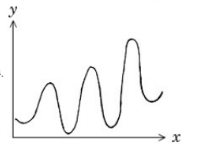
is an endothermic reaction occurring in three elementary steps:
(i)
(ii)
(iii)
Which of the following graphs between potential energy (y-axis) versus reaction coordinate (x-axis) correctly represents the reaction profile of ?
Experiment-(A) 100 ml, 10 M
Experiment-(B) 200 ml, 10 M
Experiment-(C) 100 ml, 10 M + 100 ml H O
Select correct order of rate of reaction in above experiments.
Find temperature (in Kelvin) at which rate constant are equal for the following reaction?
B, K = 10 e } \)
Q, K = 10 e } \)
time at which concentration of A become 1/8 of initial concentration.
time at which concentration of A becomes 1/10 of initial concentration.
About Chemical Kinetics - JEE-MAIN
Chemical Kinetics is a vital chapter for JEE-MAIN aspirants. Mastering the concepts covered in this chapter is essential for securing a top rank.
By rigorously practicing the previous year questions associated with this chapter, you can identify high-yield topics, understand the examiner's perspective, and boost your confidence during the actual exam.
Frequently Asked Questions
Why focus on Chemical Kinetics PYQs?
Analyzing PYQs for this specific chapter reveals the most frequently tested concepts and the typical complexity of questions, allowing you to tailor your study plan efficiently.
How to best use this analysis?
Review the topic breakdown to see which sub-topics within Chemical Kinetics carry the most weight. Then, tackle the questions iteratively to solidify your understanding.